
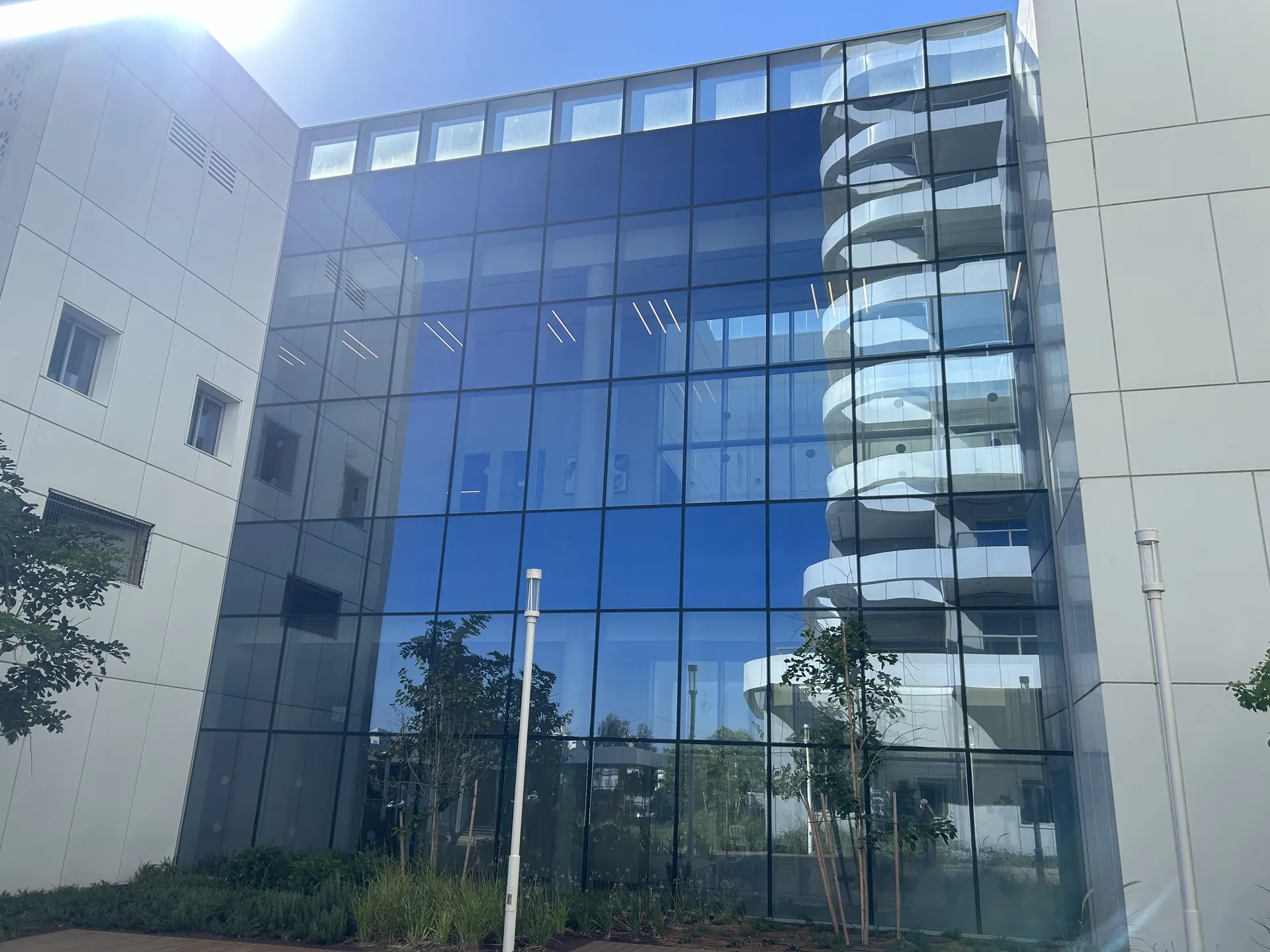
Touchless drone cleaning: how to get a clean result without touching the facade
Touchless drone cleaning: how glass and cladding are cleaned without squeegees or contact, which flight techniques, detergents and water determine the result, and why it takes skilled operators.


touch-free cleaning is one of the main reasons property managers switch to drone facade cleaning. Instead of a squeegee, sponge or brush sliding over the glass, the drone sprays cleaning agent and water from a distance, and nothing touches the facade. But "touch-free" doesn't mean "effortless". Getting clean glass without streaks or spots means knowing how to fly, at what distance and angle, how long to leave the cleaning agent on, and how to carry out the final rinse. In this article we explain the difference between touch-free and conventional cleaning, why it's gentler on the facade, and exactly what decides whether the result is sparkling or disappointing.
What touch-free cleaning is and why it's gentler on the facade
In conventional high-level window cleaning, the cleaning tool touches the glass, and particles can be dragged along with it. The US National Glass Association (NGA) guidelines on cleaning architectural glass warn about abrasive particles trapped between the glass and the cleaning tool causing scratches. With drone cleaning no tool touches the surface, but a clean touch-free result doesn't happen by itself. It depends on the team doing the work, and on three things we insist on in every project:
- Experience in reading the facade. Every facade is different: reflective glass, painted aluminium profiles, gaskets, stone andaluminium cladding. Before the drone takes off, we assess the type of material, its condition and the type of dirt, and adapt the working method to the specific building rather than to a fixed template.
- Precise flying technique. The drone keeps a steady distance and angle from the facade and makes systematic passes from top to bottom, overlapping each pass so no strips are missed. Pressure and water flow are adapted to the surface, so dirt is washed downwards without damaging the finish or forcing water into the joints.
- Cleaning agents and water suited to the job. We choose cleaning products according to the surface type and the type of dirt, apply them and then rinse with purified water, so no cleaning agent residue or streaks are left. On sensitive surfaces, such as Alucobond panels, washing is done at gentle, low pressure only.
Beyond cleaning quality, the method also has a safety advantage, because no one needs to work suspended at height. We wrote about the differences between the methods in our article drone vs rope access.
Touch-free cleaning isn't just "spraying water": why it takes experience
Anyone who has seen a video of a drone spraying water on a building might think it's simple. In practice, with no squeegee to finish the job, every decision during the flight directly affects the result. If the cleaning agent didn't reach the whole surface, if it dried before rinsing, or if the final rinse didn't cover everything, it shows on the glass. That's why touch-free cleaning needs skilled operators who know the drone, the water system and the surface types, and can spot in real time when something isn't working.
Flying techniques: distance, angle, order and wind
Distance and angle from the facade
The distance from the facade determines how wide the jet is when it hits the surface and how much force it has left. Too close, and the jet is narrow and strong, with uneven coverage. Too far, and the water is scattered by the wind and loses force. The angle matters too: spraying at the right angle helps the water wash dirt downwards rather than spreading it sideways or forcing it into grooves and profiles. Distance and angle change according to the surface type, the shape of the facade and what projects from it.
Spray pattern
As with painting, the aim is even coverage. The drone follows fixed paths, overlapping each pass so no strips are left without cleaning agent or rinsing. On facades with a grid of profiles, such as curtain walls, particular care is needed at corners and joint lines, because that's where dirt tends to build up.
From top to bottom
Water flows downwards, taking dirt with it. That's why we clean from top to bottom, so water running down doesn't re-soil an area that has already been washed. Likewise, the guidelines of glass manufacturer Vitro recommend starting glass cleaning at the top and working downwards, and avoiding cleaning tinted or reflective glass in direct sunlight.
Wind awareness
Wind affects both the drone and the water. It can deflect the jet, scatter droplets over an area already washed, dry the cleaning agent too quickly and affect the drone's stability near the building. A skilled operator checks the wind before and during the work, adjusts the distance and the order of work, and knows when it's better to stop and postpone.
Cleaning agent and dwell time
Instead of scrubbing, in touch-free cleaning the cleaning agent does the work. It breaks down the layer of dust, soot and grease so the water can wash it away. For this to work, three things are needed:
- A cleaning agent suited to the surface. Glass, painted aluminium and stone react differently to different products.
- The right dwell time. The cleaning agent needs time to break down the dirt. Rinse too early and it hasn't finished working. Wait too long, especially in sun and wind, and it dries on the surface and leaves marks. On sensitive surfaces, such as aluminium composite panels, we rinse quickly so the product doesn't stay on the surface.
- Full coverage. Any area that didn't get cleaning agent will stay dirtier than its surroundings and stand out after rinsing.
We use an environmentally friendly cleaning agent and adapt the amount of product and dwell time to the type of dirt and the conditions on the day.
The water system: purified-water rinsing and gentle pressure
The final stage is what determines how the glass looks once it dries. Ordinary tap water contains minerals, and when it dries on glass it leaves white limescale spots. That's why the final rinse uses water purified by reverse osmosis. This water rinses away cleaning agent residue and dries without leaving marks, even without a squeegee. We've written about this technology in detail in our article on reverse osmosis window cleaning.
Pressure matters just as much. Touch-free cleaning doesn't mean high pressure. On sensitive surfaces, such as aluminium composite panels, we work at gentle, low pressure. The Alucobond cleaning guide recommends avoiding pressure washing so as not to damage the panels and the cladding system, so on panels like these we only wash at gentle, low pressure, in line with the manufacturer's guidelines. On glass and the gaskets around it too, moderate pressure is enough once the cleaning agent has done its work, and it avoids forcing water into the joints.
Where touch-free cleaning is particularly suitable
Almost any exterior facade can benefit from touch-free cleaning, but on some surfaces the advantage is especially clear:
- Curtain walls and reflective glass. Large areas of glass where a fine scratch shows in the sun from certain angles, and where it's hard to reach every corner with other methods.
- Aluminium cladding and painted panels. Surfaces where repeated scrubbing can wear the finish over time, so they are best cleaned touch-free at low pressure.
- Frames, gaskets and profiles. Parts that are easily damaged by cleaning tools and stay intact when nothing touches them.
- Facades with projections and fittings. Balconies, shading, signs and air-conditioning units that make rope work difficult, and that the drone can work around from the air, without scaffolding.
Before every job we assess the surface type and its condition, and adapt the cleaning agent, pressure and order of work to the specific building. If there's an area where touch-free cleaning won't be enough, such as hardened construction residue, we say so up front.
What touch-free cleaning doesn't do
- It doesn't remove concrete or paint residue. That needs hand scraping, which is a separate service.
- It doesn't repair existing scratches or damaged glass. It only prevents the risk of new scratches from cleaning tools.
- It doesn't replace cleaning windows that open inwards. The drone cleans the outer side of the building envelope.
At the end of the work you get a summary report with photos, and the work can also be scheduled after hours. For more details, see the full guide to drone facade cleaning, our article on High-Rise Window Cleaning and the page Our Services.
FAQs
What's the difference between touch-free cleaning and conventional window cleaning?
In conventional cleaning, a worker applies a solution, scrubs and dries with a squeegee, so there's direct contact with the glass. In touch-free cleaning, the drone sprays cleaning agent from a distance and rinses with purified water, and no tool touches the facade.
Does touch-free cleaning really clean as well as a squeegee?
When done properly, yes. The result depends on full cleaning-agent coverage, the right dwell time, correct flying technique and a final rinse with purified water. That's why it needs skilled operators.
Why are there no scratches with touch-free cleaning?
Scratches on glass are usually caused by grains of sand and dust trapped between the cleaning tool and the glass and dragged across it. When no tool touches the surface, there's nothing to drag them, and the water washes them downwards.
Are spots or cleaning agent residue left behind?
No, when the final rinse is done with reverse-osmosis purified water. This water rinses away the cleaning agent and dries without leaving limescale.
Is touch-free cleaning suitable for sensitive aluminium cladding?
Yes, at gentle, low pressure. There's no mechanical contact with the panels, and the pressure is adapted to the surface type, in line with the manufacturer's guidelines.
What affects the result on the day?
Mainly wind, direct sunlight and how much dirt there is. Wind deflects the water and dries the cleaning agent, and strong sun dries it before rinsing. A skilled operator adapts the distance, the order of work and the dwell time to the conditions, and knows when to postpone.
Want to see how it would look on your building? Send us a short video of your facade, and we'll get back to you with a tailored quote.
Reverse osmosis window cleaning: why purified water leaves no spots
Reverse osmosis window cleaning: why tap water leaves white spots on glass, how purified water dries without marks, and what the method can't do.
Drone or rope access? A full comparison for facade and high-rise window cleaning
Drone or rope access for your facade? A fair comparison of the two methods on safety, privacy, disruption to residents and hands-on contact, and when each one is the right choice.
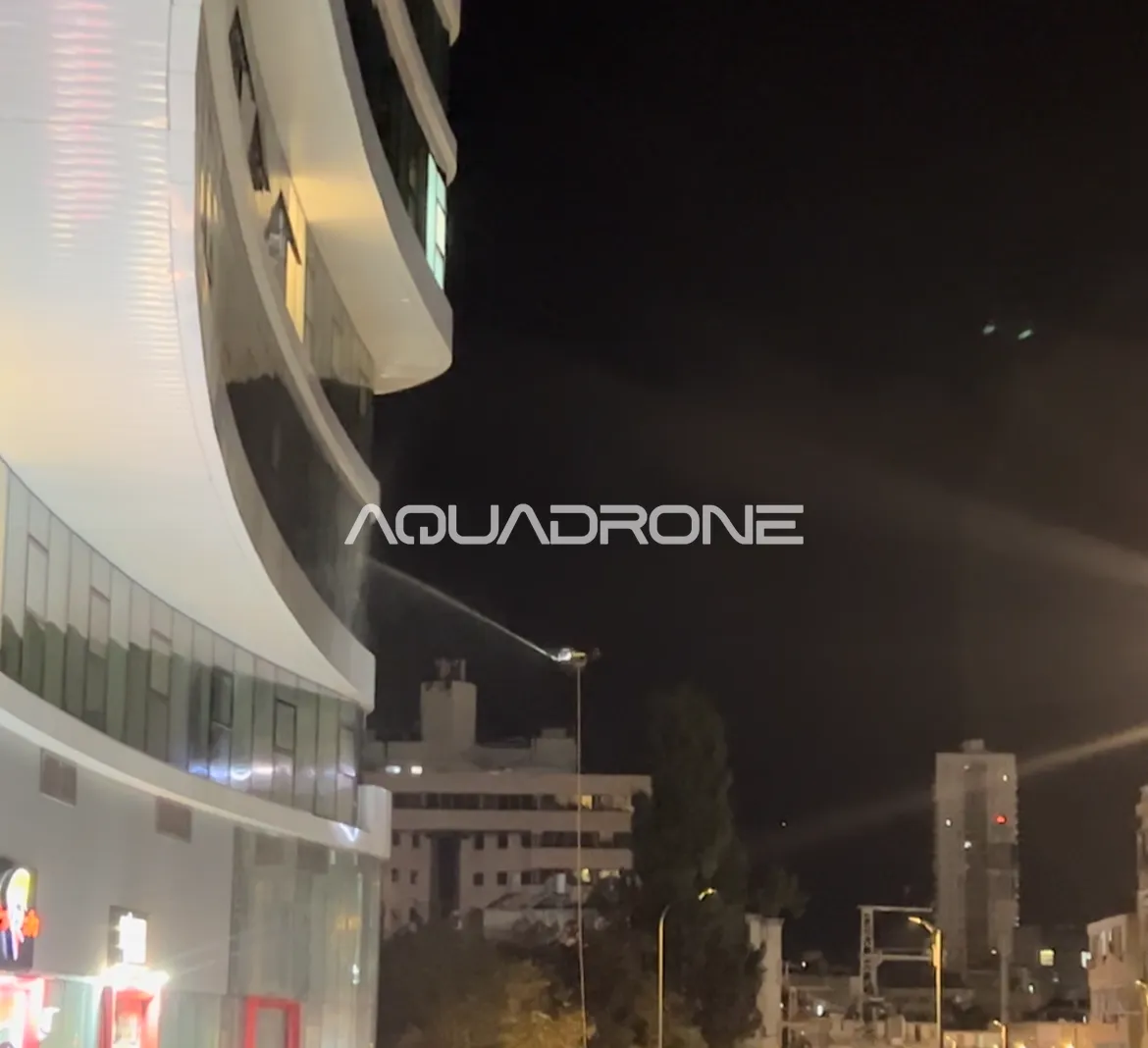
High-rise window cleaning without rope access: the safe solution for residential and office towers
For years, cleaning windows on residential and office towers automatically meant rope access: a team of technicians hanging on ropes, working down floor by floor, while residents and passers-by had to work around the job happening right above their heads. Today there is an alternative: drone high-rise window cleaning, and more and more residents' committees and property management companies are considering it. What's the problem […]
Drone building facade cleaning: the complete guide for property owners
Why property owners and maintenance managers in Israel are moving to cleaning without scaffolding or rope access
Drone curtain wall cleaning
An advanced solution for cleaning glass facades on tall buildings
What affects the cost of drone facade cleaning
The factors that shape the cost of a drone facade cleaning project
The next generation of cleaning drones
An in-depth look at the new technologies making cleaning work faster, safer and more cost-effective

Drones are changing the rules of building cleaning
Cleaning methods at height are changing, and drones are leading the way
The cleaning revolution: how drones are changing the rules of building maintenance
The shift from traditional cleaning methods to smart solutions in the air