
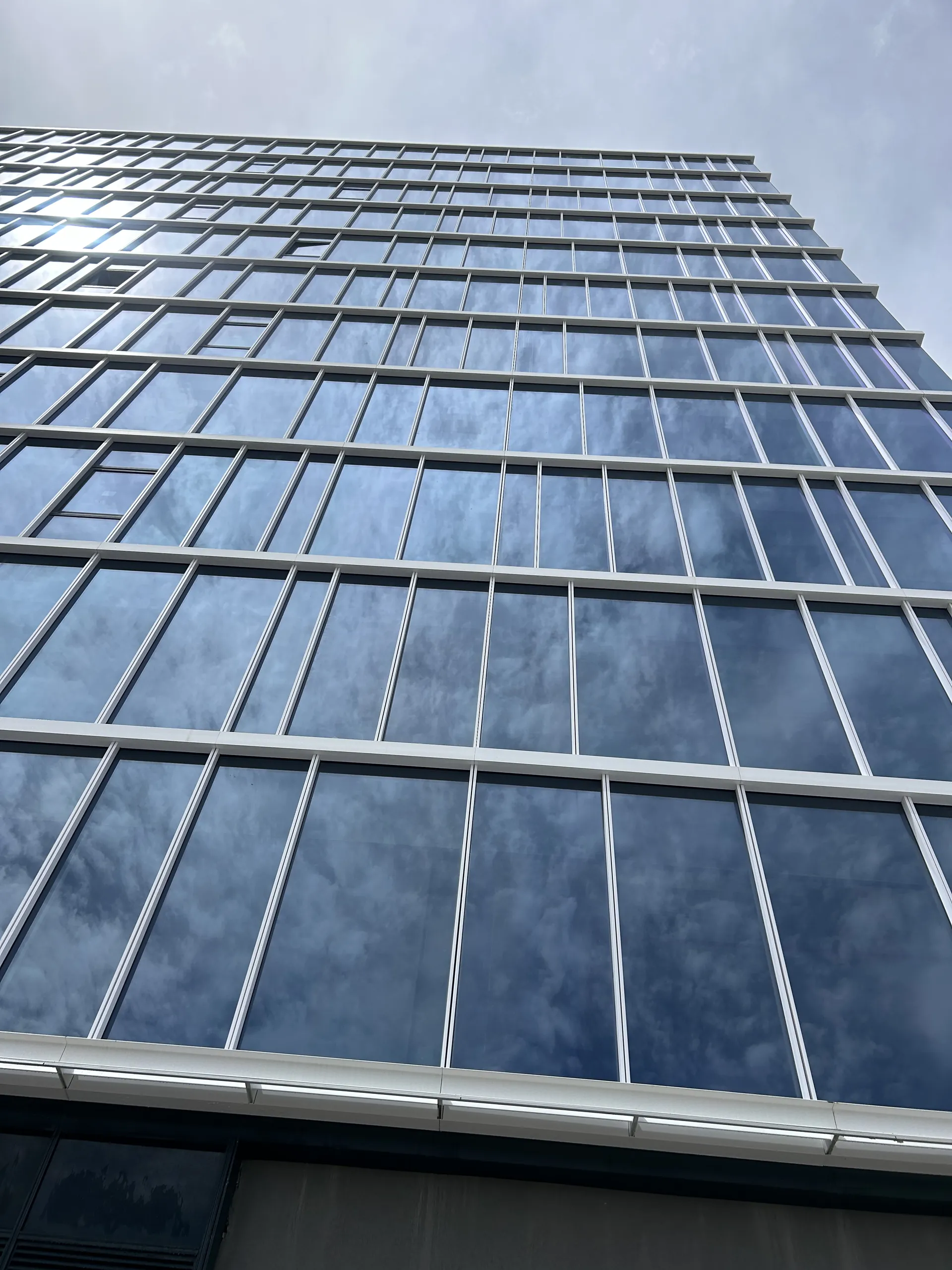
Drone or rope access? A full comparison for facade and high-rise window cleaning
Drone or rope access for your facade? A fair comparison of the two methods on safety, privacy, disruption to residents and hands-on contact, and when each one is the right choice.


drone vs rope access? When a residents' committee, management company or property manager starts looking into cleaning a facade or high-level windows, this is usually the first question. Both methods reach heights that can't be reached from the ground, but they work very differently, and each has cases where it's the better fit.
We're a drone cleaning company, so it's clear which way we lean. That's exactly why we've tried to write a fair comparison here, including the cases where a drone isn't the right solution. At the end of the article you'll find five simple steps to help you decide, plus answers to questions we often hear from residents' committees and property managers.
How each method works
Rope access (working on ropes)
In rope access, a certified worker descends from the roof on ropes and cleans the facade by hand: squeegee, brush, sponge and bucket. The big advantage is direct contact. The worker can scrub a stubborn stain, scrape and work into corners. On the other hand, it's work at height, which requires training, equipment and certification. In Israel it's regulated by theSafety at Work (Work at Height) Regulations.
Drone cleaning
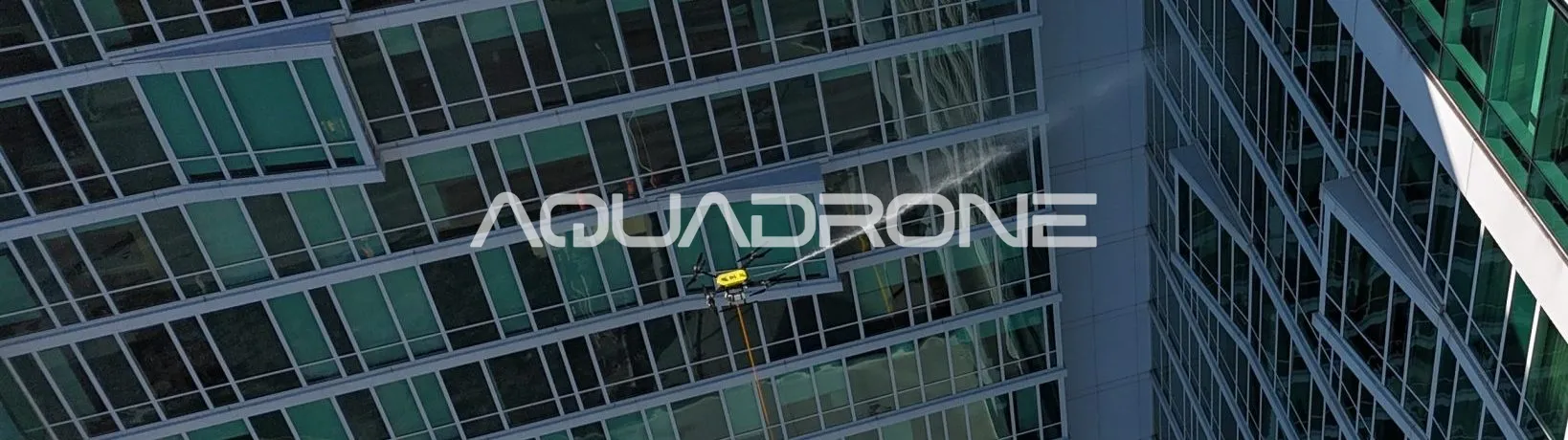
With a drone, no one hangs off the building. The drone is connected by a hose to a system on the ground, sprays an environmentally friendly cleaning agent onto the facade, and then rinses it with reverse-osmosis purified water, which dries without leaving spots. Cleaning is touch-free. There's no scrubbing, but there's also no one standing outside residents' windows. You can read more in our article on high-level window cleaning without rope access.
Drone or rope access: comparison table
| Topic | Drone | Rope access |
|---|---|---|
| Person suspended at height | No, the operator stays on the ground | Yes, with harnesses and ropes |
| Cleaning method | Spraying cleaning agent and rinsing, touch-free | Manual cleaning with contact and scrubbing |
| Residents' privacy | No worker outside the window | A worker passes every window |
| Roof anchoring | Not required | Suitable anchor points required |
| Stubborn stains, concrete and paint | Doesn't remove them; separate hand scraping needed | Can scrape and scrub on the spot |
| Deep balconies and hidden corners | Limited, depending on the angle | Better access |
| Weather sensitivity | Strong wind and rain prevent flying | Strong wind and rain prevent work |
| Working after hours | Possible, by arrangement | Depends on the team and safety conditions |
When a drone is the right choice
- Large, continuous facades. Curtain walls, stone or aluminium cladding, and facades with few recesses, where the drone can cover large surfaces in one go. See also our article on Drone curtain wall cleaning.
- Buildings where privacy matters. Residential buildings,hotels and offices, where it's unpleasant to have a worker pass every window.
- Roofs without suitable anchoring. When there are no anchor points for rope access, or roof access is complicated, the drone doesn't need them.
- When you want minimal disruption. The work is arranged in advance and can also be done after hours.
- Maintenance cleaning. Removing dust, soot, pigeon droppings and build-up that make a facade look neglected.
When a drone isn't suitable, or isn't enough on its own
We want to say this clearly, because it saves disappointment:
- Strong wind or rain. In weather like this we don't fly, and the work is moved to another day.
- Concrete and paint residue. The drone doesn't remove it. This needs hand scraping, which we offer as a separate service. In our article on post-construction building cleaning we explained how it works.
- Deep balconies and balcony ceilings. Recessed areas that water can't reach at a direct angle may need manual cleaning.
- Obstacles around the building. Power cables, tall trees or an adjoining building can limit flying. That's why we check the site before committing.
- Work that isn't cleaning. Replacing glass or repairing cladding is hands-on repair work that needs physical access, not cleaning.
What a working day looks like with each method
A rope access working day
The team goes up to the roof, checks the anchor points and rigs the ropes. The pavement or courtyard below the work area is closed off, because water or tools may fall. The worker descends one vertical "drop" of the facade at a time, cleans the windows in it, goes back up and moves to the next drop. During this time they pass residents' windows, so it's worth notifying residents in advance.
A drone working day
The water and pumping system is set up on the ground, and a zone below the facade is marked off where no one passes during flights. The drone sprays cleaning agent on one area and then rinses it from top to bottom with purified water. No one goes up to the roof or hangs off the building. At the end of the work you get a summary report with photos.
Privacy and residents' routine
The drone-or-rope-access question also has a human side that doesn't always appear in the quote. In a residential building, a worker appearing outside the bedroom window is an unpleasant experience for some residents, even when they're doing the job entirely professionally. In offices it can disrupt meetings, and in hotels it can bother guests. With a drone, there's no person outside the window. The drone stays at a distance from the facade, and the operator stands on the ground. So the work can be arranged to cause as little disruption as possible, including after hours. With either method, it's worth sending residents a notice in advance with the date, times and what they're asked to do: close windows, not hang out washing and move plant pots off sills.
What about aerial work platforms or scaffolding?
There are other options too. An aerial work platform or cherry picker mainly suits relatively low buildings, and needs space next to the building and access for a heavy vehicle. Scaffolding mainly makes sense when renovation is happening anyway, because putting it up and taking it down takes time, and it blocks windows and entrances for the whole period. For maintenance cleaning alone, a drone or rope access is usually the simpler option. You'll find a fuller comparison in our article on Building cleaning without scaffolding.
Common mistakes when choosing
- Not checking what's included. "Facade cleaning" can cover only windows, or also cladding, frames and sills. Before booking, make sure the scope of work is written in the quote.
- Assuming a drone removes everything. The drone removes dirt, dust, soot and build-up. Concrete and paint need hand scraping.
- Forgetting the weather. With both methods, wind and rain stop the work. Agree in advance what happens if it has to be postponed.
- Not updating residents. With any method, ask residents to close windows and move things off window sills and balconies.
Combining methods: sometimes that's the right answer
On many buildings there's no need to choose just one method. Most of the facade can be cleaned by drone, leaving only what's needed for manual treatment: concrete stains on the lower floors, a recessed balcony or an area the drone can't reach safely. That way you get the advantages of each method without doing manual work on the whole facade.
How to decide: 5 steps
- Define what needs cleaning. Just windows? The whole facade? Are there concrete or paint stains from construction?
- Film the building. A short video of each side of the building, including the roof and immediate surroundings, is enough for an initial assessment.
- Check site limitations. Cables, trees, adjoining buildings, deep balconies, and anchor points for rope access if that's the method being considered.
- Send us the video and get a detailed quote. Send us the video on WhatsApp, and we'll get back to you with a breakdown of what's included, what isn't and what the final documentation looks like. We've gathered the questions worth asking before you sign, with our answers, in our article on How do you choose a facade cleaning company.
- Arrange a date. Choose a date that suits residents, and leave flexibility to postpone in case of wind or rain.
FAQs
Which is safer, drone or rope access?
With drone cleaning, no one is suspended at height. The operator stays on the ground. Rope access is work at height, which requires training, certification and equipment under the Work at Height Regulations. Both methods can be carried out safely when done properly, but with a drone the risk to a person at height simply doesn't exist.
Does a drone clean as well as manual work?
For maintenance cleaning of dust, soot, pigeon droppings and build-up, the drone gives a good touch-free result. Stains that need scrubbing or scraping, such as concrete and paint, need manual work, which we offer separately.
Can a drone be used when the building has balconies?
Yes, for the exterior facade and windows. Deep balconies and balcony ceilings may be limited because of the angle, so we check them in advance and tell you exactly what's included.
What happens if it's windy on cleaning day?
In strong wind or rain we don't fly, and the work moves to a new date. This is part of the planning, so it's worth arranging a date with some flexibility.
Do you need roof anchor points for drone cleaning?
No. The drone doesn't hang from the building. Anchor points are only needed for rope access.
Can drone and rope access be combined on the same building?
Yes, and sometimes that's the best approach: the drone cleans most of the facade, and areas that need manual contact are dealt with separately.
Not sure which method suits your building? Send us a video of your facade and we'll tell you honestly whether a drone is the right solution.
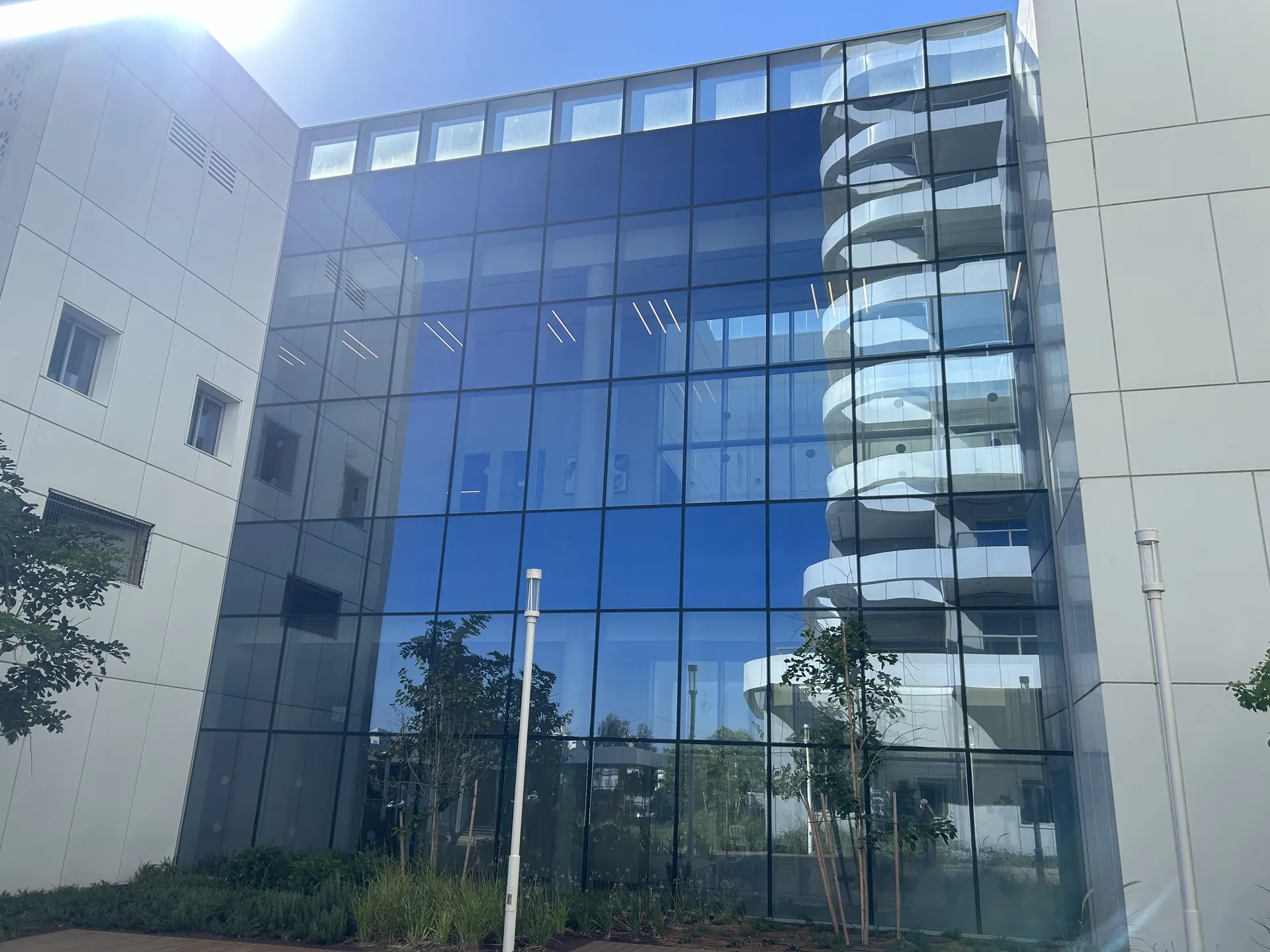
Touchless drone cleaning: how to get a clean result without touching the facade
Touchless drone cleaning: how glass and cladding are cleaned without squeegees or contact, which flight techniques, detergents and water determine the result, and why it takes skilled operators.
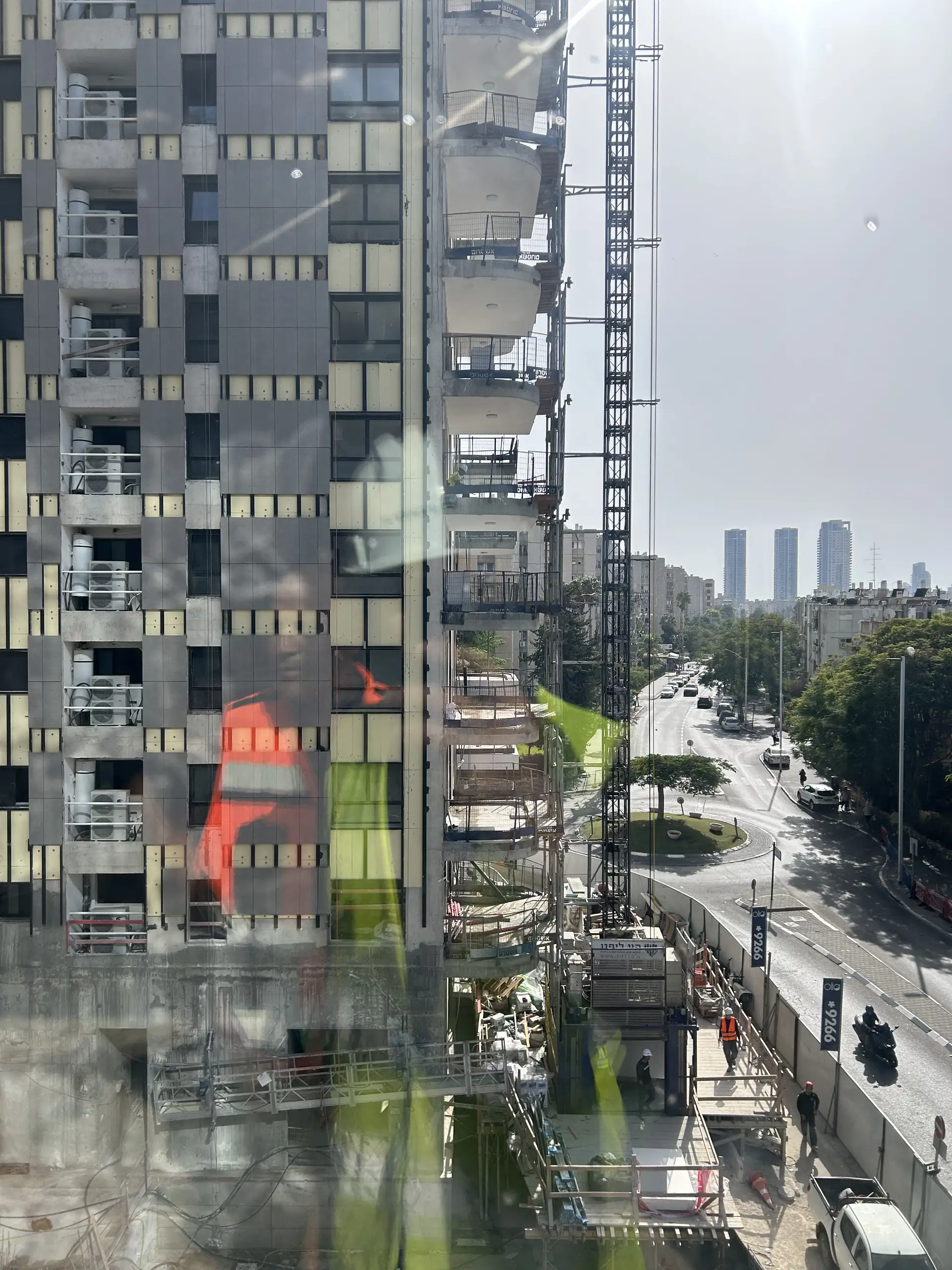
Reverse osmosis window cleaning: why purified water leaves no spots
Reverse osmosis window cleaning: why tap water leaves white spots on glass, how purified water dries without marks, and what the method can't do.
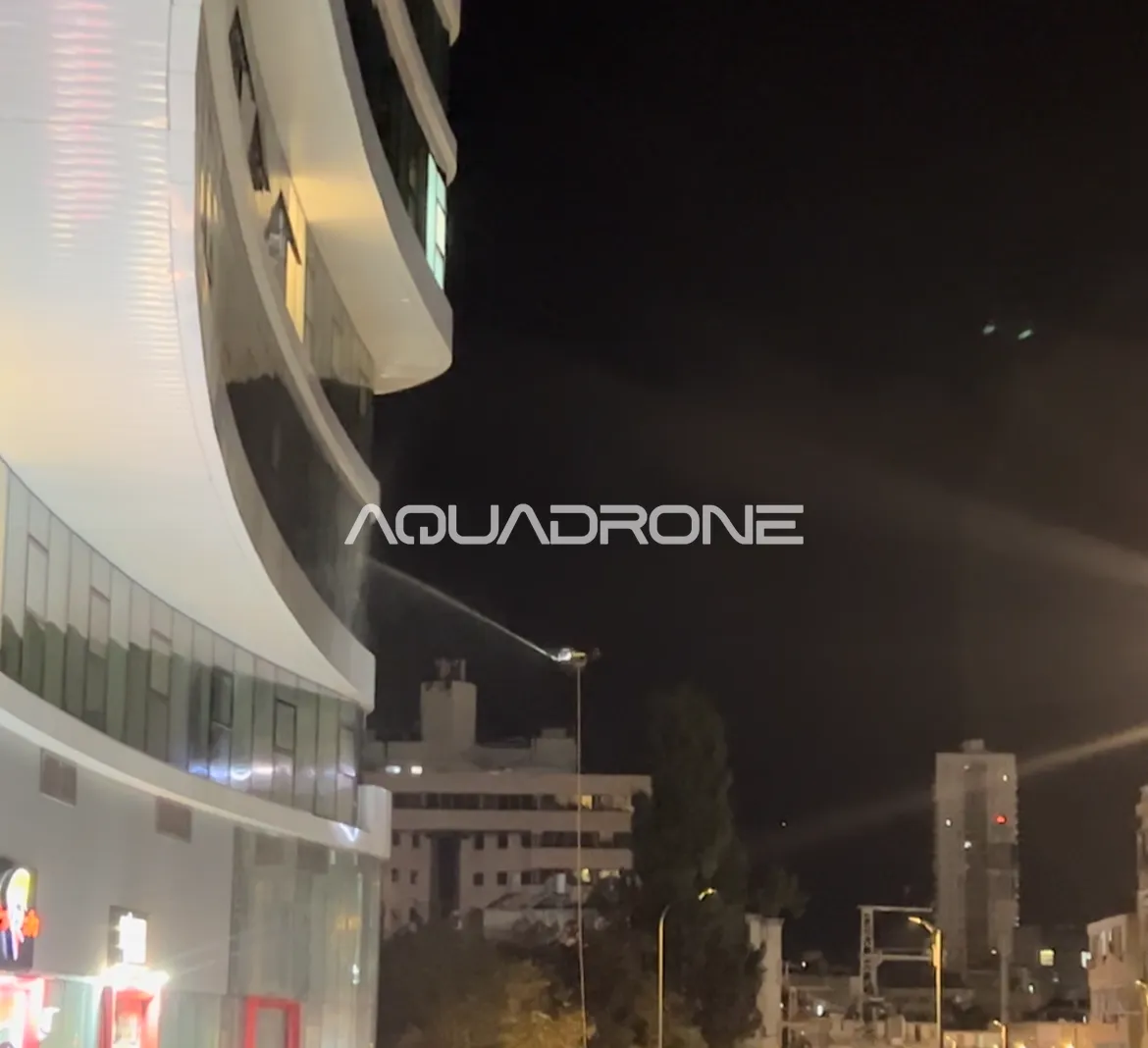
High-rise window cleaning without rope access: the safe solution for residential and office towers
For years, cleaning windows on residential and office towers automatically meant rope access: a team of technicians hanging on ropes, working down floor by floor, while residents and passers-by had to work around the job happening right above their heads. Today there is an alternative: drone high-rise window cleaning, and more and more residents' committees and property management companies are considering it. What's the problem […]
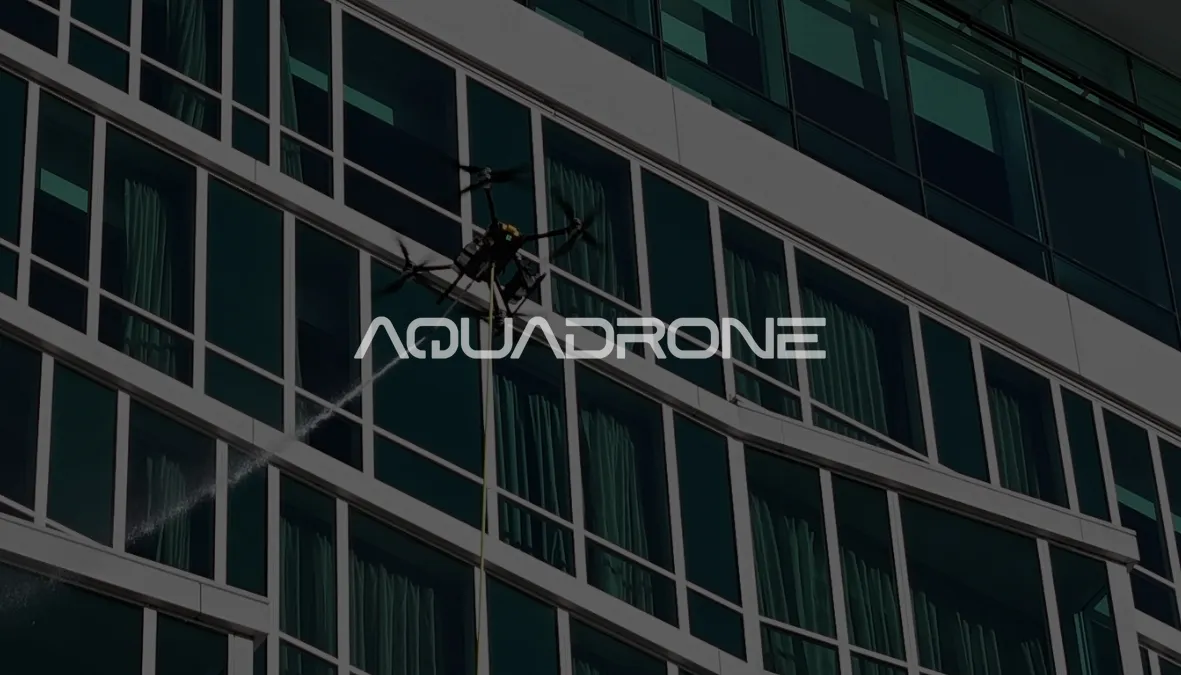
Drone building facade cleaning: the complete guide for property owners
Why property owners and maintenance managers in Israel are moving to cleaning without scaffolding or rope access
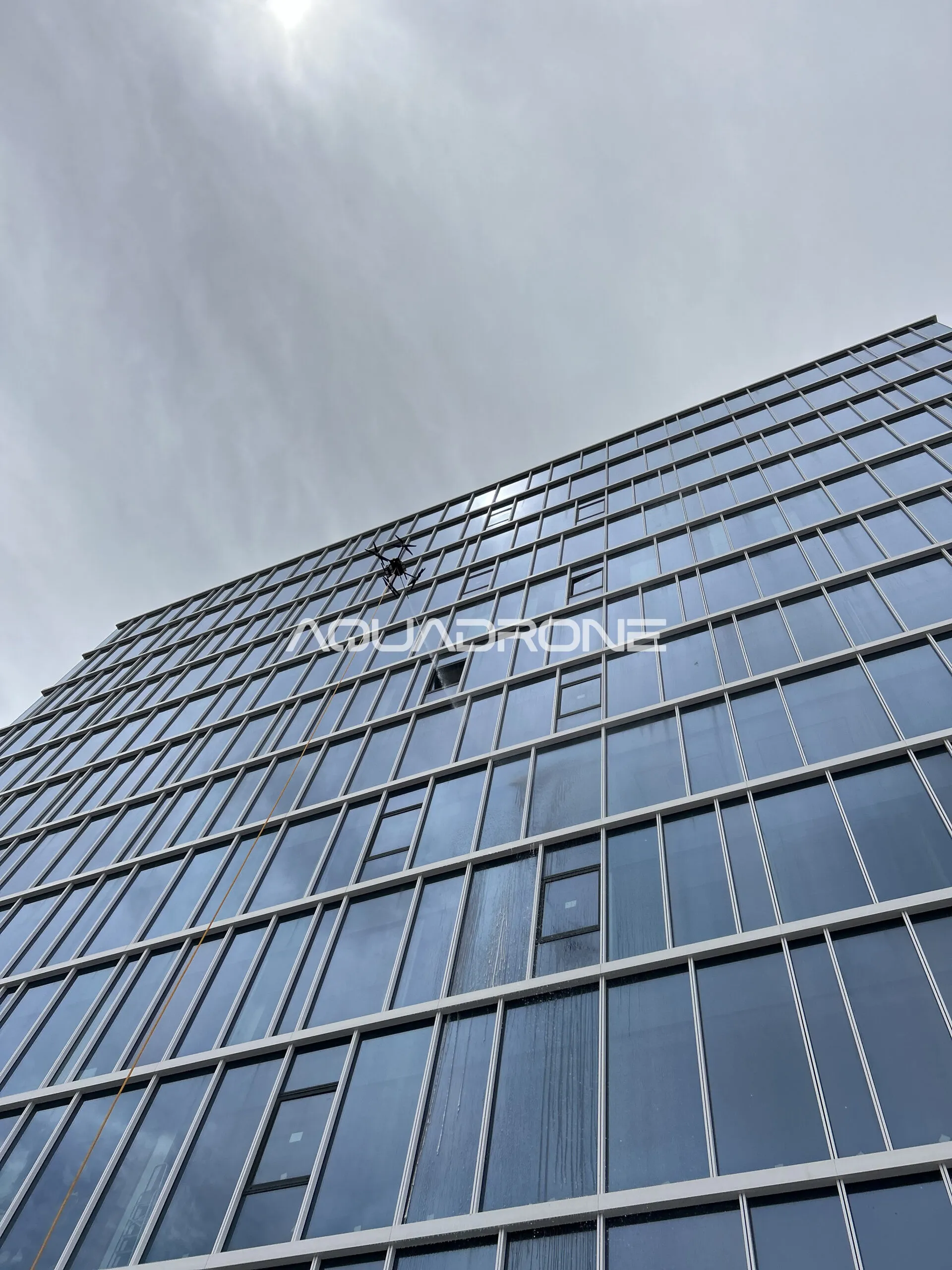
Drone curtain wall cleaning
An advanced solution for cleaning glass facades on tall buildings
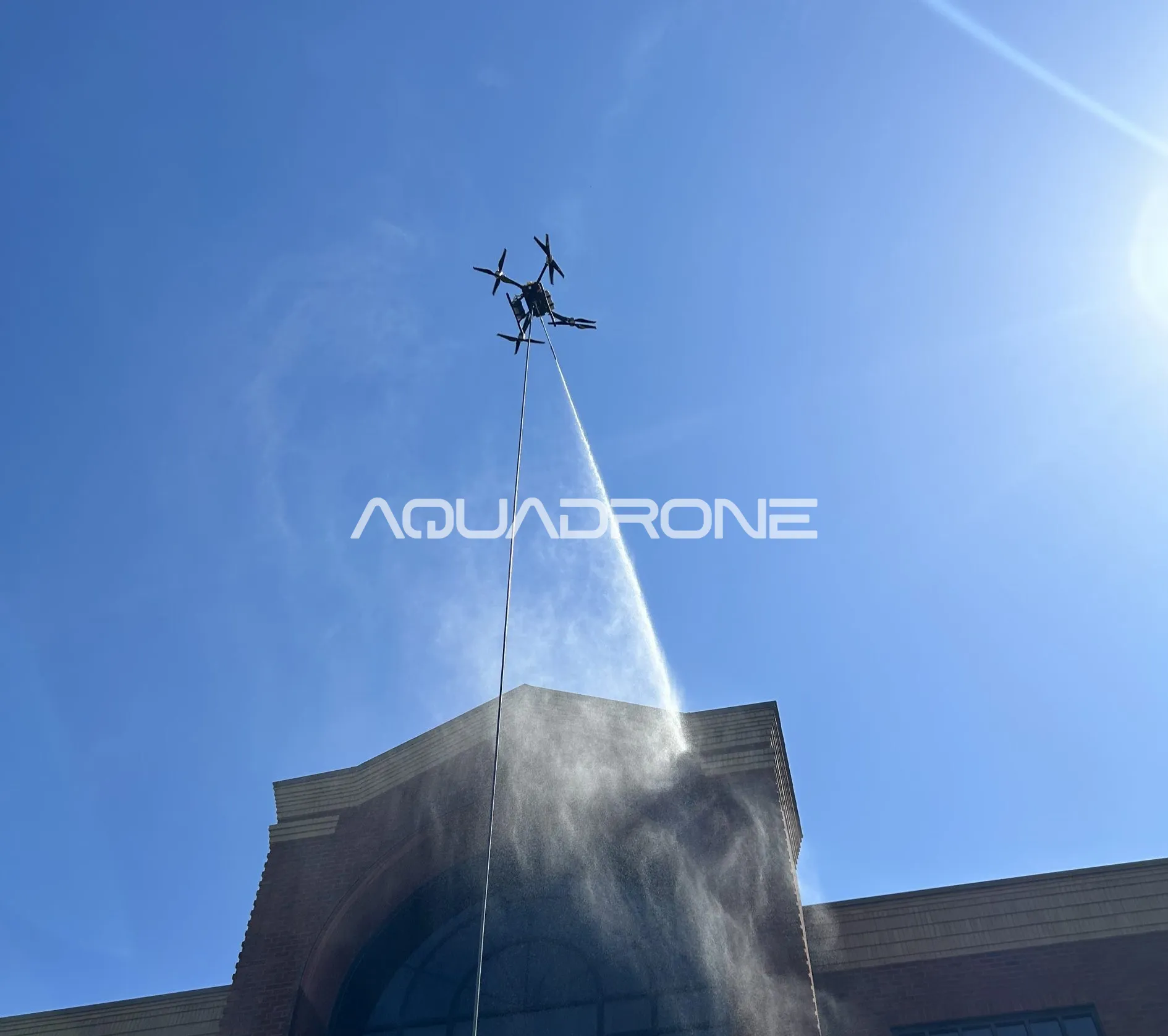
What affects the cost of drone facade cleaning
The factors that shape the cost of a drone facade cleaning project
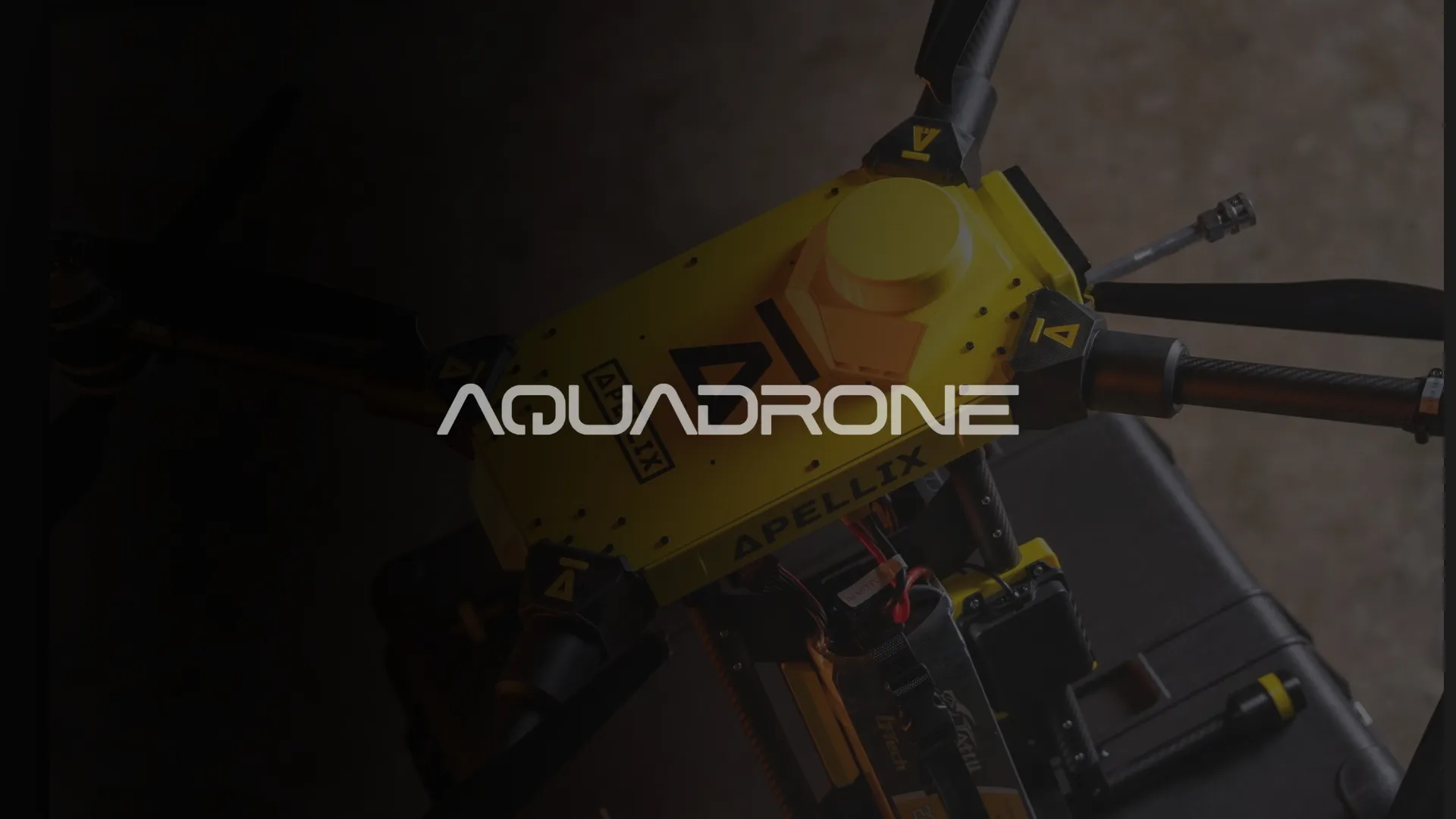
The next generation of cleaning drones
An in-depth look at the new technologies making cleaning work faster, safer and more cost-effective

Drones are changing the rules of building cleaning
Cleaning methods at height are changing, and drones are leading the way
The cleaning revolution: how drones are changing the rules of building maintenance
The shift from traditional cleaning methods to smart solutions in the air