
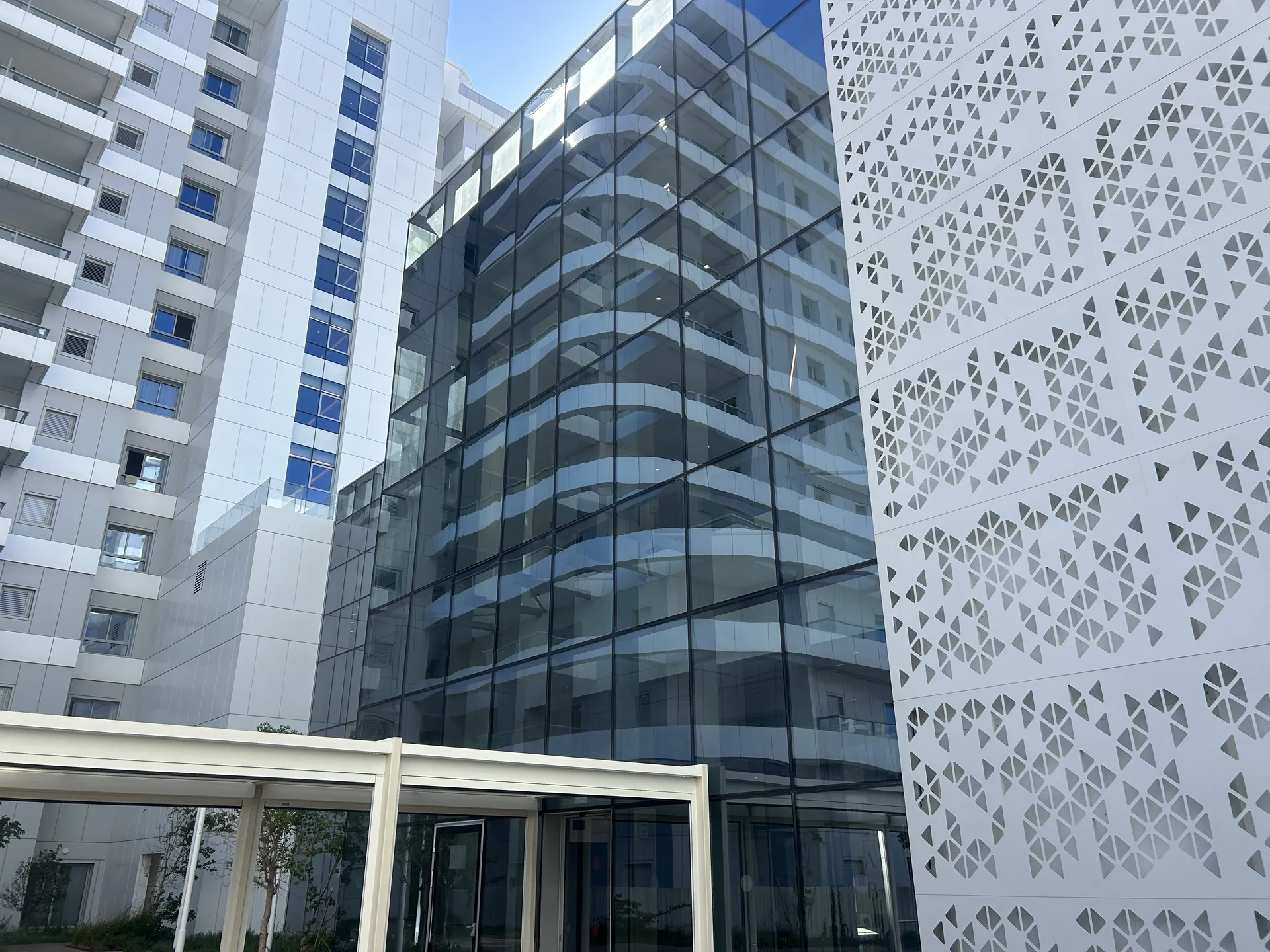
Aluminium and Alucobond cladding cleaning: what manufacturers recommend and how to protect the paint
Aluminium and Alucobond cladding cleaning: what manufacturers' guidelines say about detergents, water pressure and working hours, and how to plan cleaning that doesn't damage the painted finish.


aluminium cladding cleaning looks simple: a smooth, non-porous surface with the dirt sitting on the outside. In practice, aluminium panels, and especially composite panels such as Alucobond, are painted, sensitive surfaces. The wrong cleaning product, an abrasive sponge or washing at the wrong time of day can damage the shine and finish, and that damage stays on the facade.
In this article we explain what this kind of cladding is made of, what manufacturers recommend in their cleaning guidelines, and how to plan cleaning of an aluminium facade on an office building, shopping centre or residential building without damaging the material. We also go through the signs that it's time to clean, and what to find out before booking, so the quote you get fits your facade rather than a generic one. At the end you'll find answers to common questions.
What aluminium cladding is made of
Most aluminium facades on modern buildings are made of composite panels: two thin sheets of aluminium with a core between them. "Alucobond" is actually the trade name of one brand, but in Israel it has become a generic term for all panels of this type. The panel surface is almost always coated with a factory finish: paint, anodising, a brushed finish or a mirror finish. What you are actually cleaning is this finish, so it's what determines what is and isn't allowed.
Why the finish matters
A painted finish is highly weather-resistant, but not abrasion-resistant. Scrubbing with steel wool, abrasive paste or a stiff brush leaves fine scratches that change how the panel reflects light. Close up you can't always see it, but from a distance, in sunlight, the facade looks uneven.
What manufacturers' guidelines say
Panel manufacturers publish cleaning and maintenance guidelines, and it's worth knowing them before you book. For example,The Alucobond cleaning guide (in English) sets out a few clear principles:
- Don't abrade the finish. Don't use wire brushes, steel wool, sandpaper, abrasive pastes or similar tools. Use a sponge, soft cloth or soft-bristled brush.
- Avoid high-pressure washing. The guide recommends avoiding pressure washing so as not to damage the panels and the cladding system. That's why on panels like these we only wash at gentle, low pressure, in line with the manufacturer's guidelines.
- Test on a small area first. Start with the mildest product, and move to a stronger one only if the mild one doesn't work.
- Don't leave cleaning product on the surface. Product left on the panel for too long can damage the shine.
- Work in the shade. It's recommended to clean the shaded side of the building, ideally on a mild, overcast day. For some finishes, the guide explicitly warns against cleaning hot panels, because cleaning products become more aggressive at high temperatures.
- Remove construction residue promptly. Concrete and cement run-off can stain painted metal surfaces and should be removed as early as possible.
- Time it to the surroundings. According to the guide, frequency depends on the building's location and local pollution, and one rule of thumb is to clean the panels when the windows are cleaned.
Different manufacturers publish different guidelines, so the most important rule is to check the guidelines for the panel installed on your building. If you don't know who the manufacturer is, the information can usually be found in the building's handover documents or obtained from the contractor.
Aluminium cladding cleaning: dos and don'ts
| Action | Recommendation | Reason |
|---|---|---|
| Mild cleaning agent and rinsing with water | Recommended | Removes dust and dirt without attacking the finish |
| Sponge or soft brush | Recommended | Doesn't scratch the paint |
| Steel wool, abrasive paste, wire brush | Don't | Scratches the finish and damages the shine |
| Acetone and concentrated acidic products | Don't | Can damage the paint and finish |
| Cleaning a hot panel in direct sunlight | Avoid | The cleaning product dries quickly and becomes more aggressive |
| High-pressure washing | Avoid; wash at gentle, low pressure | According to the manufacturer's guidelines, pressure washing can damage the panels and the cladding system |
| Concrete and cement residue | Remove early | It can stain painted metal |
Signs that cladding needs cleaning
On aluminium cladding, dirt looks different from how it looks on stone. Look out for a few signs:
- Dark vertical streaks running down from panel joints, window sills or the roof. This is rainwater carrying dirt along the same path every time.
- A dull, greyish tone instead of the original shine. This is usually a layer of dust and soot, and sometimes the start of paint chalking.
- A white powder left on your finger when you touch a ground-floor panel. This is a sign of chalking, and the guide mentioned above lists gentle cleaning as a treatment for it.
- Pigeon droppings on horizontal strips and canopies. They're acidic, and it's best not to leave them on the paint for long. See also our article on removing pigeon stains.
How we approach an aluminium facade
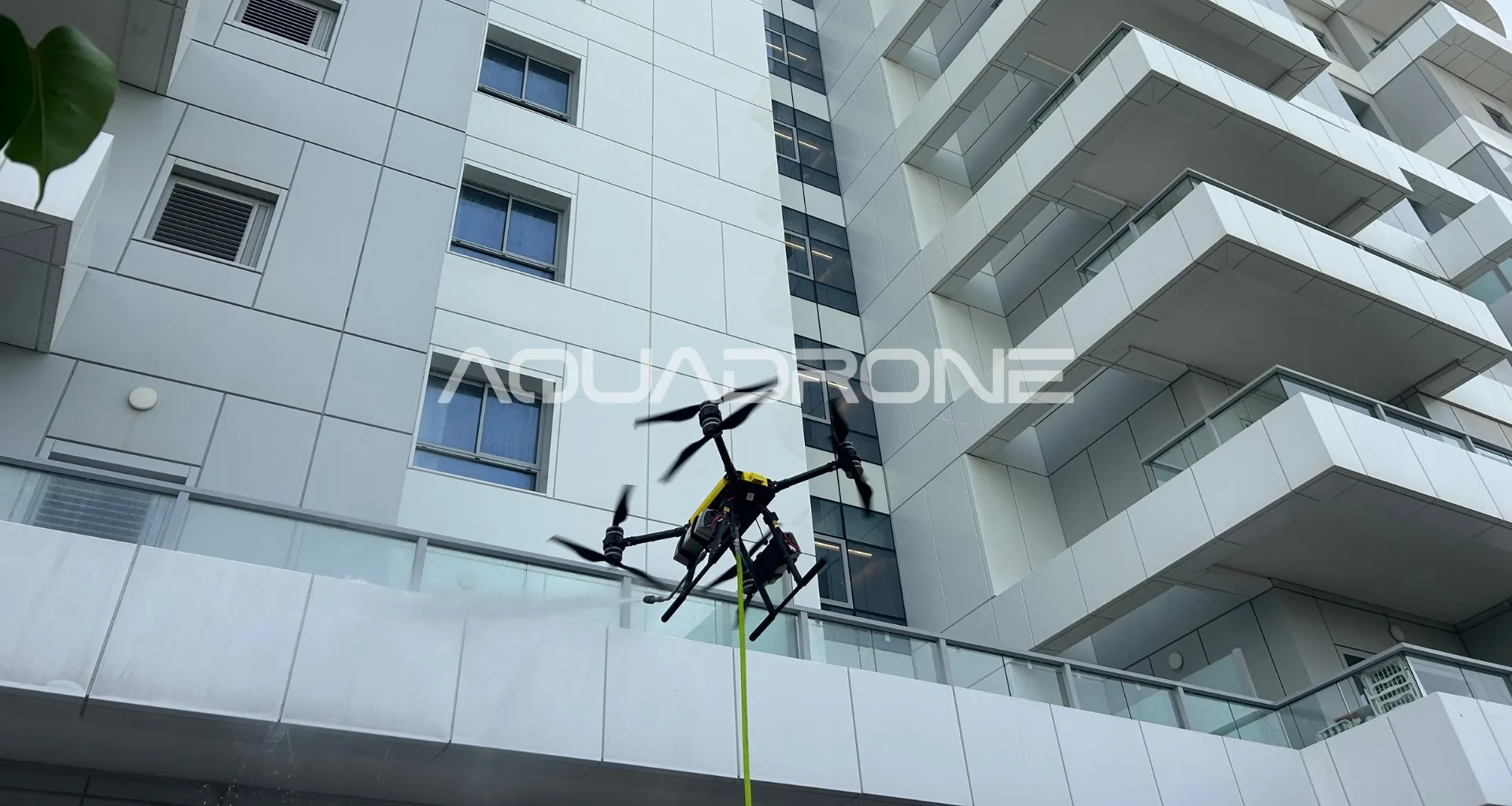
Drone cleaning is touch-free. There's no scrubbing, so there's no risk of scratches from cleaning tools. The final rinse on composite panels such as Alucobond is also done at gentle, low pressure, in line with the manufacturer's guidelines. This is how the process works:
- Identifying the panel type and finish. We ask to check the maintenance instructions for the specific panel: painted, anodised, brushed or mirror.
- Adapting the method. In line with the guidelines, we adapt the cleaning agent and washing method, and on composite panels washing is done at gentle, low pressure.
- Choosing the time. To avoid working on hot panels in direct sunlight, we plan the work for times when the side being cleaned is in shade. Work can also be done after hours.
- Spraying and rinsing without delay. We spray an environmentally friendly cleaning agent and rinse quickly so the product doesn't stay on the surface. Rinsing is done at gentle, low pressure with reverse-osmosis purified water, which dries without leaving water spots. We explained this in our article on reverse osmosis window cleaning.
- Summary report with photos. At the end of the work you get documentation of the facade.
What cleaning won't fix
- Concrete and paint residue. The drone doesn't remove it. On aluminium cladding it needs careful manual treatment, which we offer as a separate service.
- Faded and chalking paint. If the finish has faded or started to chalk, cleaning will remove the chalky layer from the surface but won't bring back the original colour.
- Damaged panels. A dented, peeling or loose panel needs cladding repair work, not cleaning.
What to find out before booking
Before booking cleaning for an aluminium facade, it helps to have answers to a few questions. They help you get an accurate quote and avoid surprises:
- Who manufactured the panels, and what's the finish? If there's a maintenance document from handover, attach it.
- Is the building still under the cladding contractor's warranty? If so, check whether the warranty includes requirements on the cleaning method.
- Which facades are in shade, and at what times? This affects the planning.
- Is there concrete, paint or stickers left on the facade from construction that will need separate manual treatment?
Aluminium cladding and glass on the same facade
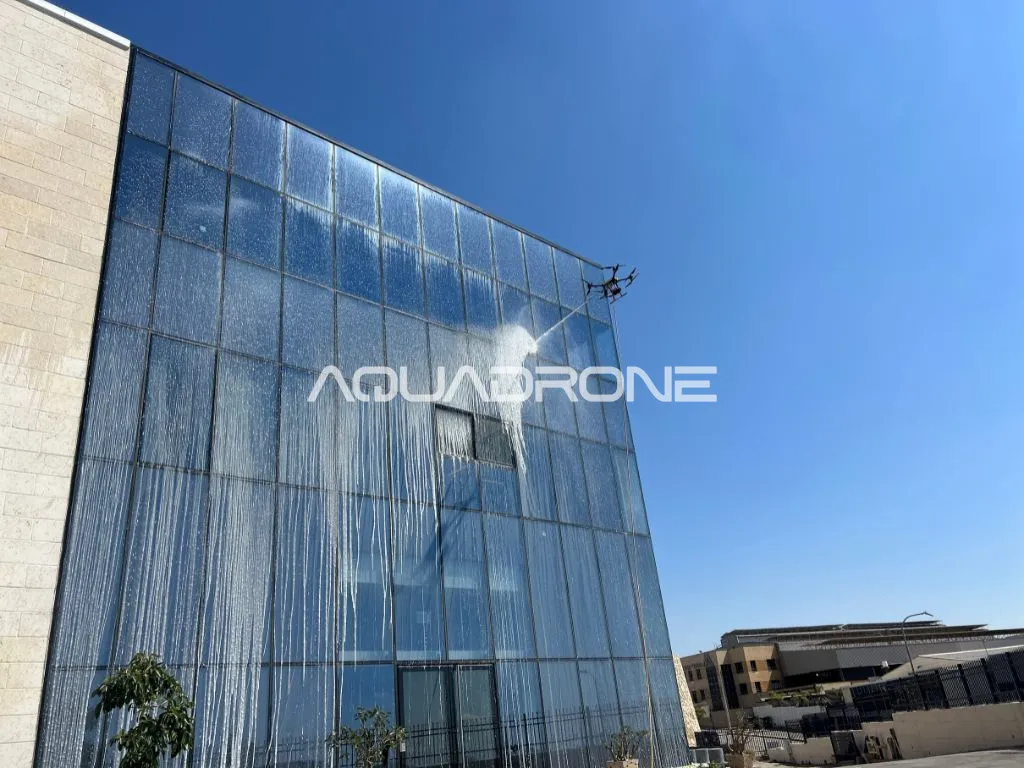
On many buildings, aluminium cladding is combined with glass curtain walls. This also fits the recommendation to clean the panels when the windows are cleaned, because both can be dealt with in the same job, on the same day and with the same notice to residents or building staff, instead of arranging two separate jobs. We wrote about the glass in our article on Drone curtain wall cleaning, and about shop, shopping centre and office facades in our article on Commercial facade cleaning. Before booking, it's worth going through the questions in our article on How do you choose a facade cleaning company, where we also explain how we answer each one.
FAQs
Can Alucobond be pressure washed?
Not at high pressure. Manufacturers such as Alucobond recommend avoiding pressure washing, so on composite panels we wash at gentle, low pressure, in line with the manufacturer's guidelines. Before the work, we also check the maintenance instructions for the specific panel and adapt the cleaning agent to them.
Which products must not be used on aluminium cladding?
Abrasive products and tools, such as steel wool, wire brushes and abrasive pastes, and acetone. Concentrated acids aren't suitable either. Use a mild cleaning agent and water, and test on a small area first.
Why shouldn't aluminium cladding be cleaned in the sun?
On a hot panel, the cleaning product dries quickly and becomes more aggressive, and can leave marks. So it's best to work when the side being cleaned is in shade, or on an overcast day.
Does the drone remove concrete residue from cladding?
No. Concrete and paint residue needs manual treatment, which we offer separately. On painted metal, it's best removed as early as possible.
Will cleaning restore the cladding's original colour?
Cleaning removes dirt, dust and the chalky layer from the surface, which usually improves the appearance a great deal. But if the paint has faded, cleaning won't bring back the original colour.
How often should aluminium cladding be cleaned?
It depends on the building's location and local pollution. A rule of thumb in one manufacturer's guidelines is to clean the panels when the windows are cleaned.
Got a facade with aluminium cladding? Send us a video and the panel details, if you have them, and we'll check which method suits it.
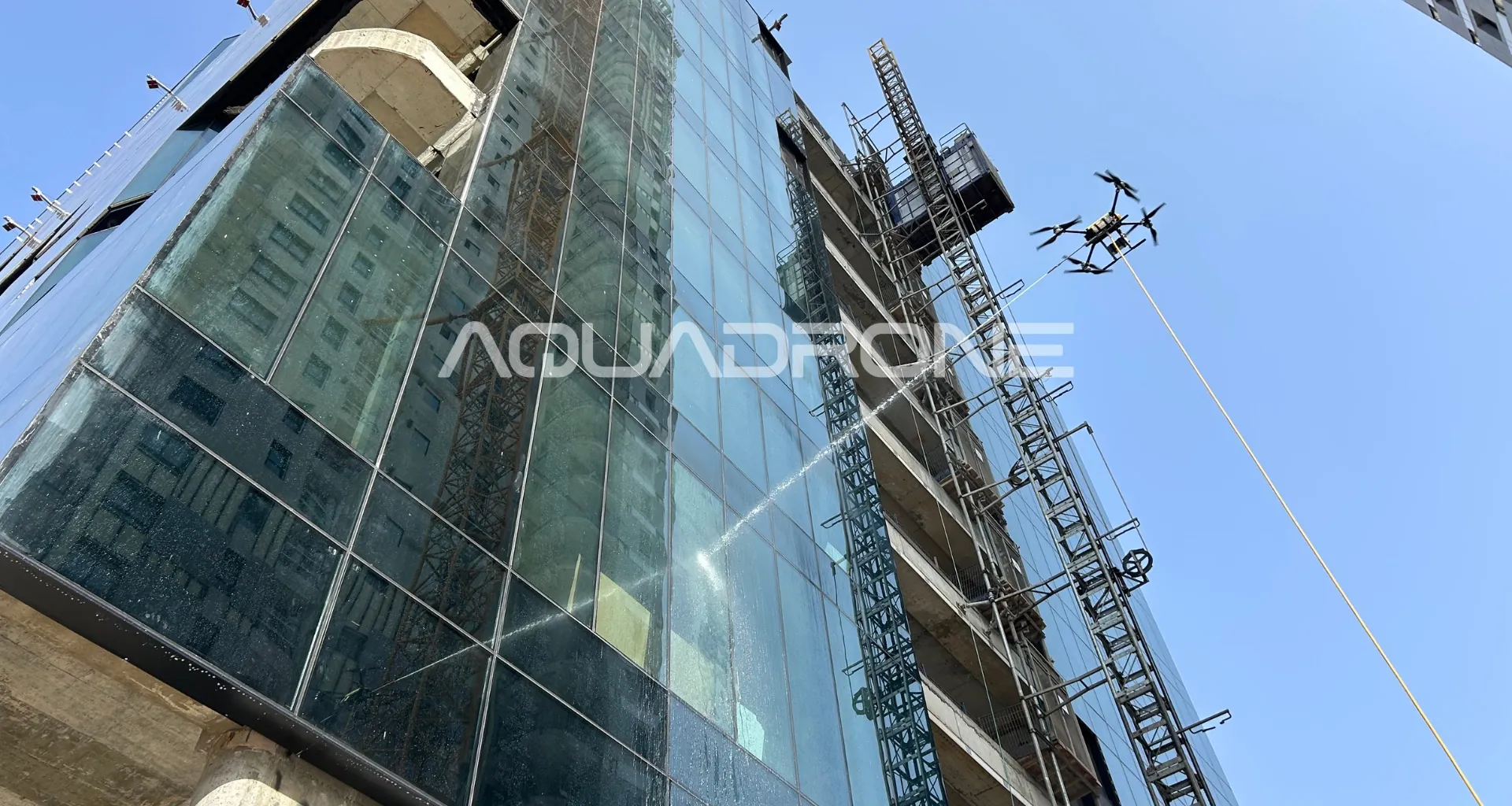
New building facade maintenance: why drone cleaning from handover pays off
New building facade maintenance starts on handover day. How drone cleaning protects glass, aluminium and stone, avoids scaffolding and helps prevent costly repairs over the years.
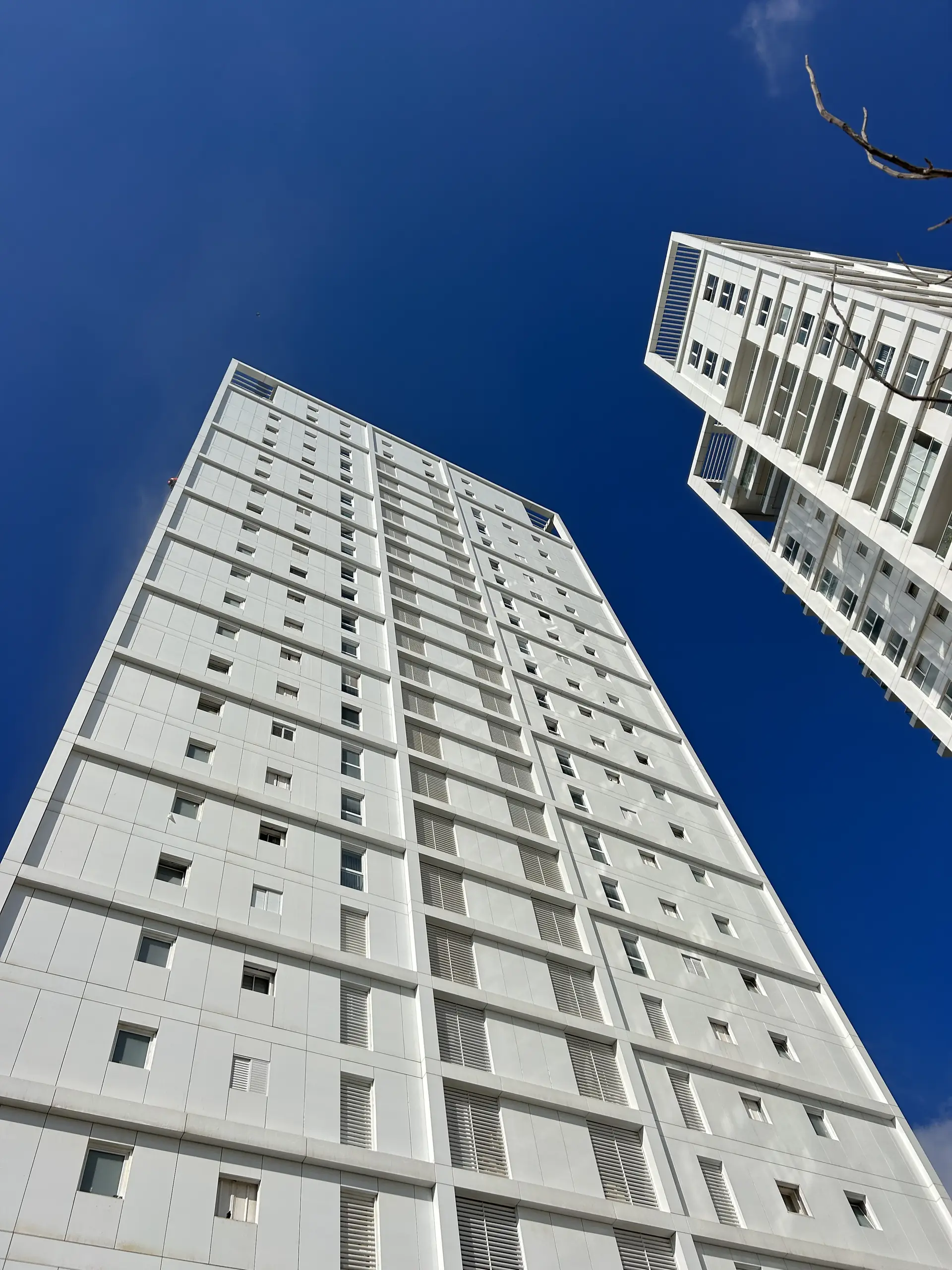
Alucobond cleaning: how to clean composite panels without damaging the finish
Alucobond cleaning needs a gentle touch: what makes panels look dull, why we work at low pressure with detergent that is rinsed off quickly, how joints are handled and how a drone works on these facades.
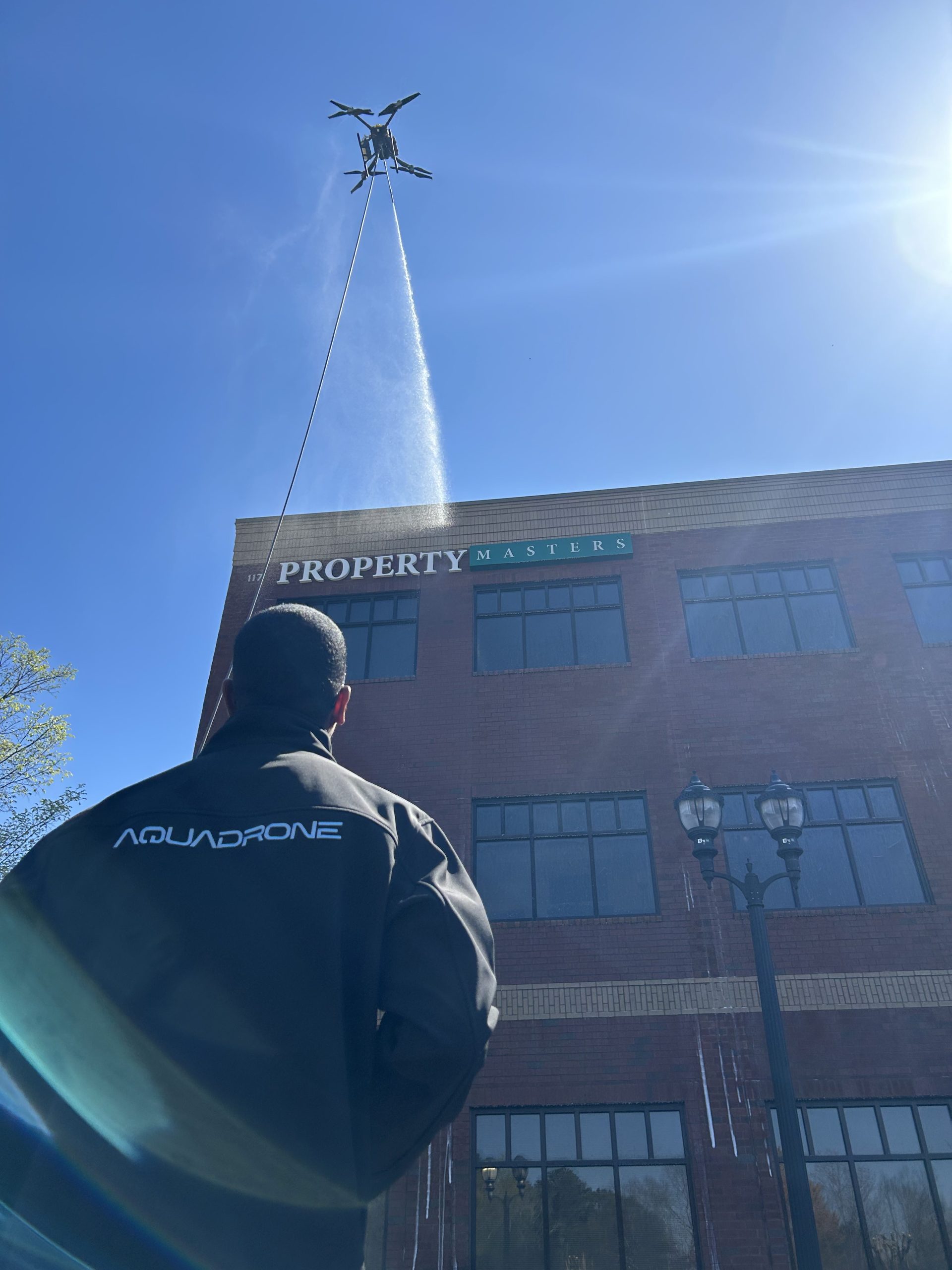
How to choose a facade cleaning company: 10 questions to ask before you sign
How do you choose a facade cleaning company? A checklist of 10 questions to ask before signing, covering method, scope of work, insurance, exclusions and documentation, plus warning signs to look out for.
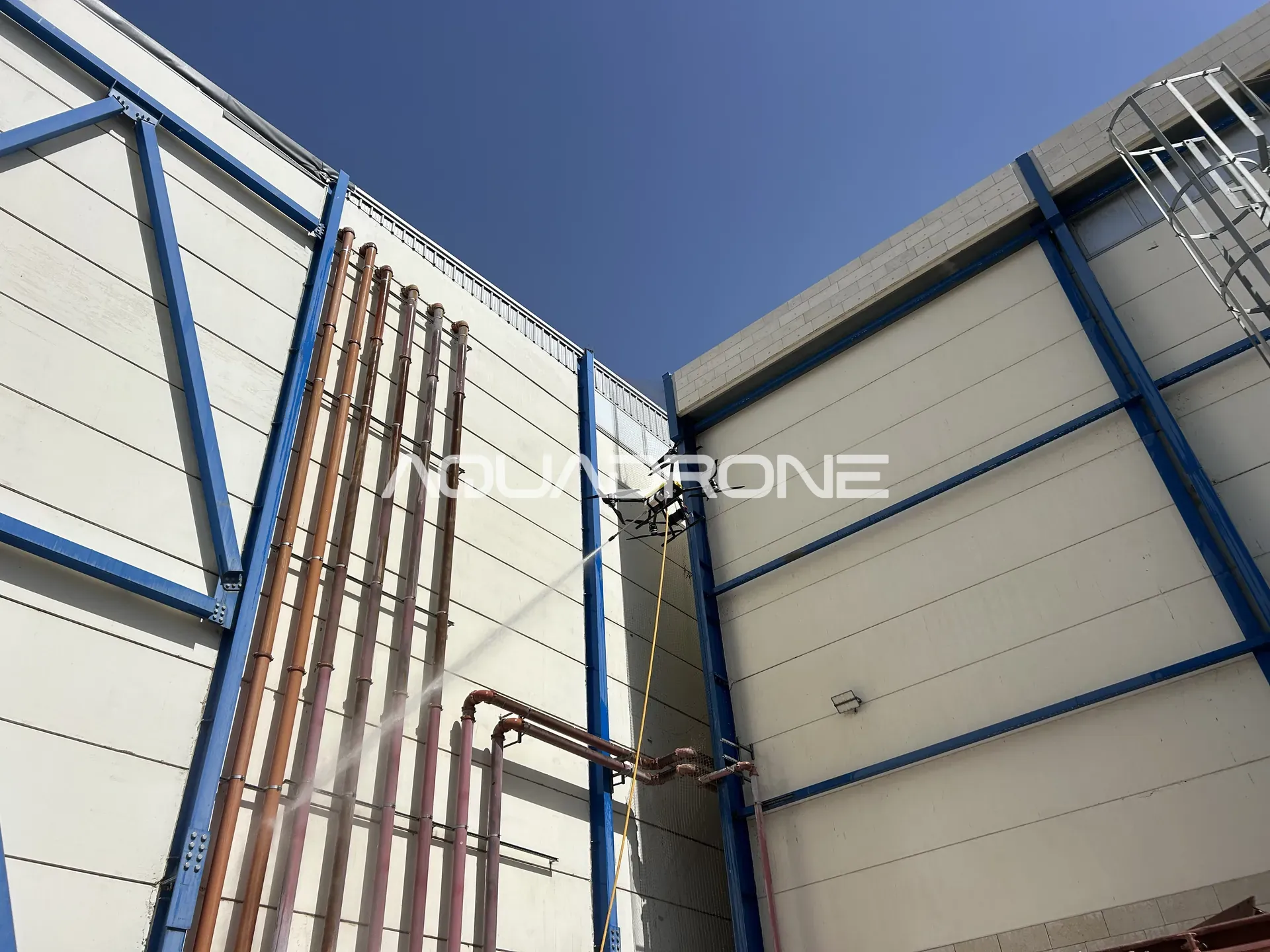
Drone factory facade cleaning: how cleaning protects the building from wear and cracks
Drone cleaning of factory, warehouse and logistics centre facades: what builds up on the envelope, how soot, mould and salts contribute to wear and cracks, and how to clean without scaffolding or disrupting operations.
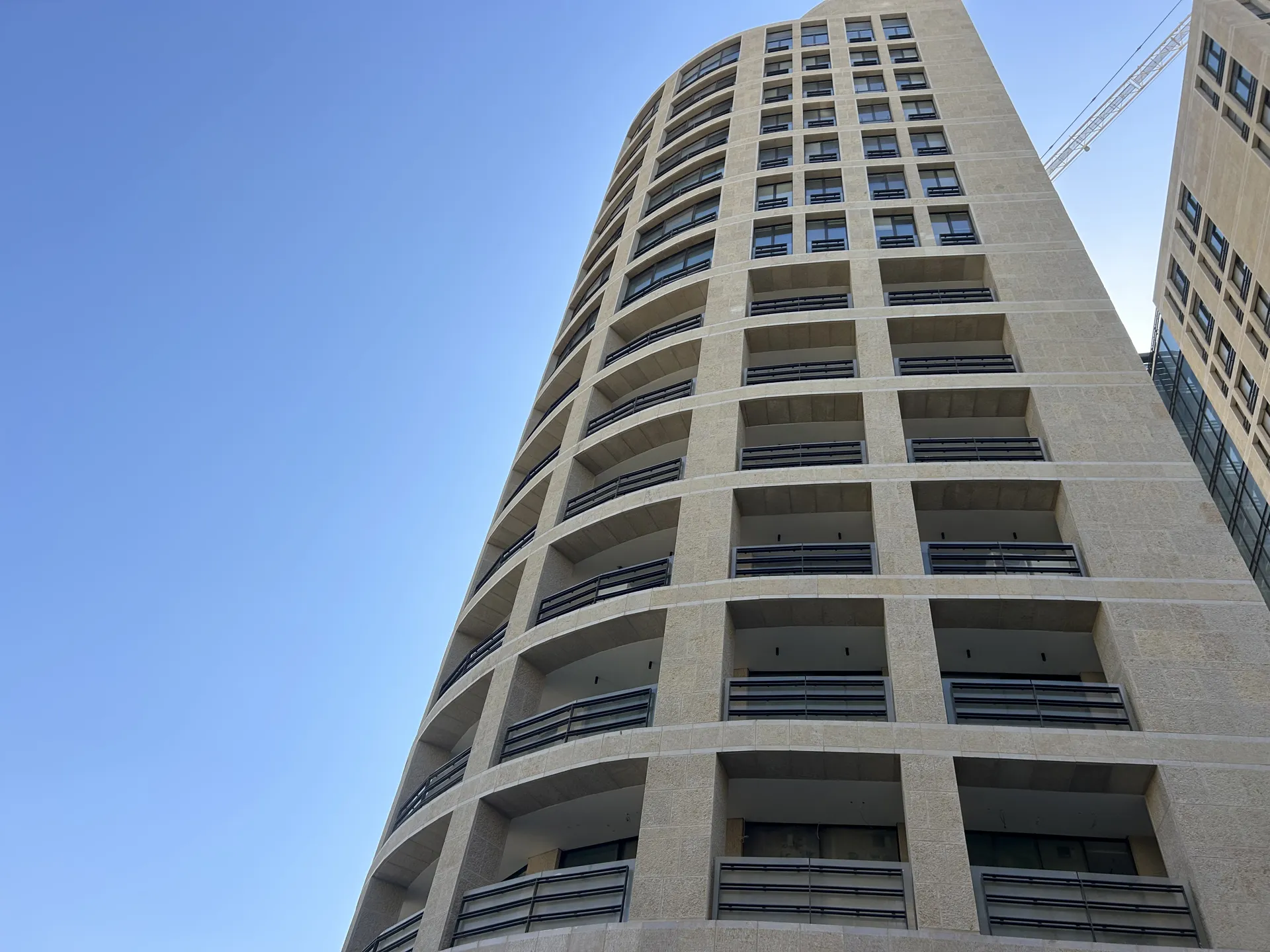
Stone facade cleaning: how to clean natural stone without damaging it
Stone facade cleaning calls for a gentle method: why acid and high pressure harm natural stone, how drone cleaning works without touching the stone, and what to check before you start.
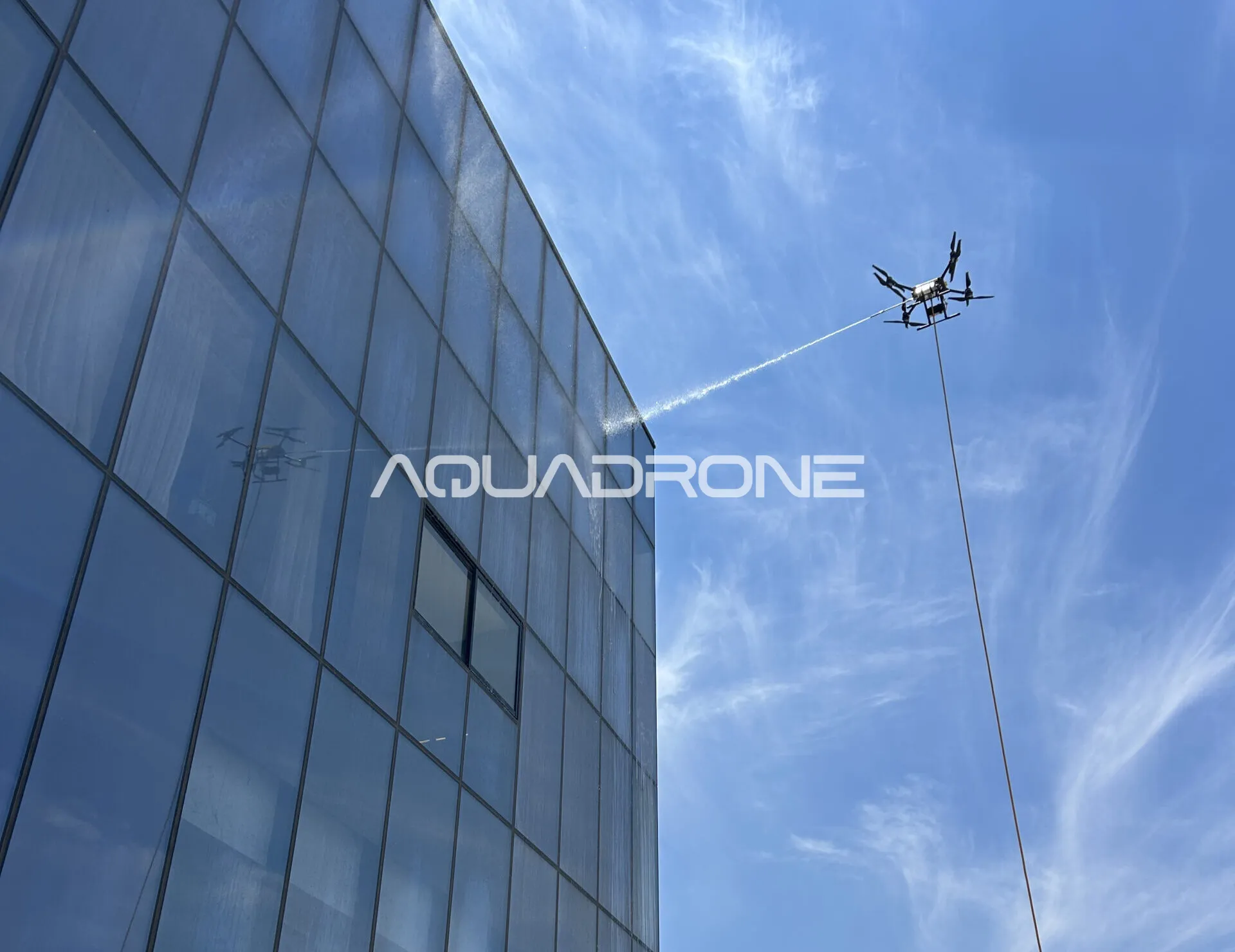
Commercial facade cleaning: why shops, malls and offices can't afford to neglect it
How a business's exterior influences a customer's decision to walk in, before they even step inside
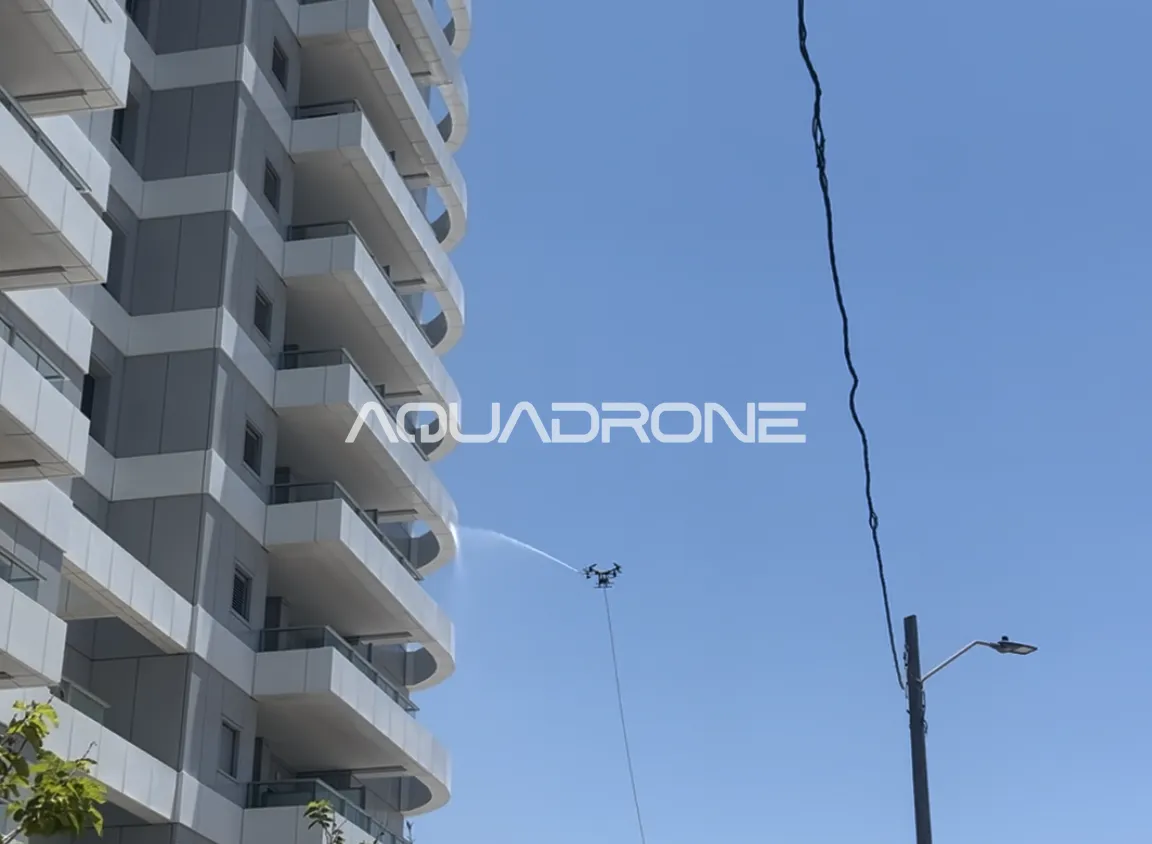
Cleaning inaccessible areas of buildings: a solution that finally reaches everywhere
Why part of the facade always gets "forgotten" in traditional cleaning, and how to fix it
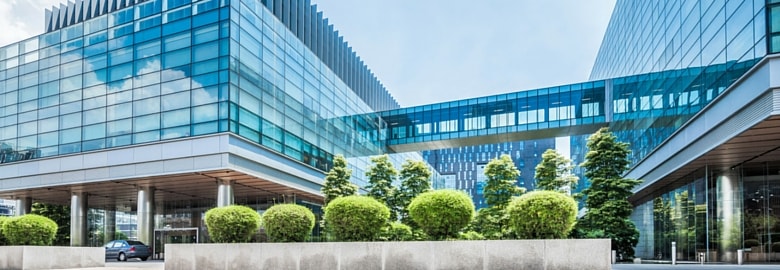
Post-construction facade and window cleaning: manual scraping and drone washing before handover
Post-construction drone cleaning is the last and one of the most important stages of any building project. Aquadrone's building cleaning services specialise in cleaning new buildings once construction is complete. Before cleaning, our team manually scrapes hardened concrete, plaster and paint residue off the facade and windows, and then the drone washes the facade and windows with purified water and removes construction dust. […]
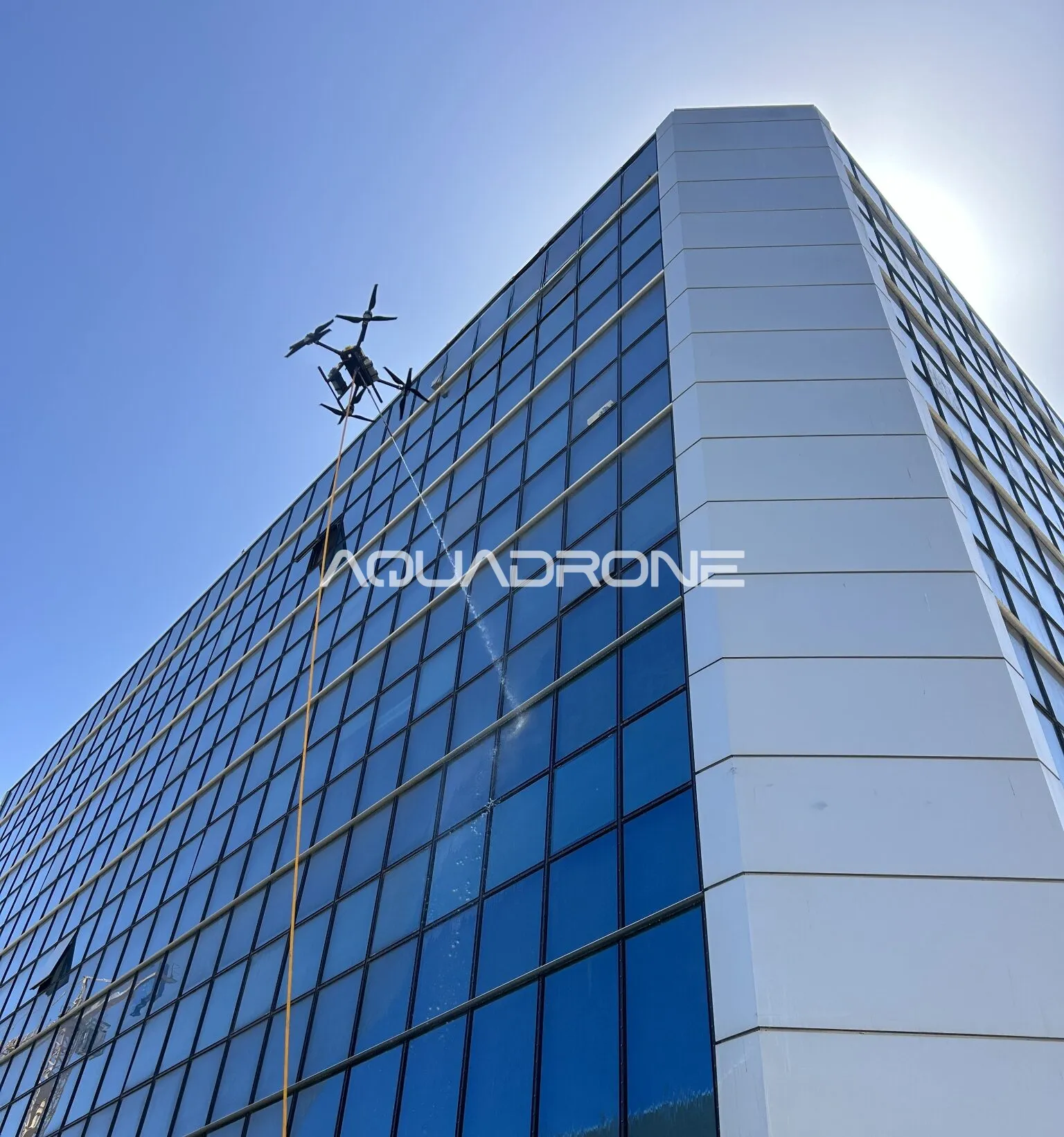
Facade cleaning in Tel Aviv
Professional facade and window cleaning for Tel Aviv and Gush Dan

Drone roof cleaning
A safe, efficient solution for cleaning roofs of every type and size

Drone cleaning of bridges and infrastructure
An advanced solution for cleaning infrastructure and complex structures at any height
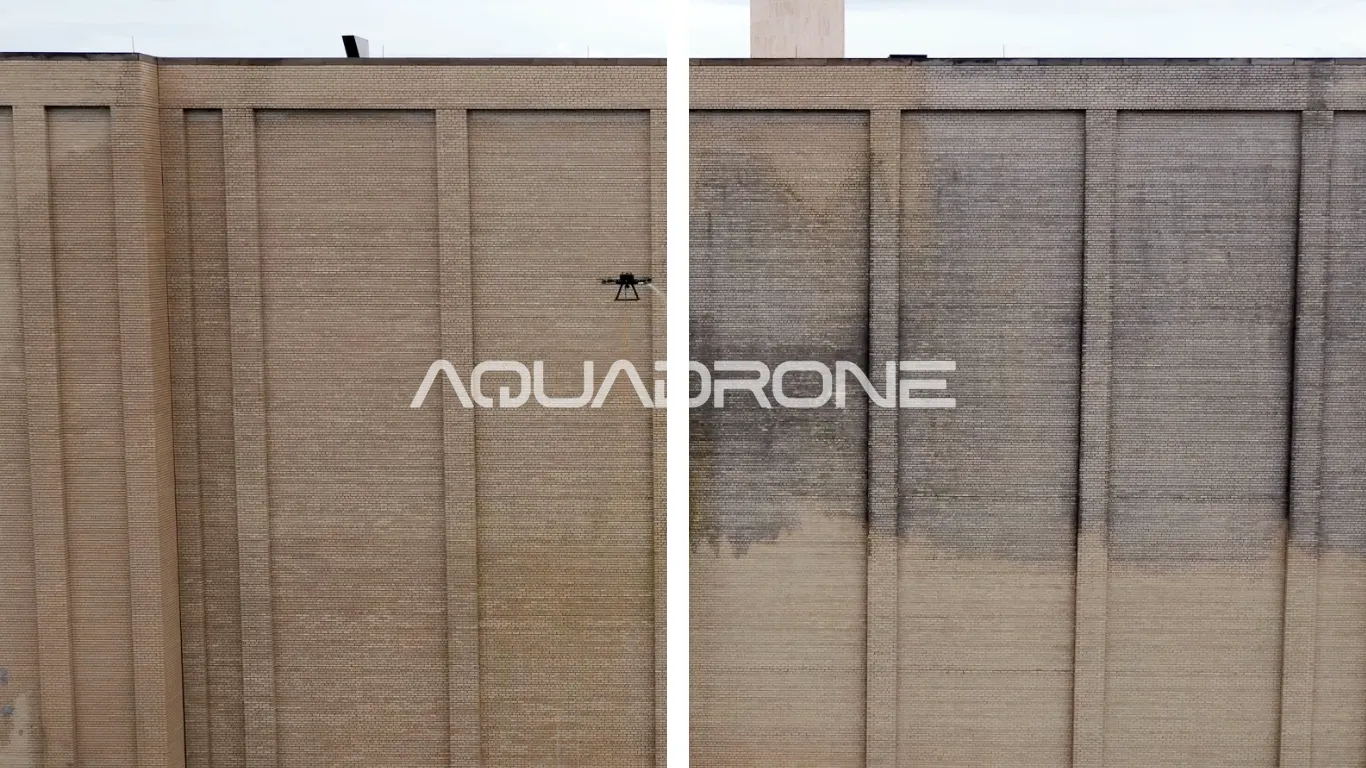
Drone brick cleaning and mould removal
A professional solution for removing mould, stains and stubborn dirt from brick facades
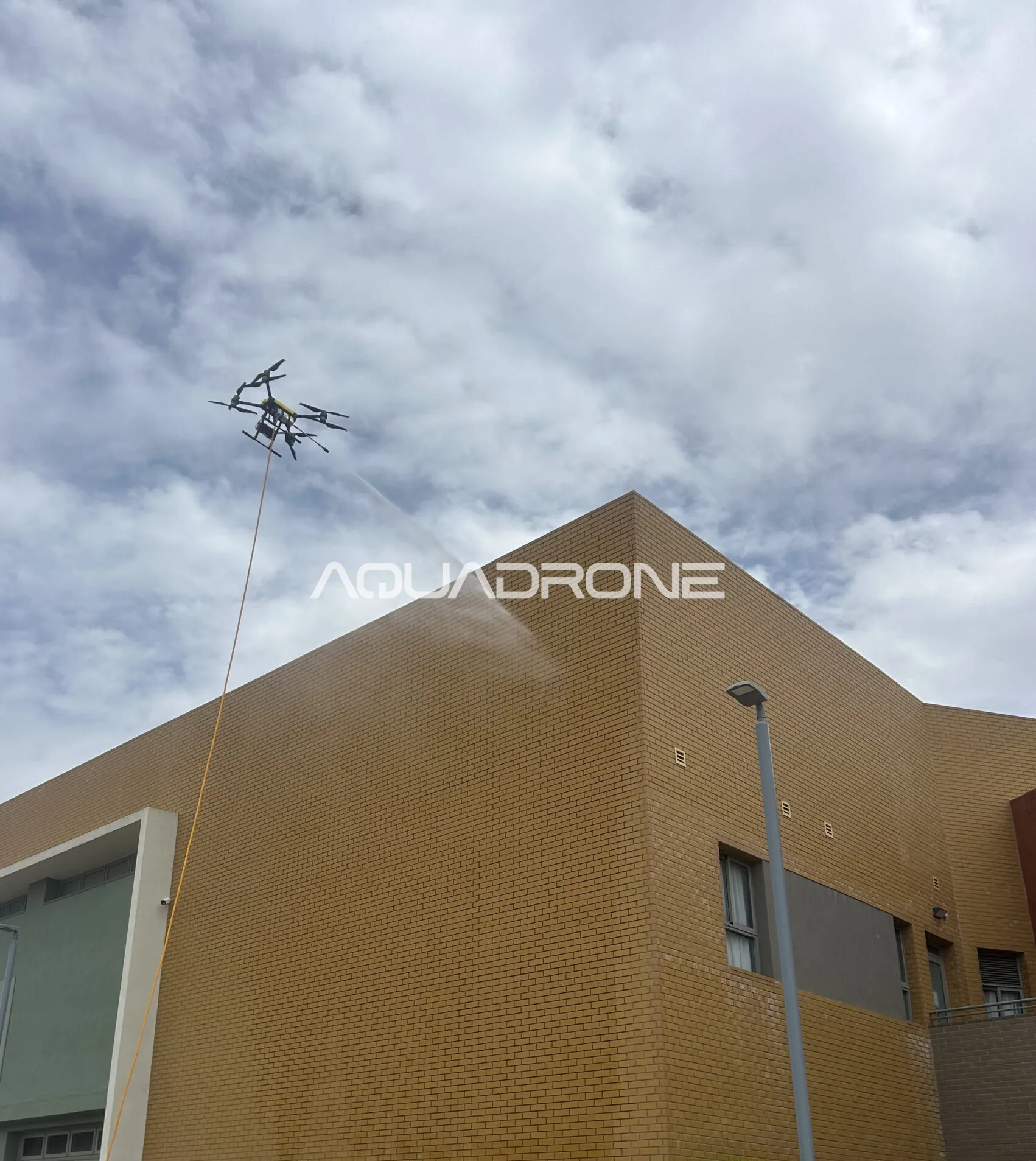
Building cleaning without scaffolding
How drones are replacing scaffolding and rope access for cleaning buildings at height
Facade stains: why dirt, limescale and pigeon droppings get harder to remove over time
Facade stains get harder to remove with every month. Why limescale, soot and pigeon droppings etch into the facade, and how early maintenance prevents permanent stains.
Drone high-rise window cleaning
Drone high-rise window cleaning: an advanced, safe solution
When should you clean your building facade? 6 signs it's time
When should you clean your building facade? The signs it's time: dark streaks under windows, limescale on glass, blackened stone and pigeon droppings, and how to clean without disruption.
Why building cleaning matters
The signs that it's time to clean, and why putting it off only makes treatment more expensive
Drone solar panel cleaning
The right maintenance for maximum output

The direct link between facade maintenance and property value
A look at how smart maintenance protects a property's value.