
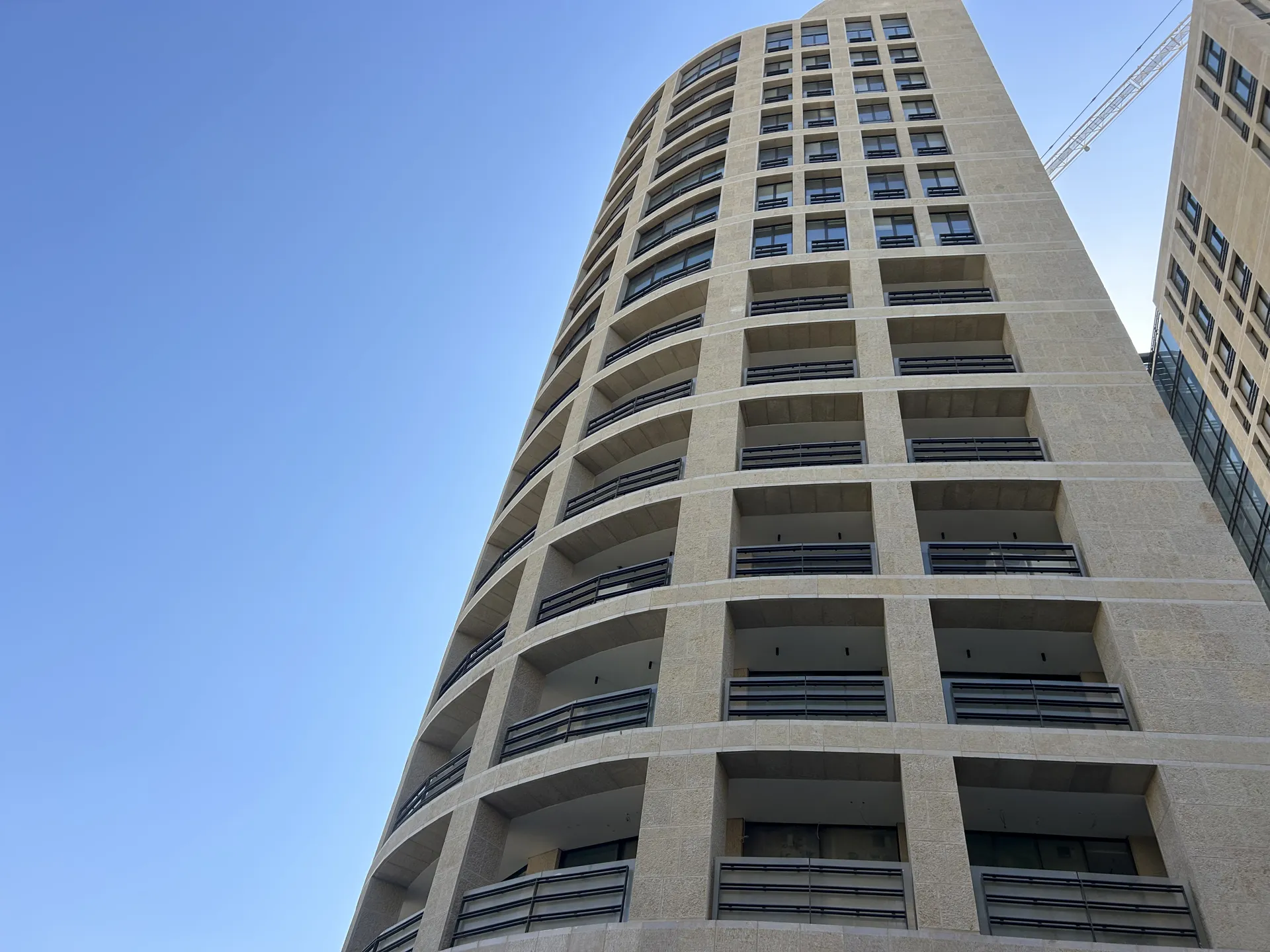
Stone facade cleaning: how to clean natural stone without damaging it
Stone facade cleaning calls for a gentle method: why acid and high pressure harm natural stone, how drone cleaning works without touching the stone, and what to check before you start.


stone facade cleaning is one of the most sensitive jobs in building maintenance. Stone looks hard and durable, but most types of stone are porous: they absorb water, dust and soot, and react to cleaning products completely differently from glass or aluminium. The wrong cleaning can leave stains, wear the stone surface or damage the pointing between the stones, and sometimes that damage can't be undone.
In this guide we explain why a stone facade gets dirty the way it does, which cleaning methods suit it and which are best avoided, and how drone cleaning fits into maintaining a stone facade on a residential building, office building or institution, without scaffolding and without workers hanging outside residents' windows.
Why a stone facade gets dirty differently
On a smooth surface like glass, dirt sits on top. On stone, it gets inside: water absorbed into the stone carries dust, soot and pollutants with it, and when it evaporates the dirt stays in the pores. That's why a stone facade doesn't get dirty evenly. It looks like a map of the way water flows over it.
Dark streaks below sills and projections
Rainwater that collects on a window sill, cornice or parapet runs off at a fixed point and carries dirt along the same path every time. That's how the dark streaks you see below windows form. These stains are different from even dirt and usually need more targeted treatment.
General darkening from soot and dust
On buildings near main roads, industrial areas or car parks, soot and fine dust build up over the whole facade. The stone loses its original colour and looks grey and tired, even when there's no single stain you can point to.
Greenish or black stains in shaded areas
On the side of the facade that gets no sun, and in areas that stay damp for a long time after rain, algae, mould and lichen can develop. They cling to the stone's pores and come back if they aren't dealt with in time. We wrote more about this in our article on brick cleaning and mould removal.
Pigeon droppings on cornices and sills
Pigeon droppings aren't just unsightly. They're also acidic, and if left on stone for a long time they can leave a mark. We wrote about dealing with them in our guide toremoving pigeon stains and mould from a house facade.
Stone facade cleaning: dos and don'ts
The accepted principle in building conservation is to choose the gentlest means that still does the job. That's how the rule is put in the US National Park Service guidance on cleaning masonry buildings (Preservation Brief 1), which also notes that acidic cleaners can seriously damage acid-sensitive stones such as limestone and marble, and that abrasive cleaning usually removes part of the stone surface as well (full document). Jerusalem stone, the well-known local stone used for building and cladding, is mainly limestone or dolomitic limestone (according to Wikipedia), so this rule is very relevant here too.
| Method | Suitable for a stone facade? | Why |
|---|---|---|
| Acid or acidic limescale remover | No, on limestone and marble | Acid reacts with the calcium in the stone and eats away the surface |
| Sandblasting or mechanical abrasion | No, for routine maintenance | Removes the dirt along with a layer of the stone itself |
| High water pressure at close range | Only with care | Too much pressure can wear soft stone and damage the pointing between stones |
| Mild cleaning agent and rinsing with water | Yes | Breaks down dirt and soot without attacking the stone |
| Final rinse with purified water | Yes | Mineral-free water leaves no new deposits as it dries |
These guidelines also explain why it's always worth testing a small area before cleaning a whole facade. Even two stones that look alike can react to cleaning differently.
How drone cleaning works on a stone facade
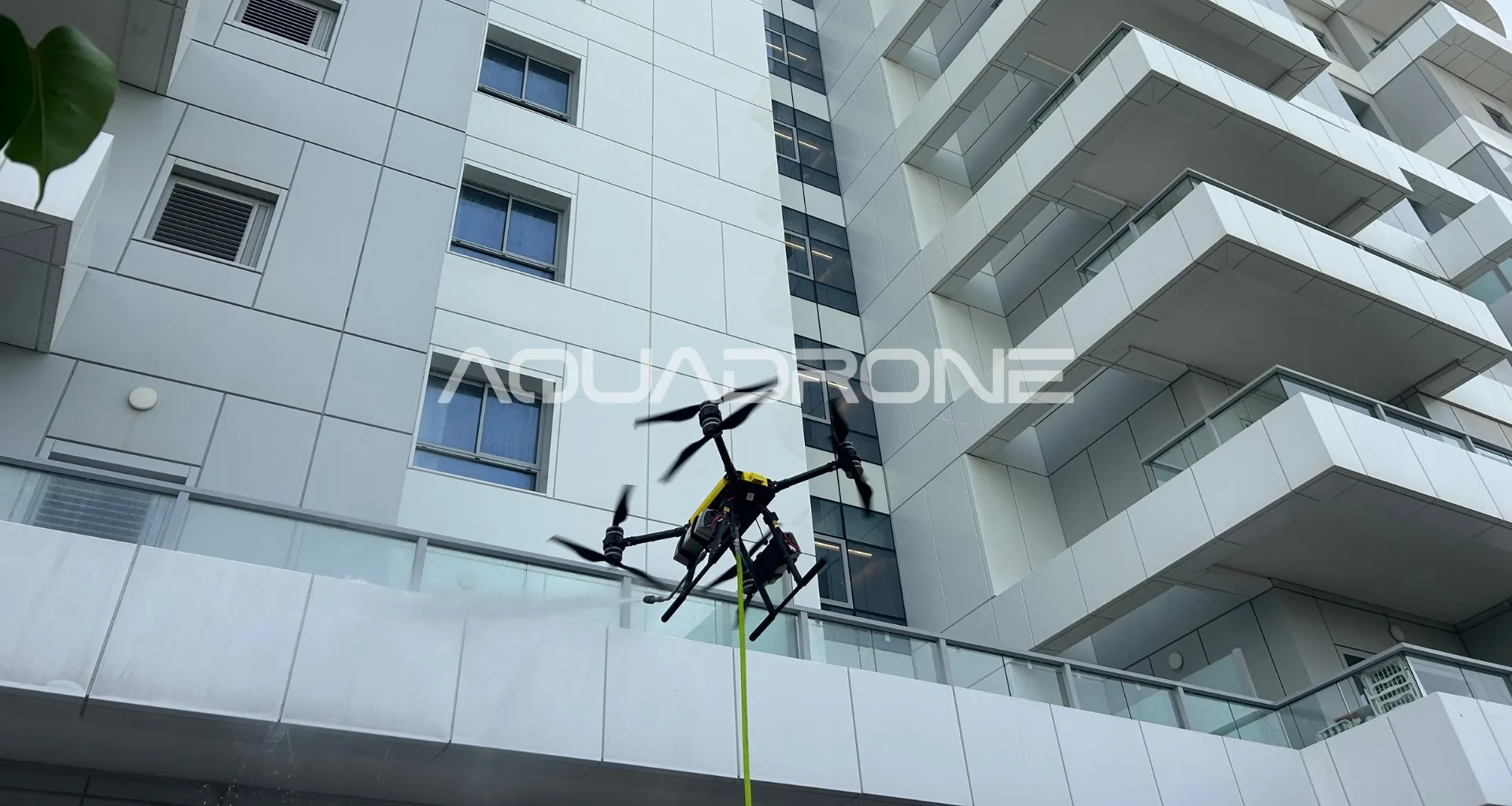
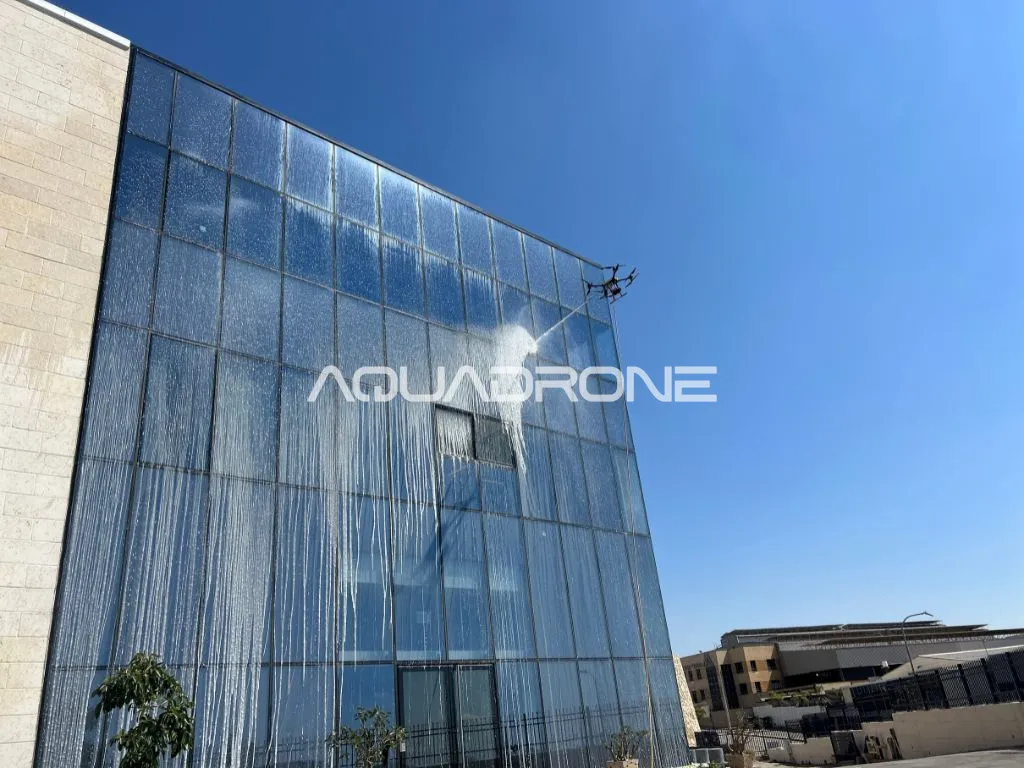
The drone doesn't scrub the stone. It sprays a cleaning agent onto it and rinses it, so there's no mechanical contact with the surface. This is especially important with stone, where aggressive scrubbing is one of the most common ways to cause damage. The process looks like this:
- Preliminary check. We check the type of stone, the condition of the pointing and the type of dirt. If we see loose or cracked stones or crumbling pointing, we say so up front. In that case the problem needs to be dealt with first, and only then cleaned.
- Arranging a date. We set a day and time that suit the building. Work can also be done after hours, to cause as little disruption as possible to residents, staff or customers.
- Spraying an active cleaning agent. A spray system mounted on the drone applies an environmentally friendly cleaning agent to the facade, breaking down dirt, soot and build-up.
- Final rinse with purified water. Rinsing is done with reverse-osmosis filtered water, from top to bottom, so dirt running down doesn't dry again on an area already cleaned. We wrote more about this method in our article on reverse osmosis window cleaning.
- Check and summary report. At the end of the work you get a summary report with photos of the facade, which you can show to residents or management.
For the full guide to the method, including other building types, read our guide to drone facade cleaning.
What cleaning won't do, and what's worth knowing in advance
Realistic expectations save disappointment. There are things no gentle clean is meant to do, and some that need other treatment:
- Deeply absorbed stains. An oil stain, rust from iron or an old stain that has penetrated deep into the stone may lighten without disappearing completely. Working harder to remove it puts the stone at risk.
- White salt efflorescence. When a white deposit appears on stone, it's usually a sign that moisture is passing through the wall and bringing salts with it. Washing removes what you can see, but if the source of moisture remains, the stain can come back.
- Concrete and paint residue. The drone doesn't remove concrete or paint splashes. These are removed by hand scraping, a service we offer separately. In our article on post-construction building cleaning we explained how it works.
- Structural repairs. Replacing stones and repointing are renovation work, not cleaning.
It's also important to remember that the service covers the exterior facade only. It doesn't include cleaning the inner side of balconies, stairwells or the inside of windows.
When to plan cleaning for a stone facade
There's no single interval that suits every building. A building near a busy road, by the sea or in a dusty area will get dirty faster than one on a quiet street. Rather than picking a date on the calendar, look out for the signs: dark streaks below windows, a clear difference in colour between parts of the facade, green growth in shaded areas or a build-up of pigeon droppings. You'll find an organised list of signs like these in our article 6 signs it's time to clean your building's facade.
It's also best not to wait too long. The longer dirt stays on stone, the deeper it penetrates the pores, and the harder it is to remove with gentle methods. We explained this logic in our article on stains on a building facade.
Who is this relevant for?
Drone stone facade cleaning suits residents' committees and management companies in residential buildings, office buildings and institutions, and in general any building where access to the facade is complicated or expensive and where it's important to disrupt routine as little as possible. If you're on a residents' committee and starting to look into it, we've gathered all the steps in our guide tocleaning a shared residential building's facade.
FAQs
Can a stone facade be cleaned with water pressure?
Yes, but with care. Too much pressure at close range can wear soft stone and damage the pointing between stones. With our method, we first spray a cleaning agent that breaks down the dirt, and only then rinse with purified water, so the water doesn't have to "peel" the dirt off by force.
Can acid be used to clean a stone facade?
Not on limestone or marble. Acid reacts with the calcium in the stone and eats away the surface. Jerusalem stone, for example, is mainly limestone or dolomitic limestone, so acidic cleaning products aren't suitable for its routine cleaning.
Does the drone remove concrete and paint splashes from stone?
No. The drone washes off dirt, soot and build-up, but doesn't remove concrete or paint. These are removed by hand scraping, a service we offer separately.
Can drone cleaning damage the pointing between stones?
The drone doesn't scrub the facade, so there's no mechanical contact with the stone or the pointing. If the preliminary check shows crumbling pointing or loose stones, we say so up front, because in that case repairs are needed before cleaning.
How often should a stone facade be cleaned?
It depends on the building's location and how much dirt there is in the area. A building near a main road or by the sea will get dirty faster. It's better to look out for the signs, such as dark streaks below windows or green growth in shaded areas, rather than setting a fixed interval in advance.
What do you get at the end of the job?
A summary report with photos of the facade after cleaning. You can show it to residents, the board or the management company.
Want to know how your facade will look after gentle cleaning? Send us a short video of your facade and we'll get back to you with an initial assessment.
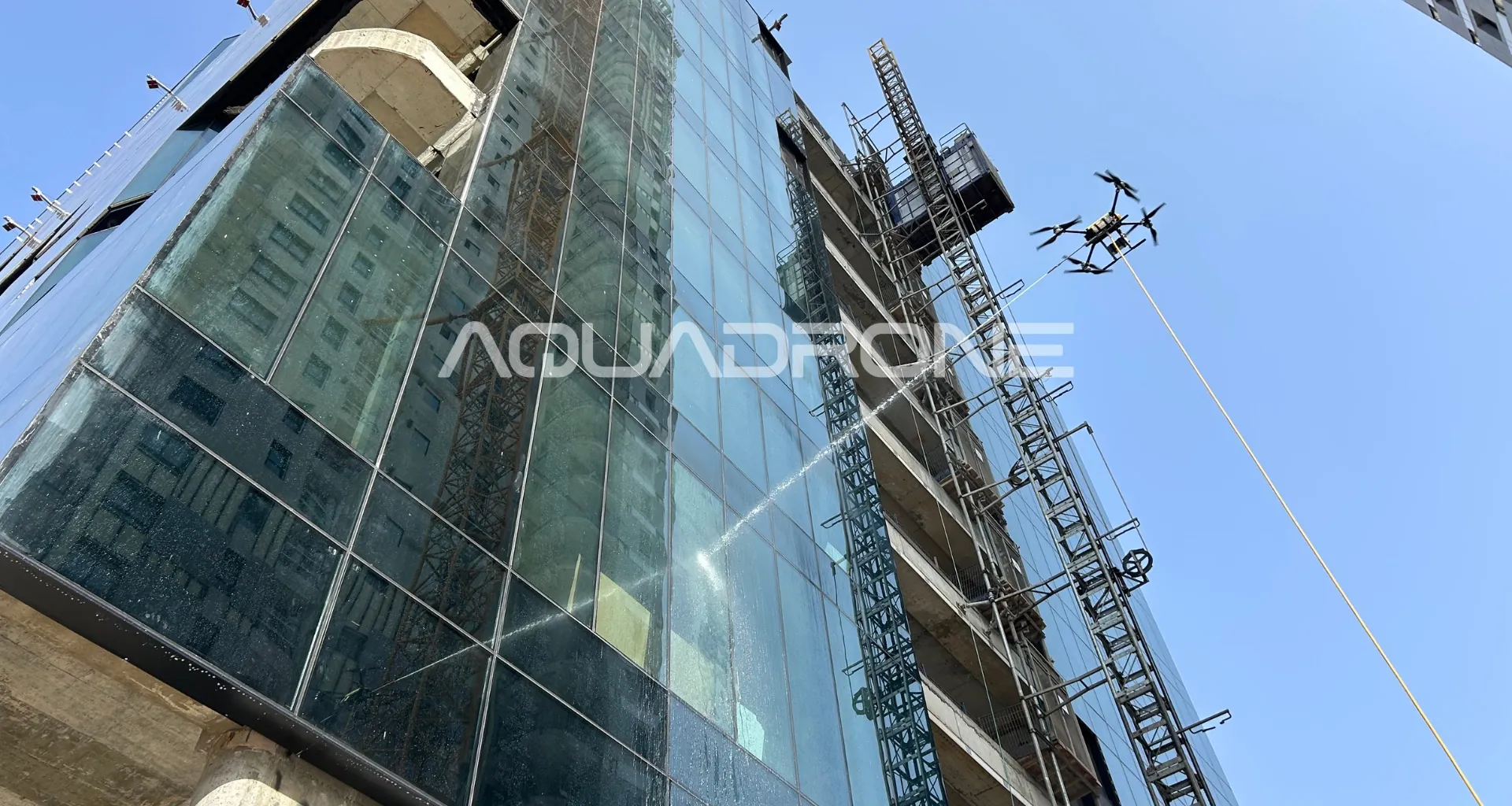
New building facade maintenance: why drone cleaning from handover pays off
New building facade maintenance starts on handover day. How drone cleaning protects glass, aluminium and stone, avoids scaffolding and helps prevent costly repairs over the years.
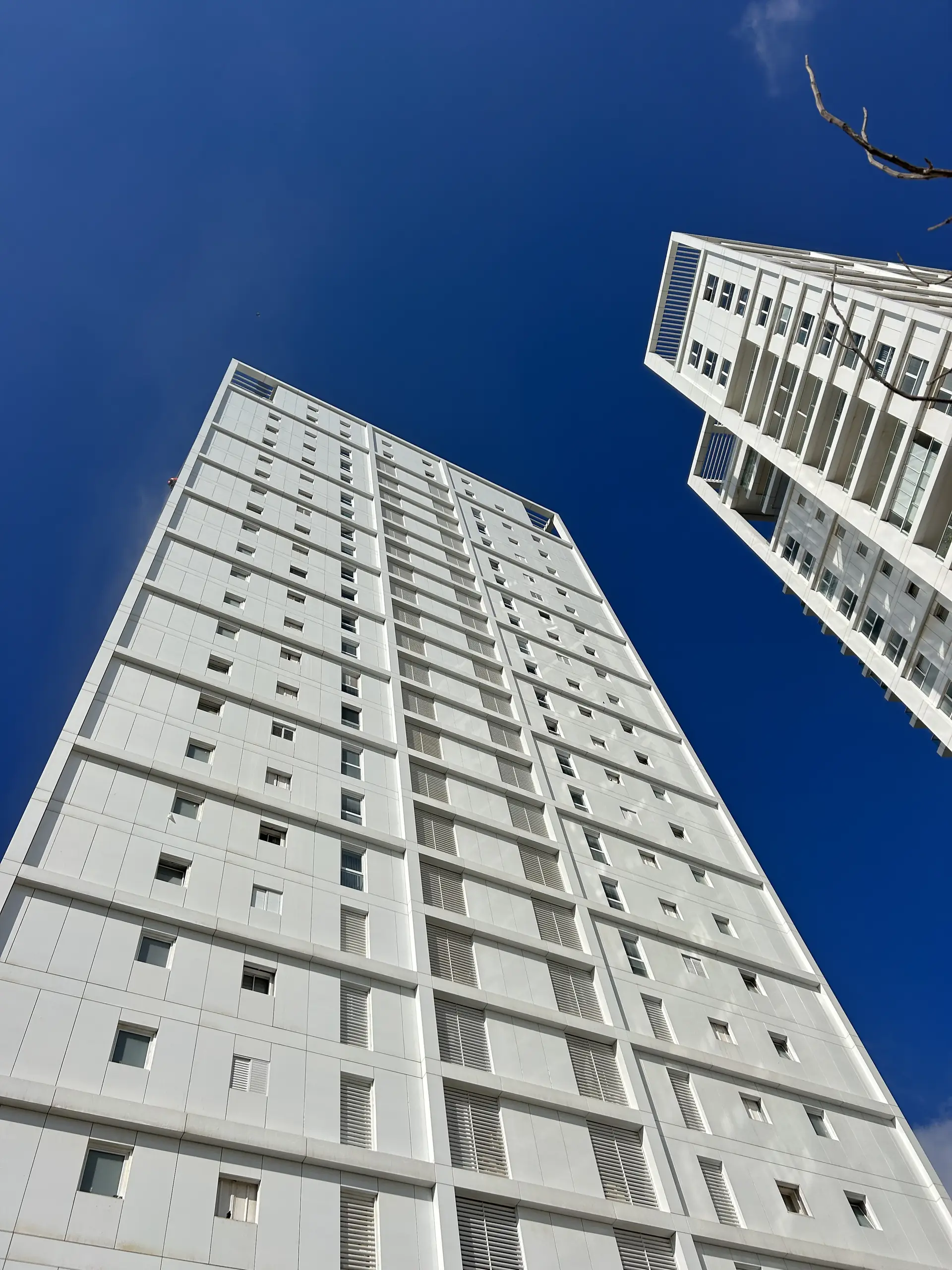
Alucobond cleaning: how to clean composite panels without damaging the finish
Alucobond cleaning needs a gentle touch: what makes panels look dull, why we work at low pressure with detergent that is rinsed off quickly, how joints are handled and how a drone works on these facades.
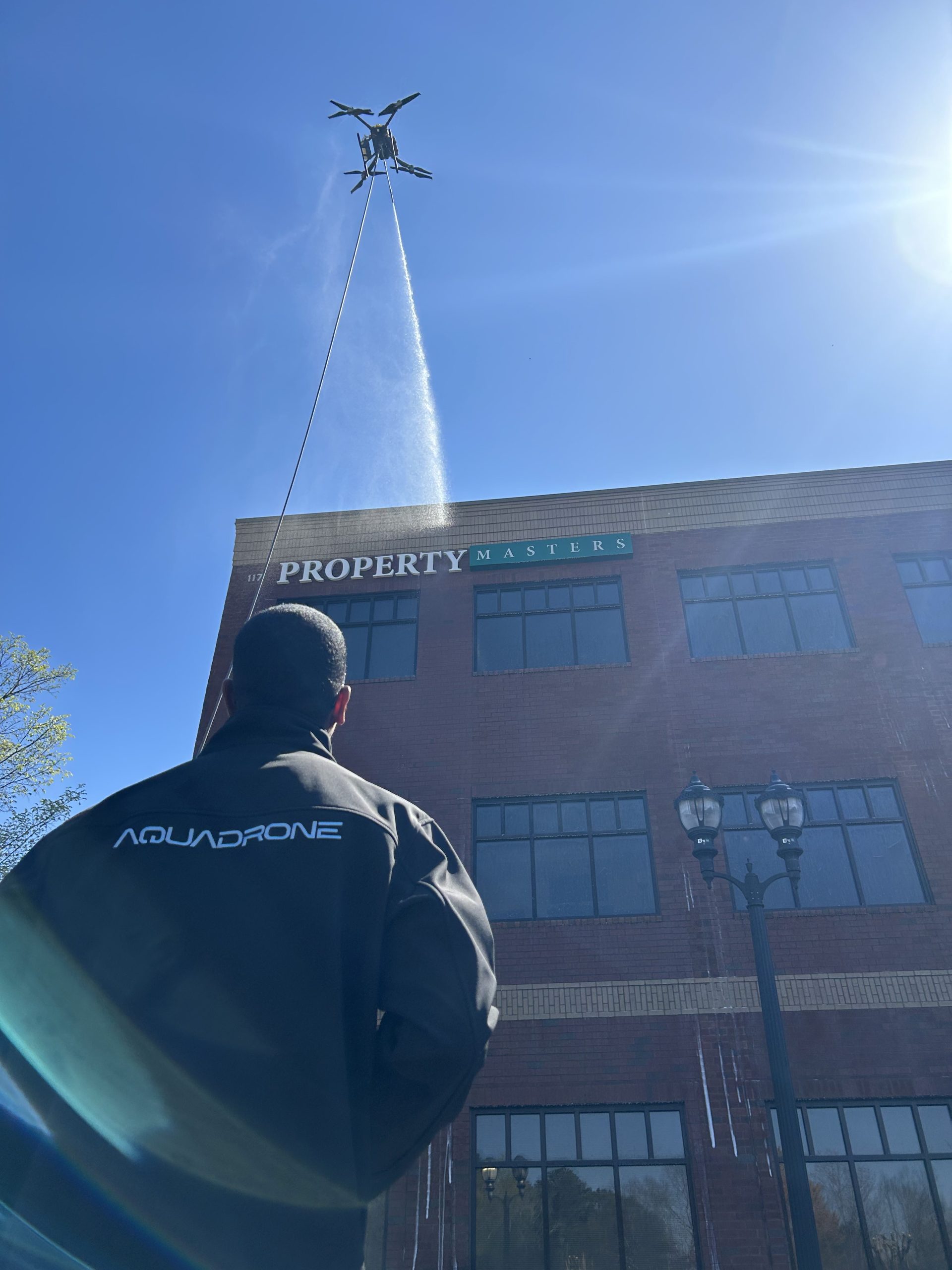
How to choose a facade cleaning company: 10 questions to ask before you sign
How do you choose a facade cleaning company? A checklist of 10 questions to ask before signing, covering method, scope of work, insurance, exclusions and documentation, plus warning signs to look out for.
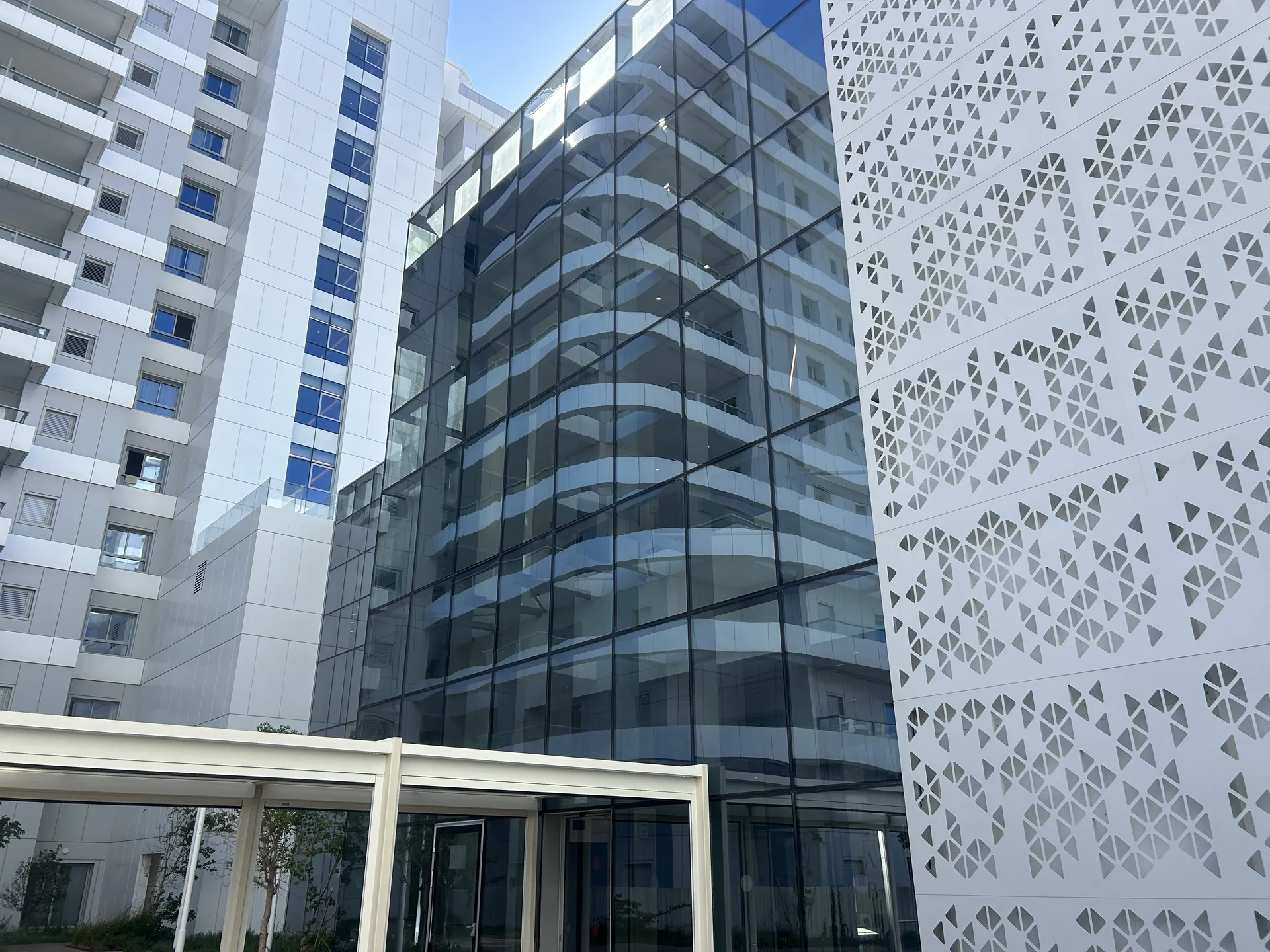
Aluminium and Alucobond cladding cleaning: what manufacturers recommend and how to protect the paint
Aluminium and Alucobond cladding cleaning: what manufacturers' guidelines say about detergents, water pressure and working hours, and how to plan cleaning that doesn't damage the painted finish.
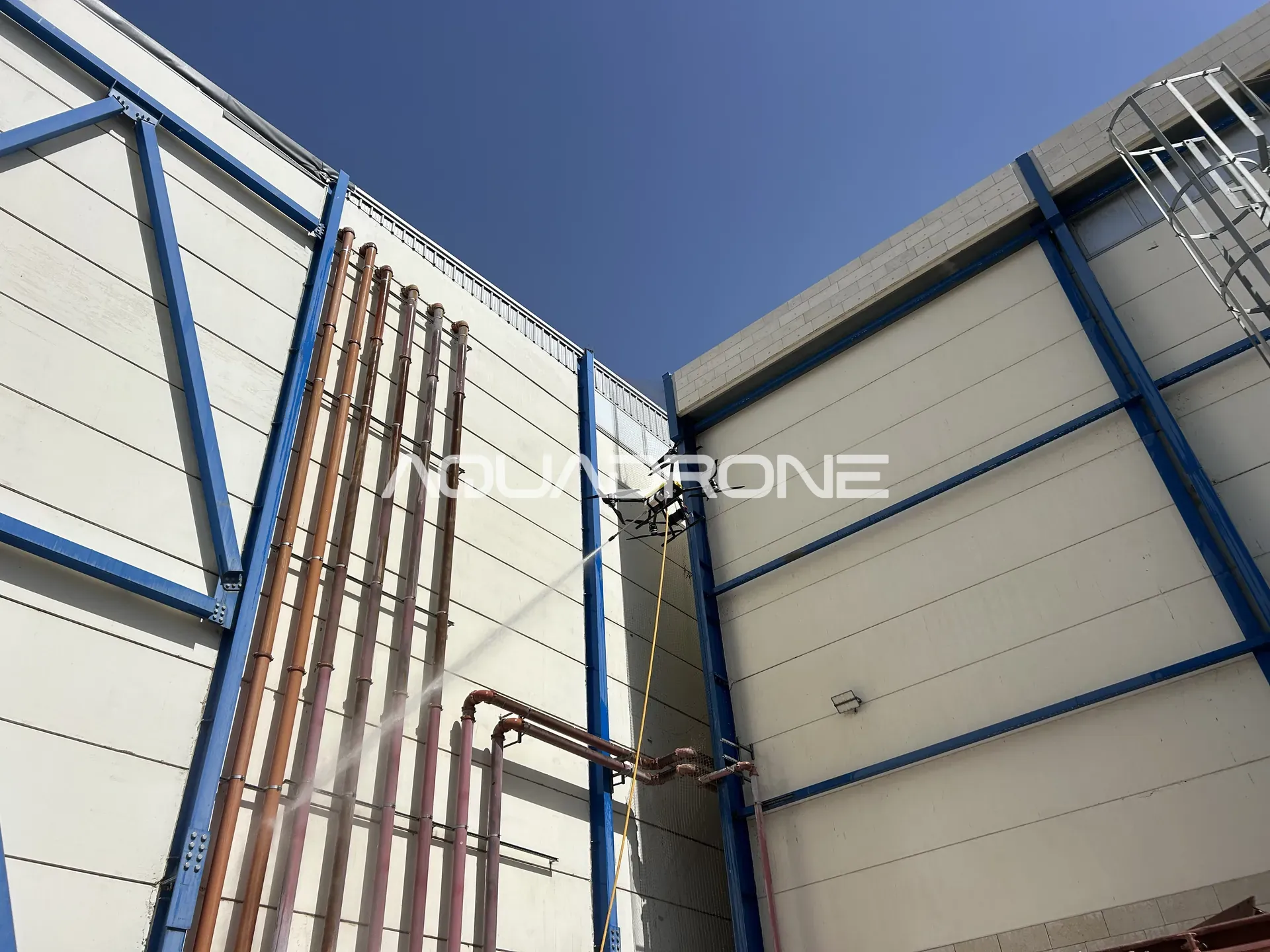
Drone factory facade cleaning: how cleaning protects the building from wear and cracks
Drone cleaning of factory, warehouse and logistics centre facades: what builds up on the envelope, how soot, mould and salts contribute to wear and cracks, and how to clean without scaffolding or disrupting operations.
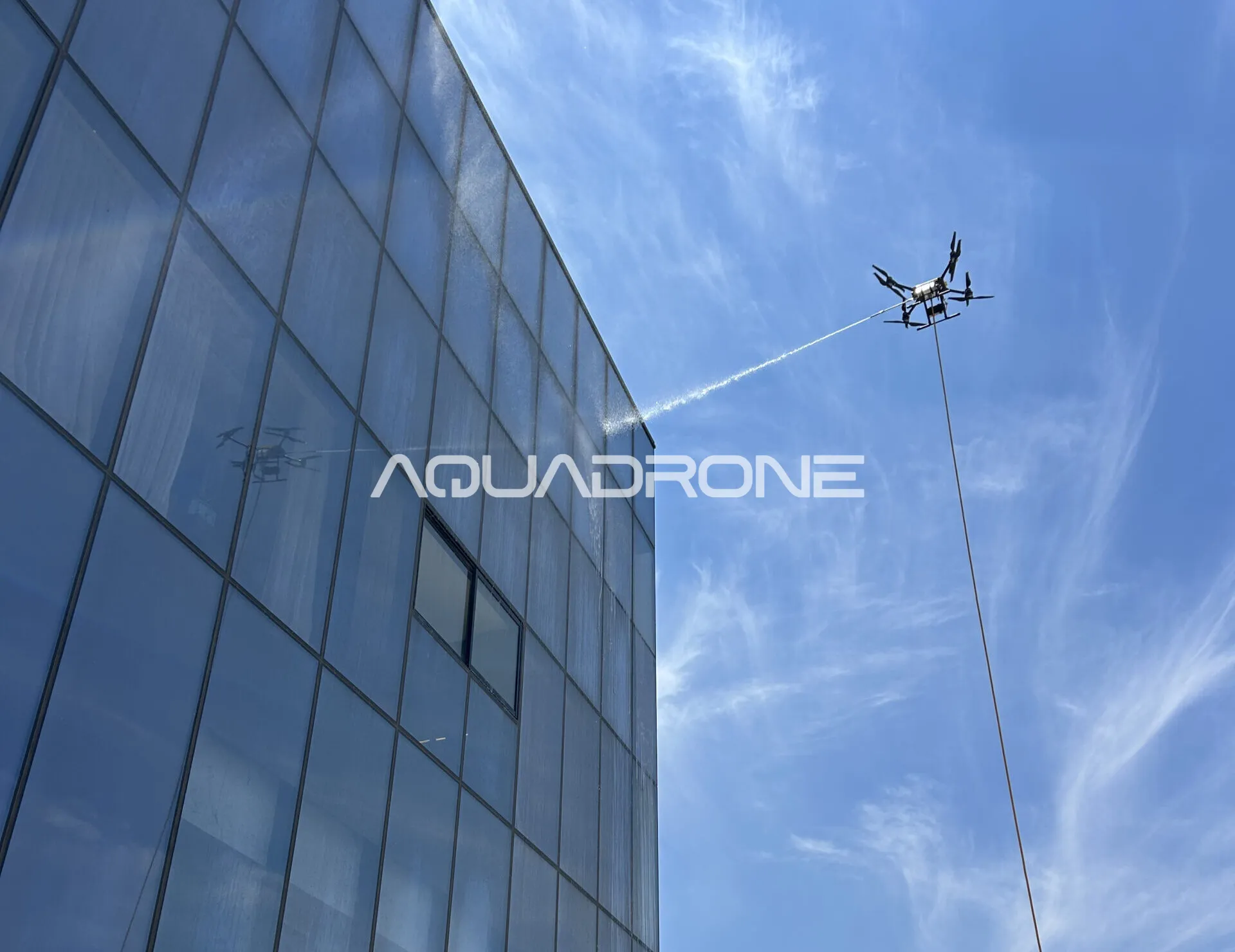
Commercial facade cleaning: why shops, malls and offices can't afford to neglect it
How a business's exterior influences a customer's decision to walk in, before they even step inside
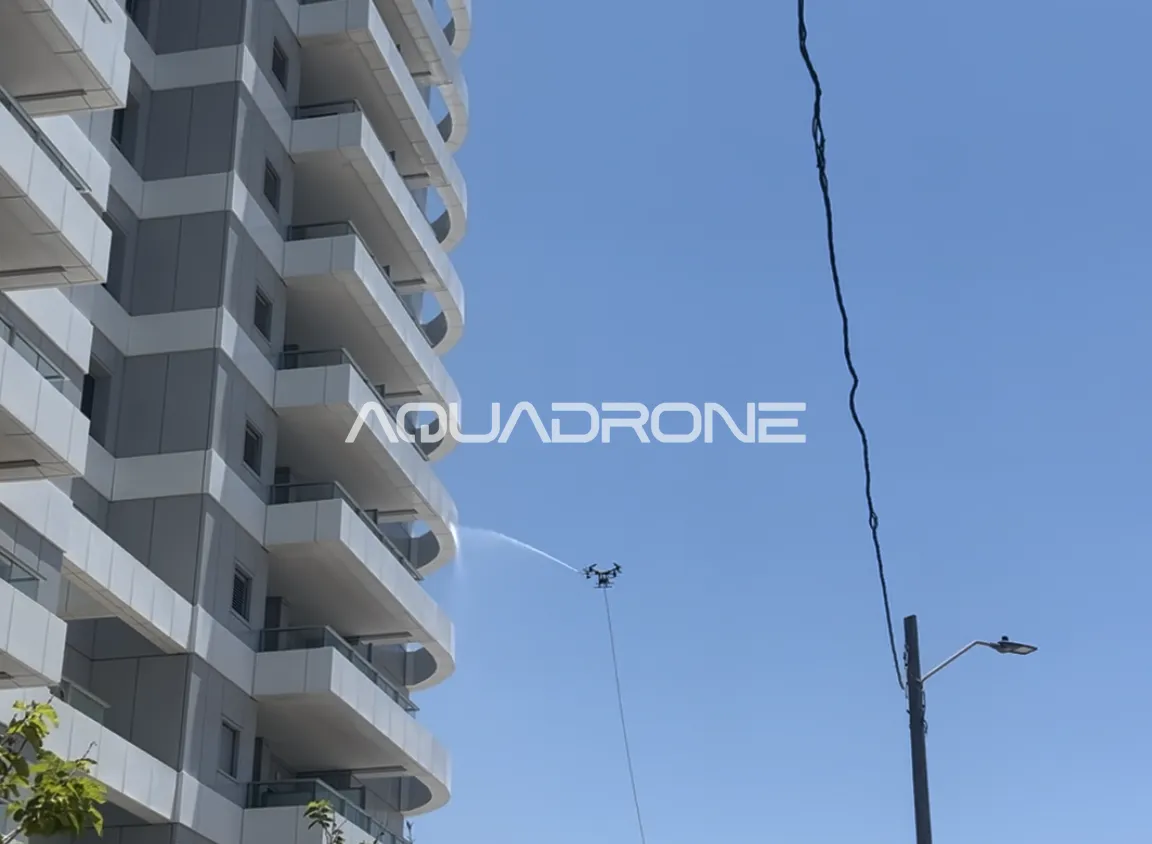
Cleaning inaccessible areas of buildings: a solution that finally reaches everywhere
Why part of the facade always gets "forgotten" in traditional cleaning, and how to fix it
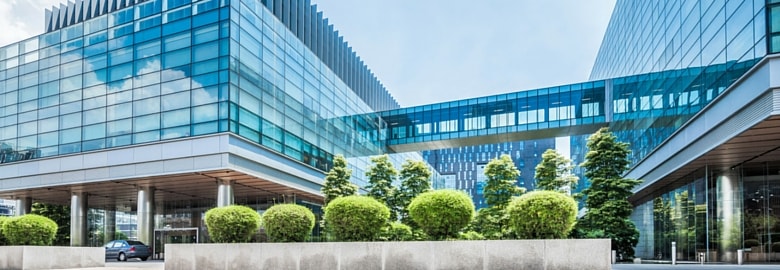
Post-construction facade and window cleaning: manual scraping and drone washing before handover
Post-construction drone cleaning is the last and one of the most important stages of any building project. Aquadrone's building cleaning services specialise in cleaning new buildings once construction is complete. Before cleaning, our team manually scrapes hardened concrete, plaster and paint residue off the facade and windows, and then the drone washes the facade and windows with purified water and removes construction dust. […]
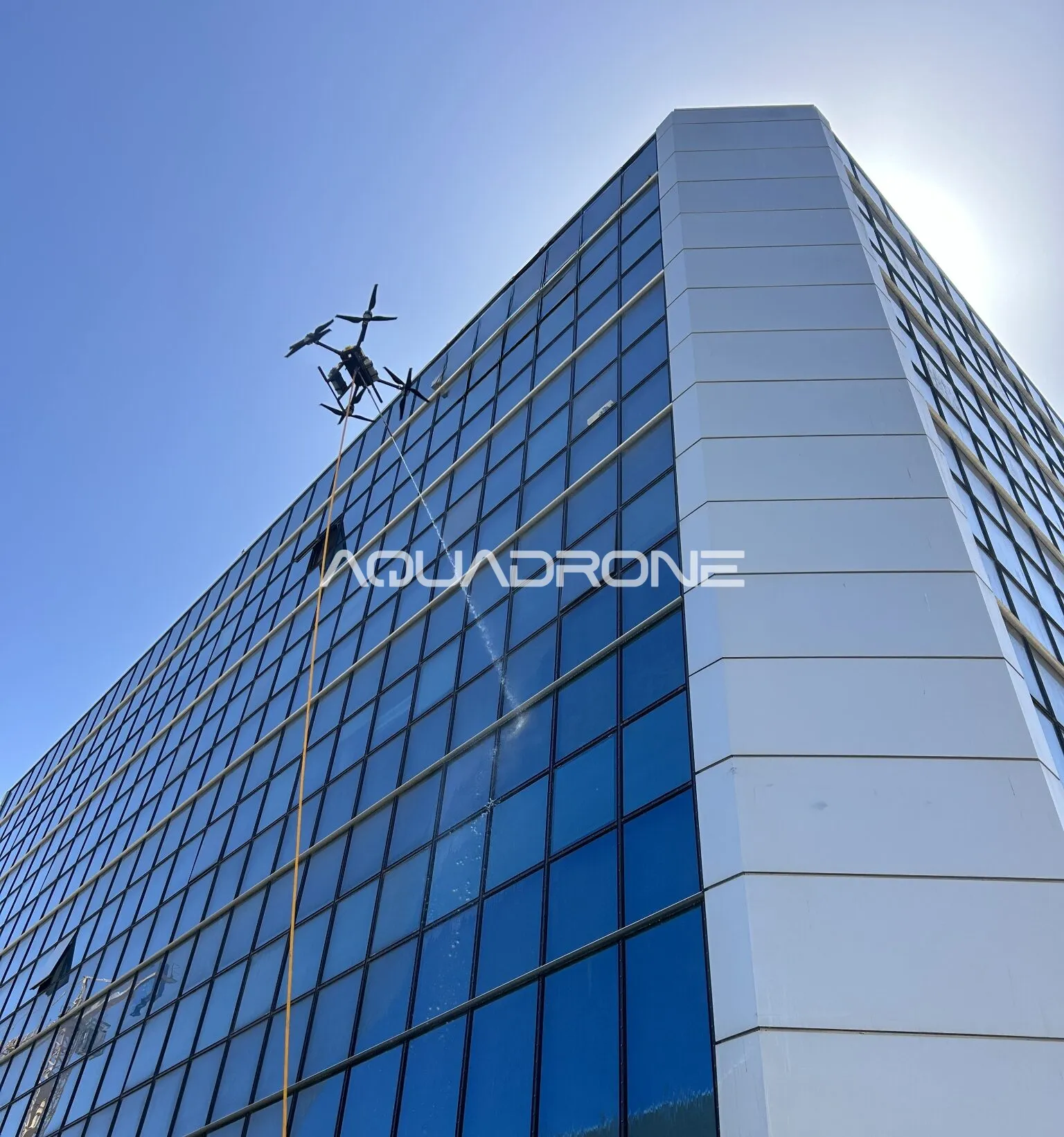
Facade cleaning in Tel Aviv
Professional facade and window cleaning for Tel Aviv and Gush Dan

Drone roof cleaning
A safe, efficient solution for cleaning roofs of every type and size

Drone cleaning of bridges and infrastructure
An advanced solution for cleaning infrastructure and complex structures at any height
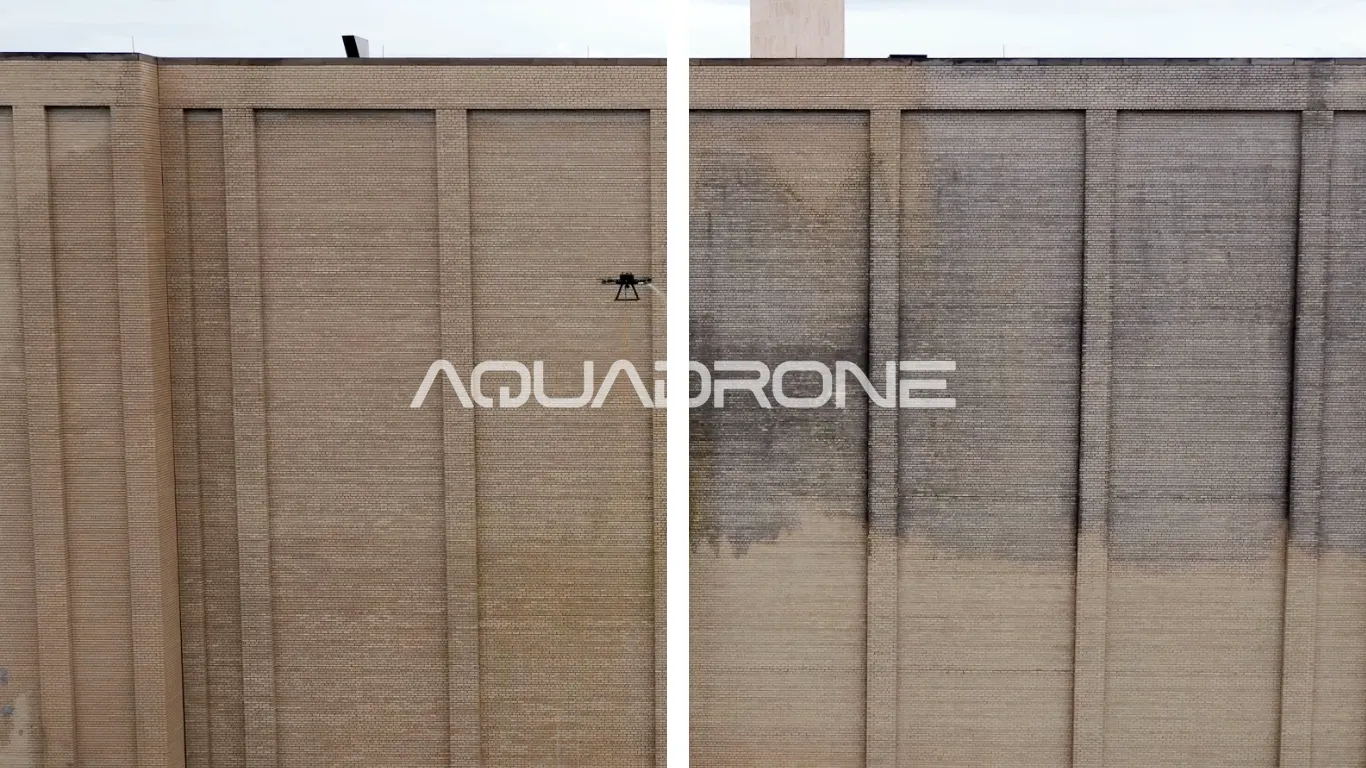
Drone brick cleaning and mould removal
A professional solution for removing mould, stains and stubborn dirt from brick facades
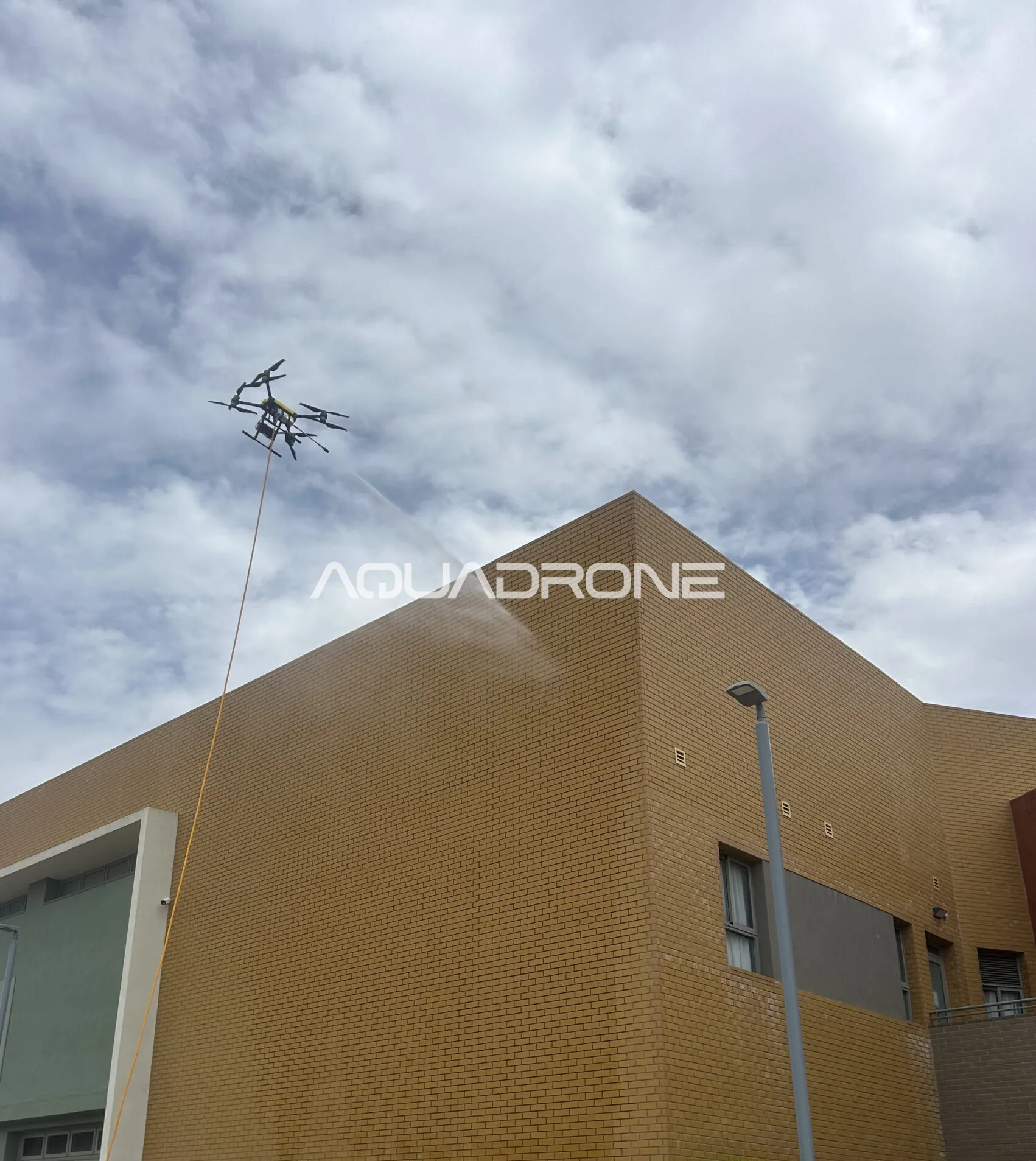
Building cleaning without scaffolding
How drones are replacing scaffolding and rope access for cleaning buildings at height
Facade stains: why dirt, limescale and pigeon droppings get harder to remove over time
Facade stains get harder to remove with every month. Why limescale, soot and pigeon droppings etch into the facade, and how early maintenance prevents permanent stains.
Drone high-rise window cleaning
Drone high-rise window cleaning: an advanced, safe solution
When should you clean your building facade? 6 signs it's time
When should you clean your building facade? The signs it's time: dark streaks under windows, limescale on glass, blackened stone and pigeon droppings, and how to clean without disruption.
Why building cleaning matters
The signs that it's time to clean, and why putting it off only makes treatment more expensive
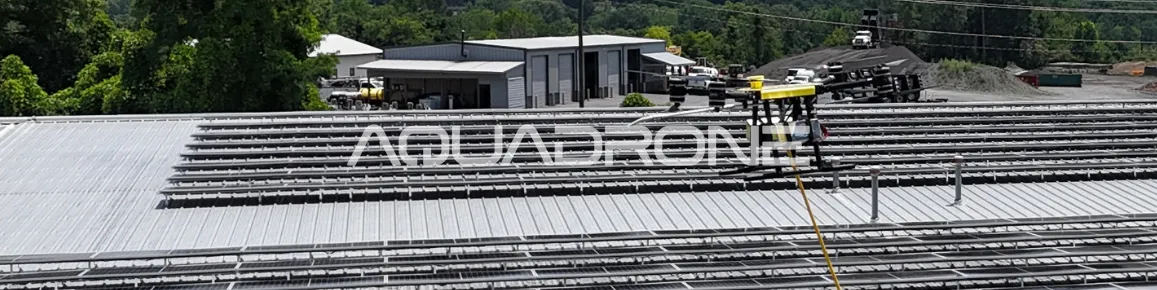
Drone solar panel cleaning
The right maintenance for maximum output

The direct link between facade maintenance and property value
A look at how smart maintenance protects a property's value.