
Drone factory facade cleaning: how cleaning protects the building from wear and cracks
Drone cleaning of factory, warehouse and logistics centre facades: what builds up on the envelope, how soot, mould and salts contribute to wear and cracks, and how to clean without scaffolding or disrupting operations.


Factory facade cleaning is usually seen as a matter of appearance: a clean factory signals order, and a well-kept warehouse looks better to customers and staff. But on industrial buildings, cleaning the exterior envelope also has a maintenance role. Industrial dust, soot, chemical residue, salts and moisture don't just make walls dirty. They stay on the cladding, the roof and the profiles, absorb moisture and create conditions that speed up material wear. In this article we explain what builds up on the facades of factories, warehouses and logistics centres, how that build-up relates to building wear and cracks, why mould and soot get harder to remove the longer you wait, and how drone cleaning is carried out without scaffolding and without stopping operations.
It's important to say from the outset: cleaning alone doesn't prevent cracks. Cracks form for many reasons, including building movement, temperature changes, loads and build quality. What cleaning does do is remove some of the factors that speed up wear, and expose the surface so problems can be seen in time.
Factory facade cleaning: what builds up on an industrial building's envelope
The envelope of an industrial building is exposed to a different environment from a residential building. Depending on the type of factory and its location, the walls and roof typically collect:
- Industrial dust and road dust from lorries, forklifts and work in the area.
- Soot and exhaust residue from chimneys, generators, vehicle traffic and production processes.
- Chemical residue carried through the air from production processes and sticking to the cladding.
- Salts, especially in industrial areas near the sea.
- Prolonged damp on shaded walls, behind equipment and in corners the sun doesn't reach.
- Bird droppings on cornices, gutters and rooftop equipment. We wrote about this in detail in our article on removing mould and pigeon stains.
The problem isn't just the layer itself, but what it does over time. Rain washes some of the dirt off exposed surfaces, but in sheltered areas, under cornices, behind pipework and in corners, the build-up stays and thickens.
How dirt speeds up material wear
The link between dirt and wear runs mainly through moisture. A layer of dust and deposits on a metal surface holds moisture for longer and increases its conductivity, creating local spots of corrosion. This is how the American Galvanizers Association (AGA)explains it, also noting that sulphur compounds from industrial emissions and chlorides from salts are among the environmental factors with the greatest effect on corrosion rate, and that it classifies an industrial environment as more corrosive than a rural one. According to the same source, surfaces washed by rain benefit from natural rinsing, while surfaces sheltered from rain collect corrosive deposits over time.
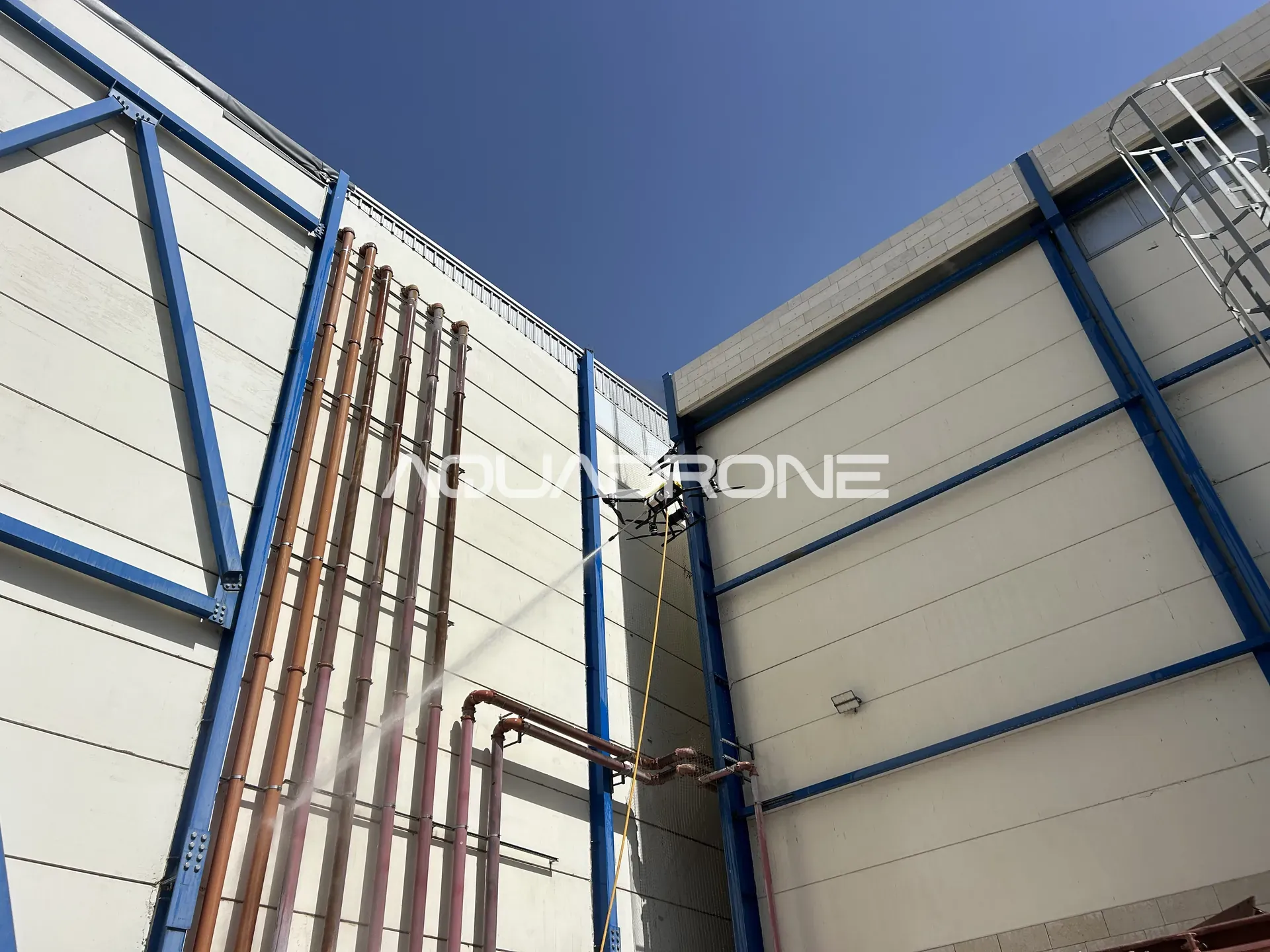
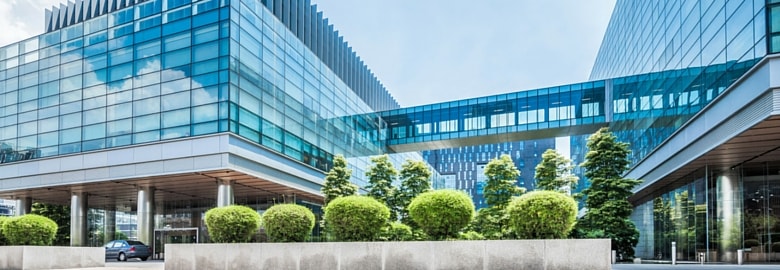
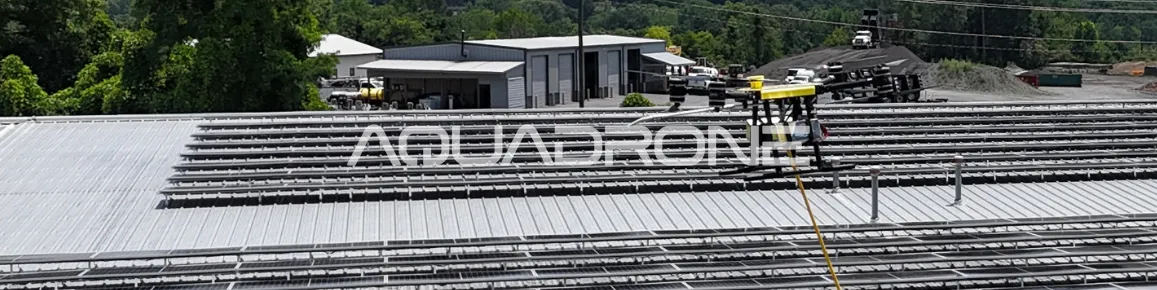
On buildings with sheet-metal cladding, insulated panels, steel profiles and exposed structure, like the building in the main photo, this is particularly relevant. Periodic cleaning removes the layer of deposits that holds moisture and salts on the surface. It doesn't repair existing corrosion, but it removes one of the factors that speeds it up.
On stone and concrete facades too, build-up isn't neutral. The US National Park Service guide to cleaning masonry notes that one of the aims of cleaning is to slow deterioration by removing dirt that may harm the masonry, and describes soot and gypsum crusts that tend to form precisely in areas rain doesn't wash. We wrote about stone cleaning in detail in our article on stone facade cleaning.
Mould and soot on industrial buildings: why they get worse over time
Mould and organic growth appear where there's moisture, shade and time. North-facing walls, walls shaded by nearby buildings, areas behind air-conditioning units and corners where water drips from a gutter are the typical places. A scientific review of biological deterioration of building materials explains that damp, less sunlit facades are colonised faster by organisms, and that fungi secrete acids and send filaments into the material's surface. According to the same review, the combination of biological acids, pollutants and weathering creates cracks and crevices in the surface of concrete and increases its porosity.
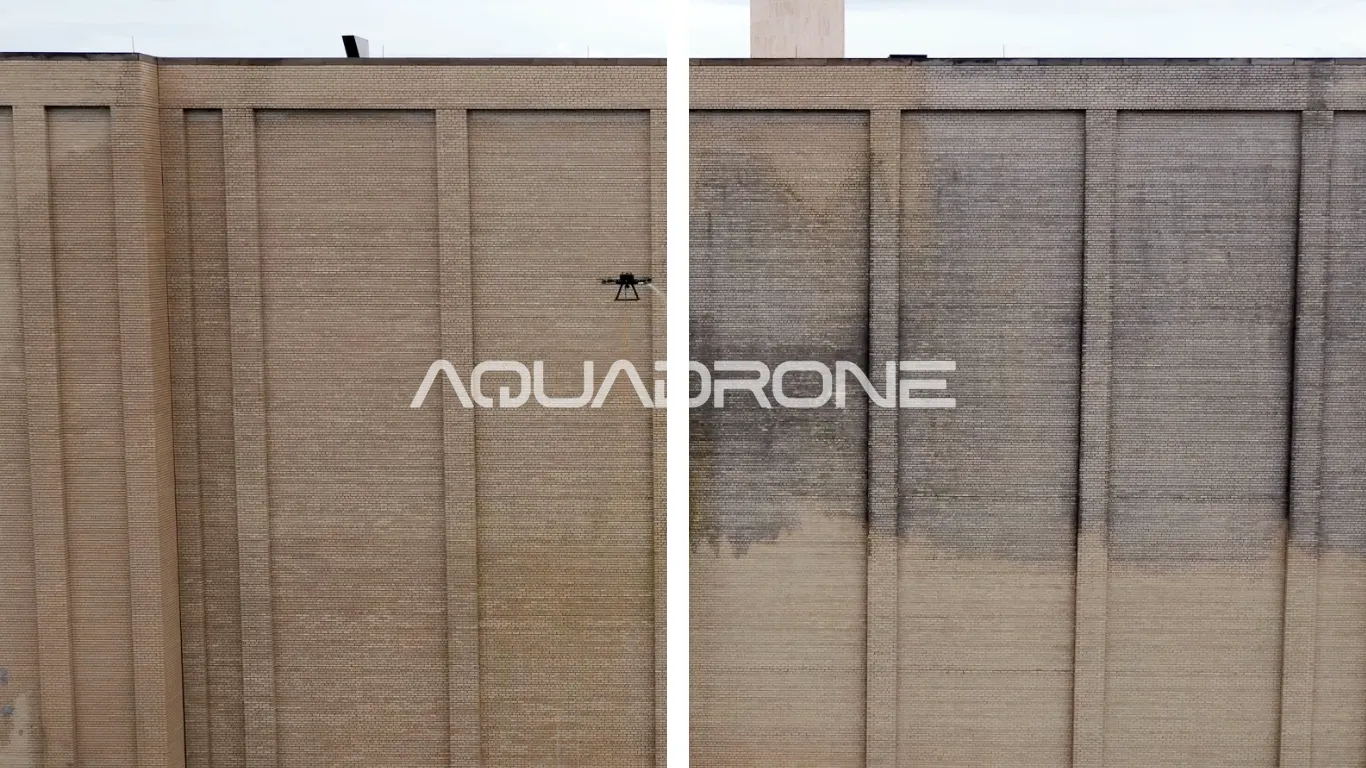
Soot comes from emissions: chimneys, generators, furnaces and lorry traffic. It's greasier and stickier than ordinary dust, so it clings to cladding and attracts more dirt. In areas rain doesn't reach, it builds up into a thick layer.
The reason both get harder to remove the longer you wait is similar. Established mould penetrates pores and seams, and a thick layer of soot and deposits hardens and bonds to the surface. The National Park Service guide notes that some crusts can become part of the stone itself, to the point where removing them may damage the surface. Cleaning at an early stage, while the layer is still thin, takes less product and less effort and leaves fewer marks. We wrote about the same principle in our article on cleaning facade stains before they set.
One more point: both mould and soot hide what's underneath. A dark patch on a wall can hide a crack, seeping damp or a profile starting to rust.
Cracks and building wear: why cleaning helps spot problems early
Perhaps the most important reason to clean a factory's envelope is that after cleaning you can see it. On a dirty wall it's hard to notice a hairline crack, a rust spot starting by a screw, a joint between panels opening up or a place where water is seeping in. After cleaning, those details stand out.
Fine cracks that stay filled with moisture and organic growth can get worse over time: the moisture stays in the crack, and the organisms widen the pores around it. Cleaning removes the growth and lets you see the crack, but doesn't close it. The repair itself is a job for the appropriate specialist.
The National Park Service guide explicitly mentions a survey of the masonry's condition as one of the aims of cleaning. At the end of every job we provide a summary report with photos. When we notice a crack, rust or another defect during cleaning, we record it in the report. That way the maintenance manager gets documentation and can decide what to inspect and what to repair. It doesn't replace an engineering inspection, but it gives an organised starting point.
What we clean on an industrial building: facades, cladding, roofs, windows and solar
- Facades and cladding. Sheet metal, insulated panels, concrete, stone andaluminium cladding. Each surface gets the right pressure and cleaning agent, and on sensitive surfaces we work at low pressure.
- Roofs. Sheet-metal and flat roofs collect dust, deposits and droppings. We went into detail in our article on Drone roof cleaning.
- Windows and glass. The final rinse can useReverse-osmosis purified water, so no limescale marks are left.
- Rooftop solar panels. Research published in the US Department of Energy's repository describes how dust and dirt build-up on panels reduces the amount of light reaching the cells, and therefore the output. See also our article on drone solar panel cleaning.
You'll find a broader overview of work on industrial and infrastructure buildings in our article on drone cleaning of industrial and infrastructure buildings.
Facade cleaning at a working factory, without stopping work
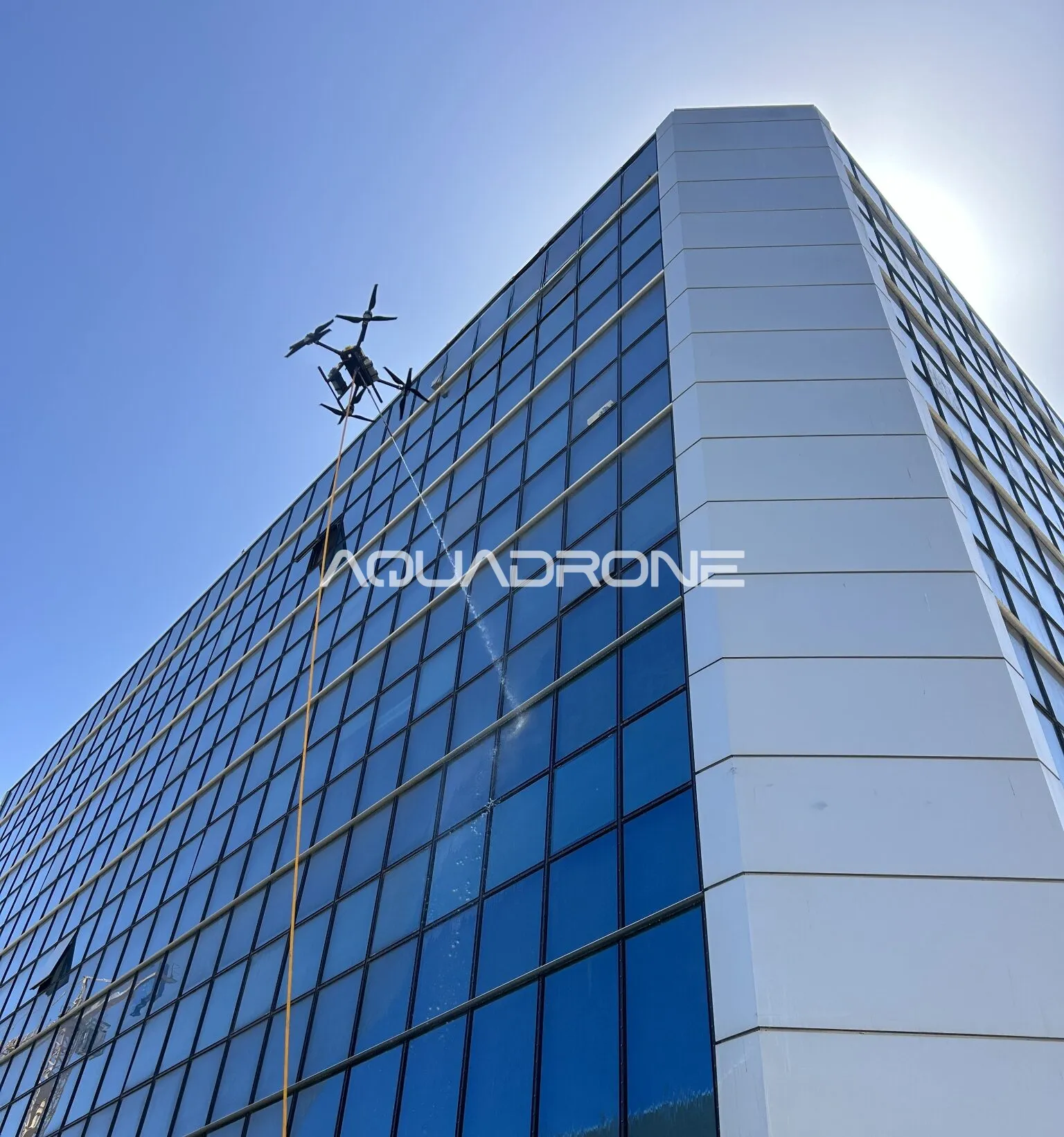
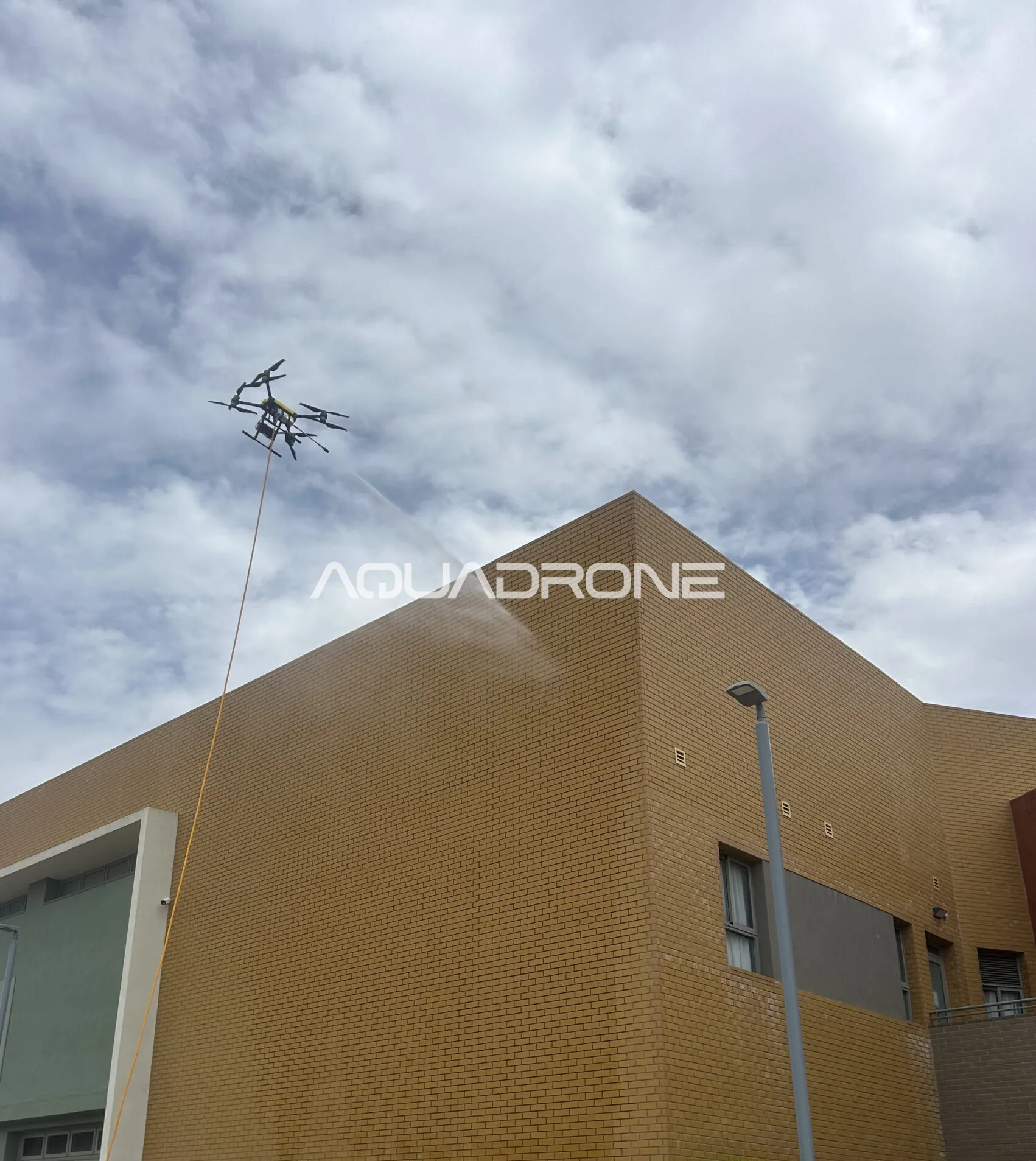
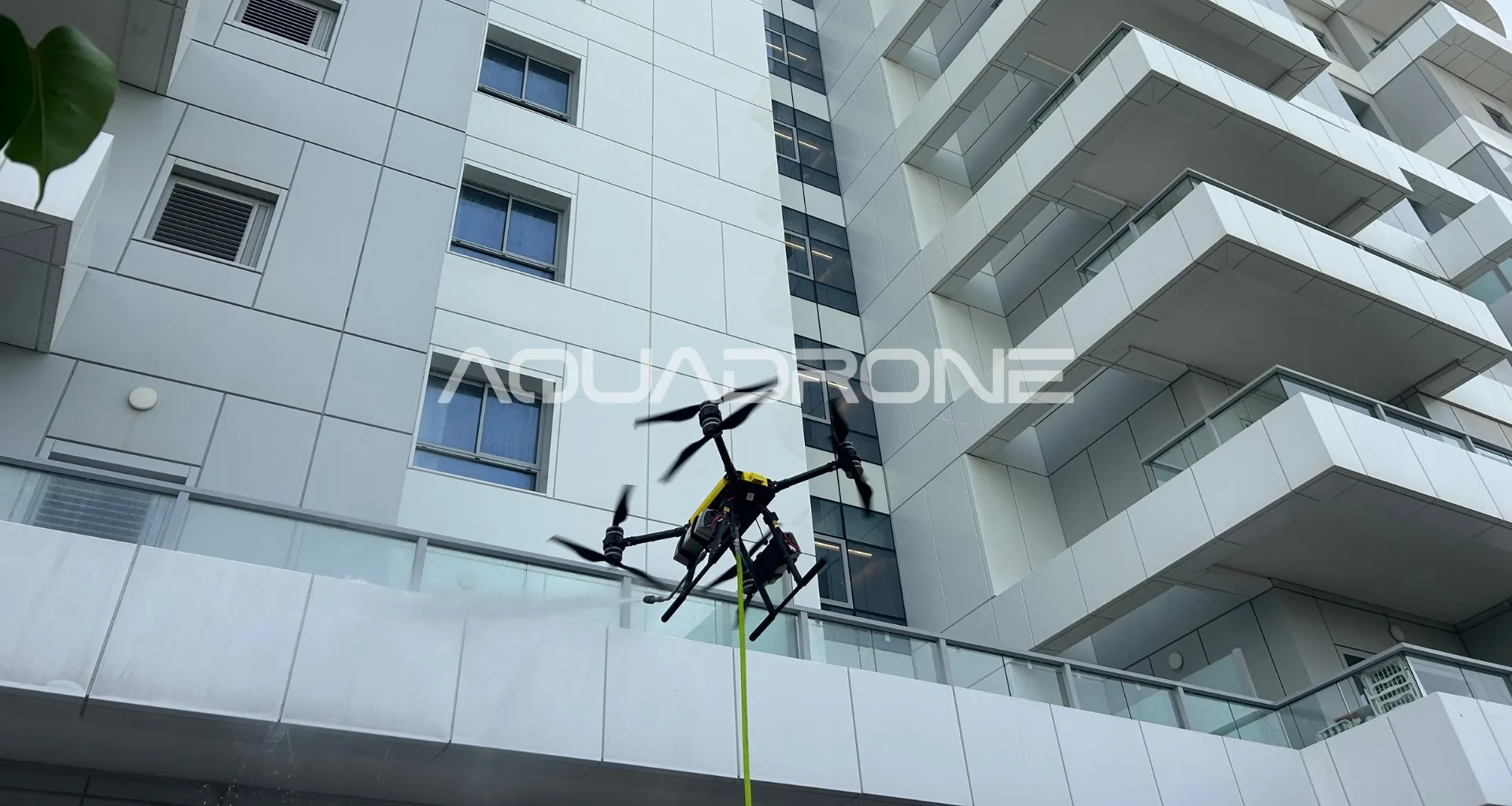
In a factory, every hour of downtime costs money. The main advantage of a drone is that there's no need for scaffolding, cranes or aerial work platforms blocking roads, loading ramps and parking. The drone works from the air, and the ground team takes up little space. On buildings with structure, pipework and equipment on the wall, the drone also reaches areas that are hard to reach with other methods.
Work can also be arranged after hours, at weekends or zone by zone, so that at each stage only a small part of the building is affected. Before the work, we go over sensitive points with the person in charge on site: ventilation openings, outdoor electrical equipment, open storage areas and areas that mustn't get wet. We work in line with Civil Aviation Authority guidelines and the site's safety procedures.
What the service doesn't include
- Interior cleaning, production lines and machinery. Our service focuses on the exterior envelope only.
- Industrial disinfection. We remove dirt, soot and mould from surfaces, but we don't disinfect.
- Removing concrete and paint residue. The drone doesn't remove it. Hand scraping is a separate service.
- Crack repairs and protective treatments. We document what we see, but repairs are carried out by the appropriate specialists.
Details of all our services can be found on Our Services, and our full guide todrone facade cleaning explains the process step by step.
FAQs
Does factory facade cleaning prevent cracks?
Not on its own. Cracks form for many reasons, such as building movement, temperature changes and loads. Cleaning removes deposits, trapped moisture and organic growth that can speed up wear, and above all exposes the surface so cracks and defects can be spotted early.
Why do mould and soot get harder to remove the longer you wait?
Established mould penetrates the material's pores and seams, and a thick layer of soot and deposits hardens and bonds to the surface. Cleaning while the layer is still thin takes less product and effort and leaves fewer marks. This is surface cleaning, not disinfection.
Can cleaning be done while the factory is working?
Yes. There's no need for scaffolding or cranes, and the ground team takes up little space. Work can also be arranged after hours or zone by zone, so operations are affected as little as possible.
Do you also clean the inside of the factory or production lines?
No. Our service focuses on the exterior envelope: facades, cladding, roofs, windows and solar panels. We don't clean interiors, production lines or machinery, and we don't disinfect.
What do you get at the end of the job?
A summary report with photos. When we notice a crack, rust or another defect during cleaning, we record it in the report, so the maintenance manager can decide what to inspect. The report doesn't replace an engineering inspection.
Does the drone remove concrete or paint residue?
No. The drone removes dirt, dust, soot and mould. Concrete and paint residue needs hand scraping, which is a separate service.
Want to know what can be done on your building? Send us a short video of the facades and roof, and we'll get back to you with a tailored quote.
New building facade maintenance: why drone cleaning from handover pays off
New building facade maintenance starts on handover day. How drone cleaning protects glass, aluminium and stone, avoids scaffolding and helps prevent costly repairs over the years.
Alucobond cleaning: how to clean composite panels without damaging the finish
Alucobond cleaning needs a gentle touch: what makes panels look dull, why we work at low pressure with detergent that is rinsed off quickly, how joints are handled and how a drone works on these facades.
How to choose a facade cleaning company: 10 questions to ask before you sign
How do you choose a facade cleaning company? A checklist of 10 questions to ask before signing, covering method, scope of work, insurance, exclusions and documentation, plus warning signs to look out for.
Aluminium and Alucobond cladding cleaning: what manufacturers recommend and how to protect the paint
Aluminium and Alucobond cladding cleaning: what manufacturers' guidelines say about detergents, water pressure and working hours, and how to plan cleaning that doesn't damage the painted finish.
Stone facade cleaning: how to clean natural stone without damaging it
Stone facade cleaning calls for a gentle method: why acid and high pressure harm natural stone, how drone cleaning works without touching the stone, and what to check before you start.
Commercial facade cleaning: why shops, malls and offices can't afford to neglect it
How a business's exterior influences a customer's decision to walk in, before they even step inside
Cleaning inaccessible areas of buildings: a solution that finally reaches everywhere
Why part of the facade always gets "forgotten" in traditional cleaning, and how to fix it
Post-construction facade and window cleaning: manual scraping and drone washing before handover
Post-construction drone cleaning is the last and one of the most important stages of any building project. Aquadrone's building cleaning services specialise in cleaning new buildings once construction is complete. Before cleaning, our team manually scrapes hardened concrete, plaster and paint residue off the facade and windows, and then the drone washes the facade and windows with purified water and removes construction dust. […]
Facade cleaning in Tel Aviv
Professional facade and window cleaning for Tel Aviv and Gush Dan

Drone roof cleaning
A safe, efficient solution for cleaning roofs of every type and size

Drone cleaning of bridges and infrastructure
An advanced solution for cleaning infrastructure and complex structures at any height
Drone brick cleaning and mould removal
A professional solution for removing mould, stains and stubborn dirt from brick facades
Building cleaning without scaffolding
How drones are replacing scaffolding and rope access for cleaning buildings at height
Facade stains: why dirt, limescale and pigeon droppings get harder to remove over time
Facade stains get harder to remove with every month. Why limescale, soot and pigeon droppings etch into the facade, and how early maintenance prevents permanent stains.
Drone high-rise window cleaning
Drone high-rise window cleaning: an advanced, safe solution
When should you clean your building facade? 6 signs it's time
When should you clean your building facade? The signs it's time: dark streaks under windows, limescale on glass, blackened stone and pigeon droppings, and how to clean without disruption.
Why building cleaning matters
The signs that it's time to clean, and why putting it off only makes treatment more expensive
Drone solar panel cleaning
The right maintenance for maximum output

The direct link between facade maintenance and property value
A look at how smart maintenance protects a property's value.