
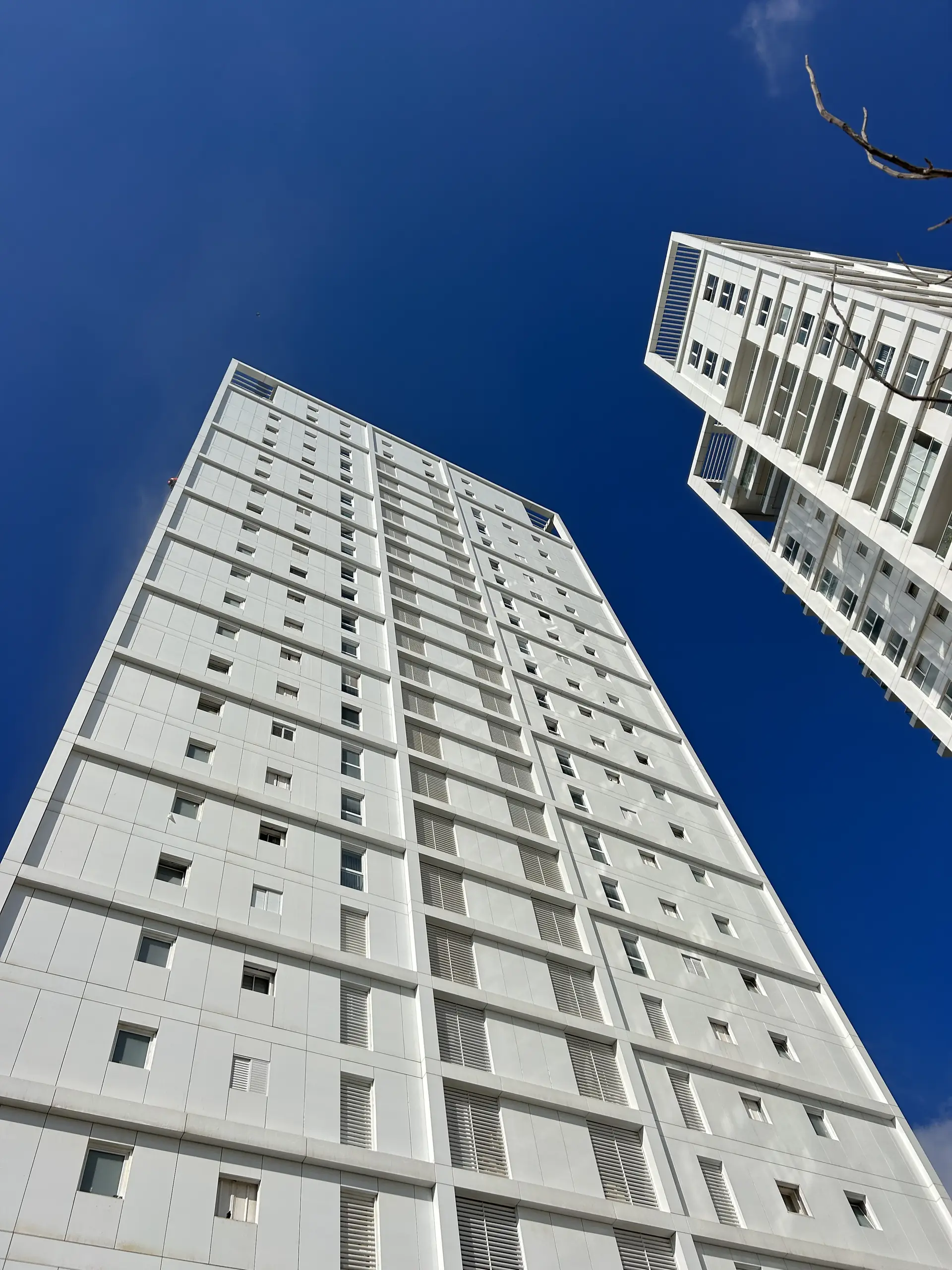
Alucobond cleaning: how to clean composite panels without damaging the finish
Alucobond cleaning needs a gentle touch: what makes panels look dull, why we work at low pressure with detergent that is rinsed off quickly, how joints are handled and how a drone works on these facades.


Alucobond cleaning takes a gentle hand. The Alucobond panels on a facade look tough and smooth, but their surface is a factory-painted finish, and that finish is easy to scratch, wear or stain with the wrong cleaning. When cleaning is done at the right pressure with a mild cleaning agent, the facade looks even and clean again, without harming the material.
In this article we focus on Alucobond itself: what this panel is, what makes it look dull, why we use low pressure and a cleaning agent that rinses off quickly, how we deal with dirt that builds up in the joints, and how a drone works on facades like these. If you're looking for a broader overview of all types of metal cladding, we have a separate guide to aluminium cladding cleaning.
What is Alucobond?
Alucobond is the trade name of an aluminium composite panel, known internationally as ACM (Aluminium Composite Material). The panel is made of two thin sheets of aluminium with a core between them. The outer sheet comes from the factory with a painted finish: an even colour, metallic, gloss or matt. In Israel the name "Alucobond" has become a generic term for all panels of this type, even when they are a different brand.
The panels are fixed to a subframe, with a gap or joint left between each panel. This construction gives the facade a clean, modern look, but it also determines how it should be cleaned: what you are actually cleaning is the finish, and what you need to protect is both the finish and the joints.
What makes Alucobond panels look dull?
A new Alucobond facade reflects light evenly. Over time it starts to look grey, patchy or faded, and usually that isn't because the paint itself has been damaged, but because of what has built up on it:
- Dust and soot. Street dust, soot from traffic and chimneys, and particles from nearby building sites stick to the finish and form a grey film.
- Salt. On buildings near the sea, salt builds up on the panels, attracts more dirt and leaves a whitish haze.
- Run-off streaks. Water running down the facade picks up dirt from the joints and edges and leaves vertical streaks below them.
- Pigeon droppings. Droppings and bird dirt build up on cornices, ledges and projections, staining the finish if left on it.
- Incorrect cleaning in the past. Scrubbing, harsh chemicals or high pressure can leave dull patches that look different from the rest of the facade.
The good news is that in most cases it's dirt sitting on the surface. Gentle, correct cleaning removes it and gives the facade back its even appearance.
Why Alucobond cleaning is done at gentle, low pressure
The natural temptation is to grab a high-pressure washer and get the job done quickly. On Alucobond that's a bad idea. High pressure can wear the finish, damage the panel edges and force water into the joints and the system behind them. That's why on composite panels we only use gentle, low-pressure washing, which removes dirt without blasting the material.
The principle is simple: the cleaning agent does most of the work, and the water just rinses it away. Instead of trying to "blast" dirt off the surface, we soften it and rinse it away gently.
The right cleaning agent, rinsed off before it dries
Alucobond's painted finish is sensitive to harsh chemicals. Products that are too acidic or alkaline, solvents and abrasives can dull the shine and leave stains that won't come off. That's why we use a mild cleaning agent suitable for painted surfaces, at a low concentration.
Just as important as the choice of cleaning agent is how long it stays on the panel. Cleaning agent that dries on the finish, especially in the sun, leaves marks and can damage it. So the work is done in sections: apply the cleaning agent, let it work briefly, then rinse with clean water before it dries. Where possible, we work on the shaded side of the building so the panels don't get too hot.
Dirt and stains in the joints
The joints between panels are where dirt likes to gather. Dust, soot and dirt washed down from above get caught at the edges and gaps, and from there the rain draws it down, creating the familiar run-off streaks.
When cleaning Alucobond, we pay special attention to the joints:
- We wash along the joints at low pressure, without aiming a strong jet straight into the gap.
- We clean from top to bottom, so that dirt running down doesn't re-stain areas already cleaned.
- We rinse the area below each joint thoroughly, where run-off streaks are most noticeable.
- We don't scrub the joint filler hard, so as not to damage it.
Once the joints are clean, the lines between the panels look sharp and clean again, and that's one of the things that changes the overall look of the facade the most.
How a drone works on an Alucobond facade
Alucobond facades are especially common on office buildings, shopping centres and high-rise residential buildings. On many of them, access at height is complicated, and that's where the drone comes in.
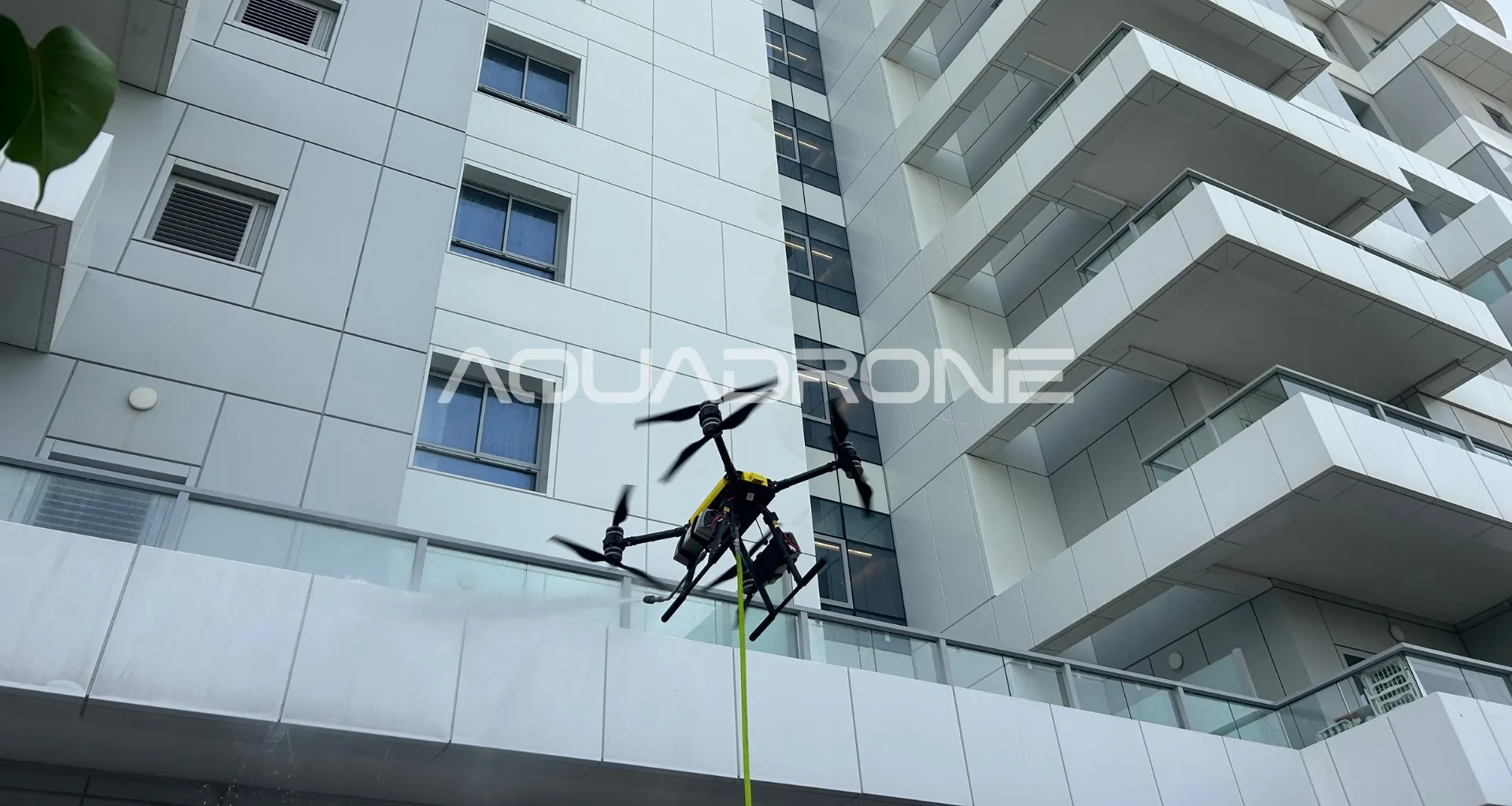
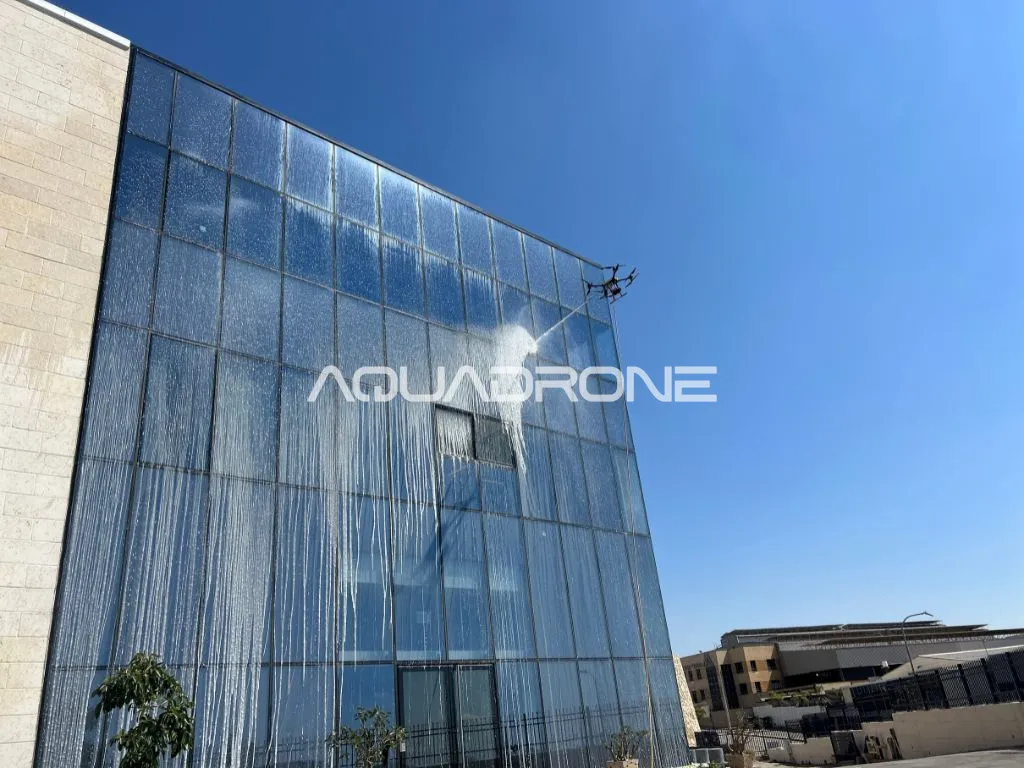
The drone is connected to a hose that feeds it water and cleaning agent from the ground. The operator flies it in front of the facade and sprays the cleaning agent and rinse water at low pressure, section by section. No one leans on the panels, there's no scaffolding against the facade and no cranes standing by the building. So there is no physical contact with the finish, which is exactly what Alucobond needs. We've written more about this method in our article on touch-free cleaning.
Flying correctly in front of a facade like this takes experience: keeping a constant distance from the panels, working at a pace that allows the cleaning agent to be rinsed off before it dries, and reaching every joint and every corner. The work is carried out in line with Civil Aviation Authority guidelines and stops when wind conditions don't allow safe, precise work.
If you're unsure whether a drone suits your building or whether rope access would be better, read our comparison of drone vs rope access. You can see all our services on Our Services.
How to tell when an Alucobond facade needs cleaning
There's no need to wait until the facade looks completely neglected. A few simple signs you can spot from the street:
- The panels look greyer or duller than you remember, especially in direct sunlight.
- Dark vertical streaks appear below joints and windows.
- There's a noticeable difference between sheltered panels, for example under a balcony, and exposed ones.
- Bird droppings and dirt build up on projections, cornices and ledges.
- On a building near the sea, a whitish salt haze appears on the finish.
When dirt is dealt with in good time, it's easier to remove gently, and the finish stays in better condition for longer.
What Alucobond cleaning doesn't do
To keep expectations clear, it's important to know what cleaning doesn't fix:
- Concrete residue and paint splashes. The drone doesn't remove them. They need hand scraping, which we offer as a separate service.
- Faded paint. Cleaning removes the dirt that hides the colour, but if the paint itself has faded in the sun, cleaning won't bring back the original colour.
- Scratches and physical damage. Scratches, dents or damaged panels are a matter for repair, not cleaning.
All the work is done on the outside only, on the surface of the facade.
Alucobond cleaning FAQs
Can Alucobond be washed at high pressure?
No. On composite panels we only use gentle, low-pressure washing. High pressure can damage the finish, the panel edges and the joints between them, and force water into the cladding system.
Which cleaning agent is suitable for Alucobond?
A mild cleaning agent suitable for painted surfaces, at a low concentration. It doesn't stay on the panel for long: apply it, let it work briefly and rinse with clean water before it dries.
Why does the facade look faded even after rain?
Rain shifts some of the dust, but it doesn't remove the sticky layer of soot, air pollution and salt that clings to the finish. Sometimes it even leaves run-off streaks below the joints. Proper cleaning is needed to restore an even appearance.
Does the drone remove concrete or paint residue from the panels?
No. Concrete residue and paint splashes need manual treatment, and we offer hand scraping as a separate service.
Does the building need to be vacated during cleaning?
No. The work is done on the outside only, and the drone works in front of the facade with no scaffolding and no one hanging outside the windows. It's enough for windows to be closed and for nothing to be left on sills and balconies.
Got an Alucobond facade that looks dull? Send us a video of the facade, and we'll tell you how it can be cleaned without damaging the finish.
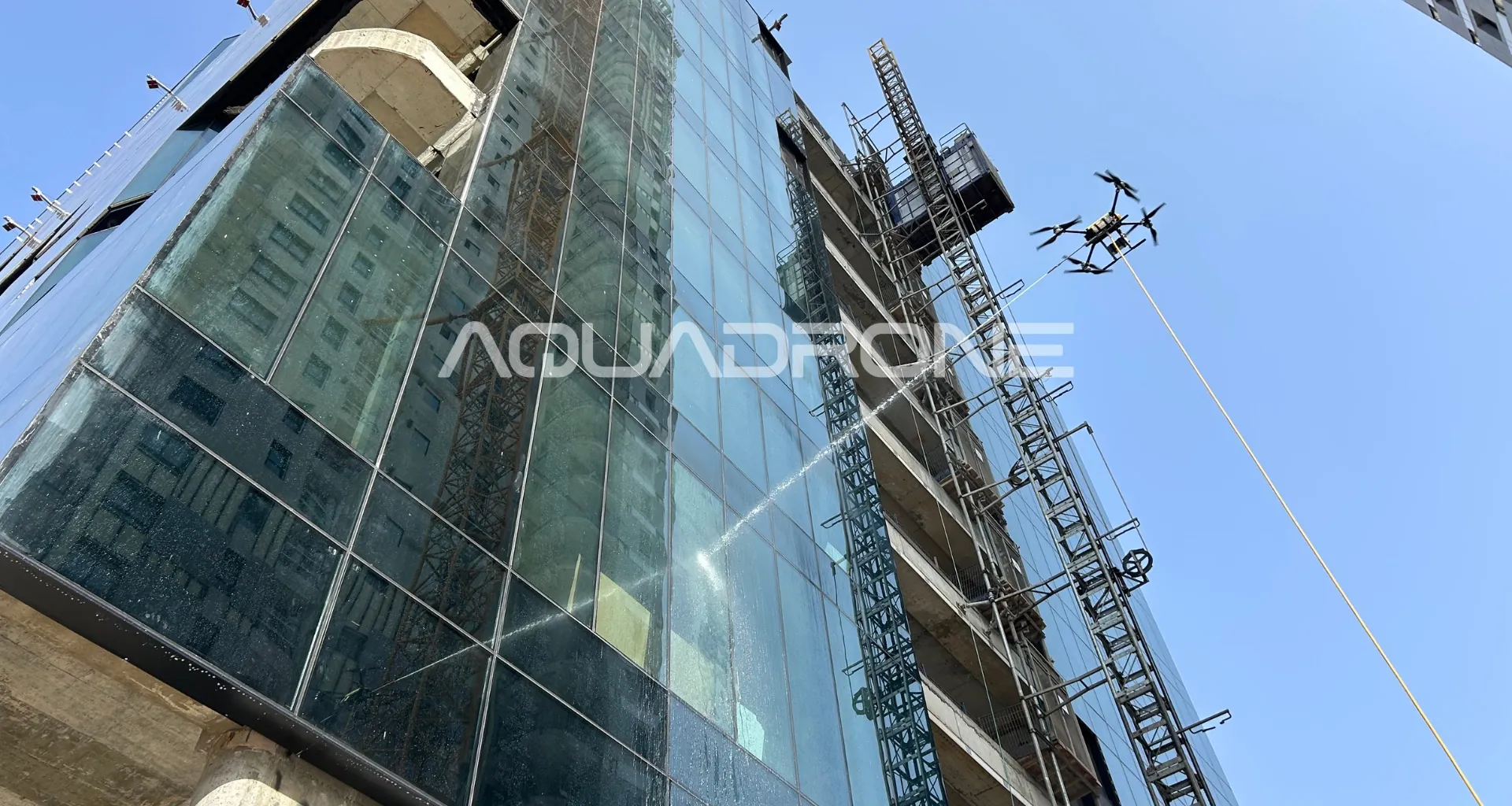
New building facade maintenance: why drone cleaning from handover pays off
New building facade maintenance starts on handover day. How drone cleaning protects glass, aluminium and stone, avoids scaffolding and helps prevent costly repairs over the years.
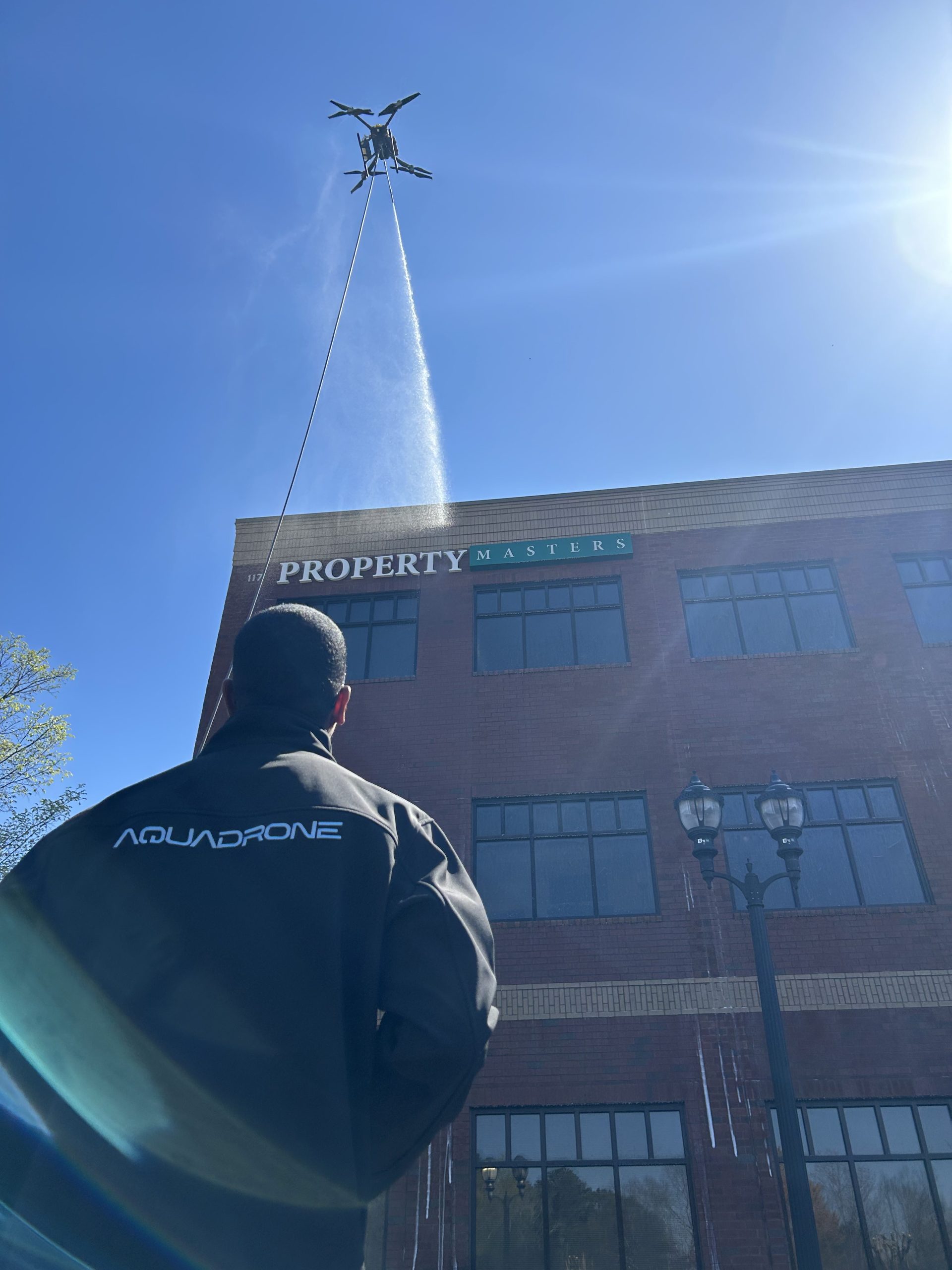
How to choose a facade cleaning company: 10 questions to ask before you sign
How do you choose a facade cleaning company? A checklist of 10 questions to ask before signing, covering method, scope of work, insurance, exclusions and documentation, plus warning signs to look out for.
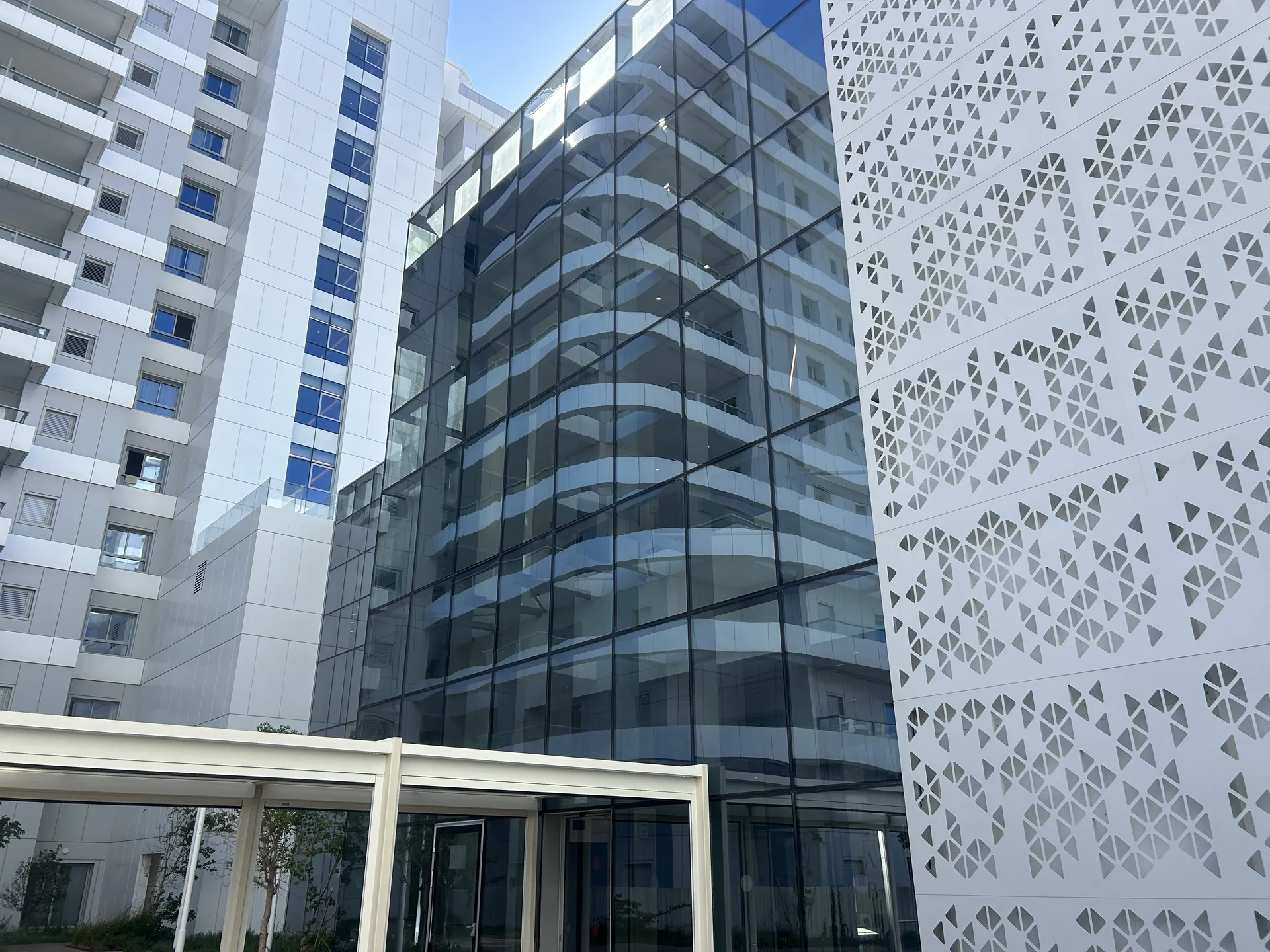
Aluminium and Alucobond cladding cleaning: what manufacturers recommend and how to protect the paint
Aluminium and Alucobond cladding cleaning: what manufacturers' guidelines say about detergents, water pressure and working hours, and how to plan cleaning that doesn't damage the painted finish.
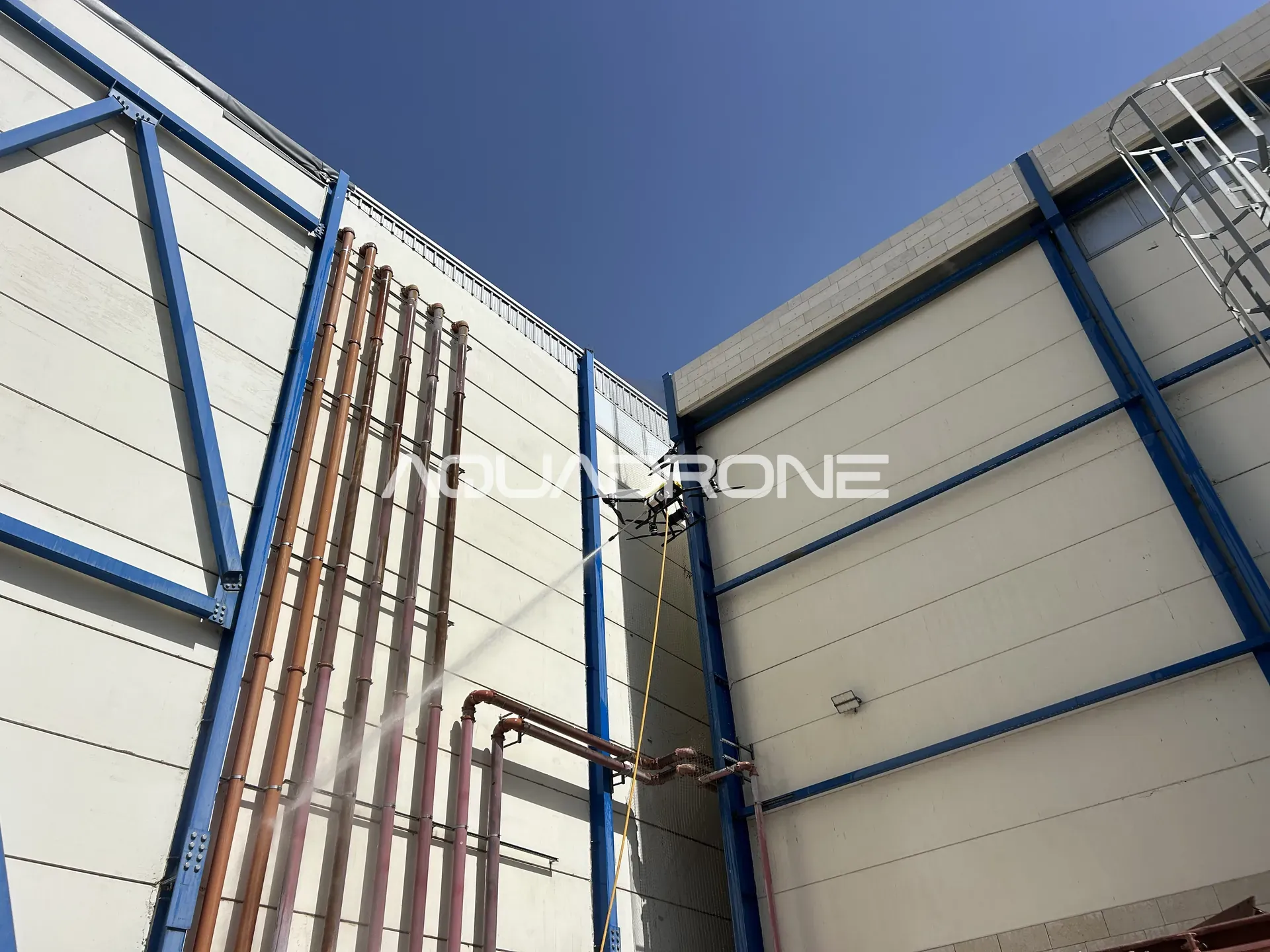
Drone factory facade cleaning: how cleaning protects the building from wear and cracks
Drone cleaning of factory, warehouse and logistics centre facades: what builds up on the envelope, how soot, mould and salts contribute to wear and cracks, and how to clean without scaffolding or disrupting operations.
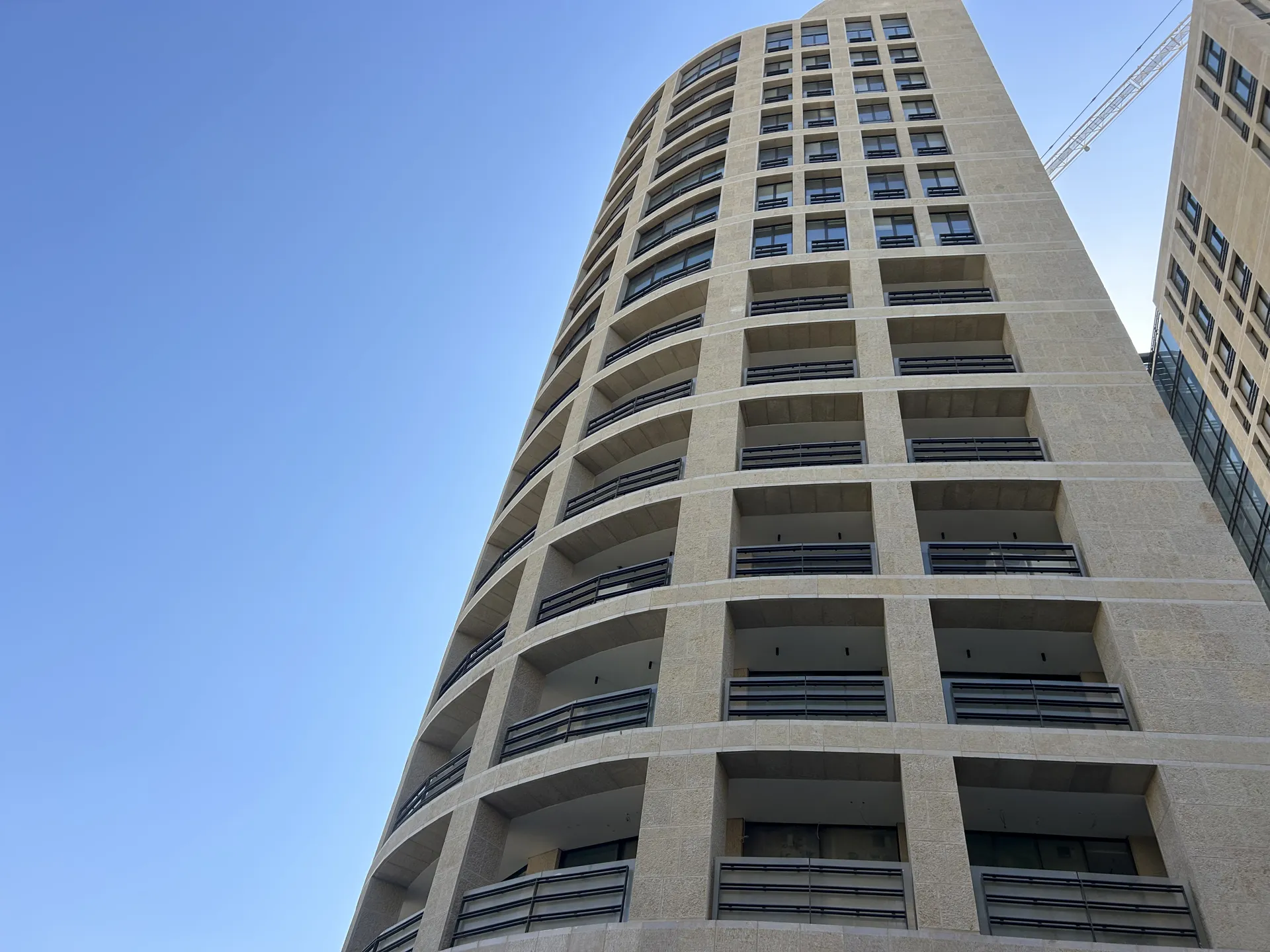
Stone facade cleaning: how to clean natural stone without damaging it
Stone facade cleaning calls for a gentle method: why acid and high pressure harm natural stone, how drone cleaning works without touching the stone, and what to check before you start.
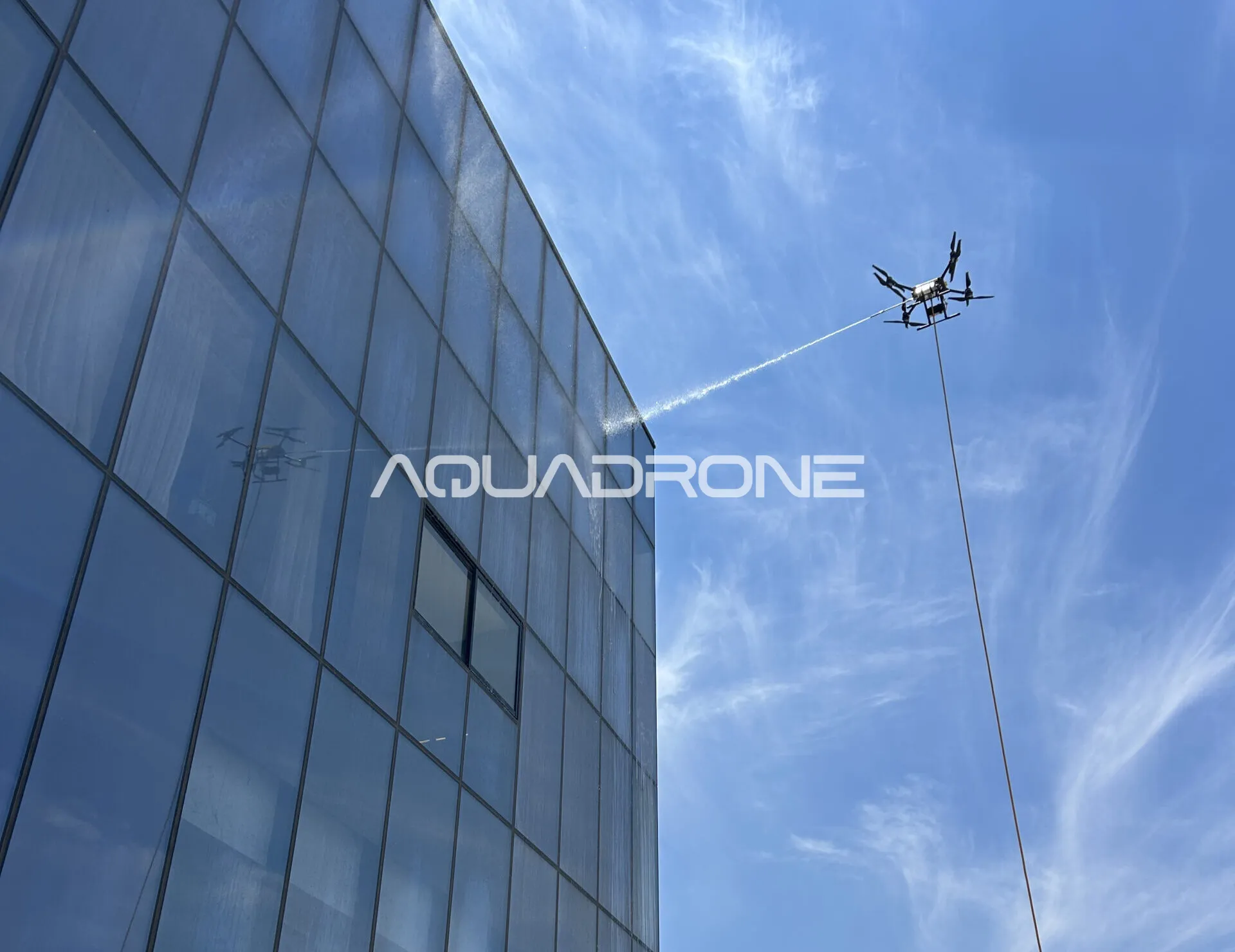
Commercial facade cleaning: why shops, malls and offices can't afford to neglect it
How a business's exterior influences a customer's decision to walk in, before they even step inside
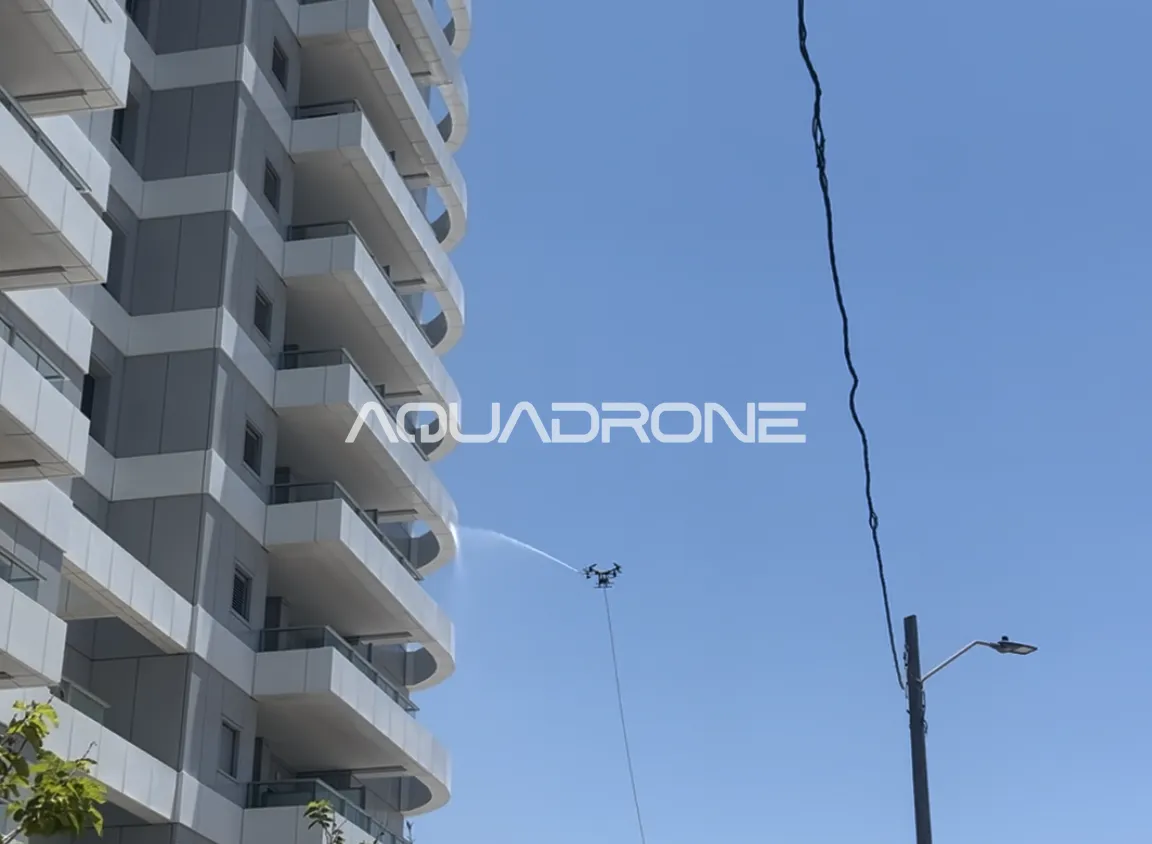
Cleaning inaccessible areas of buildings: a solution that finally reaches everywhere
Why part of the facade always gets "forgotten" in traditional cleaning, and how to fix it
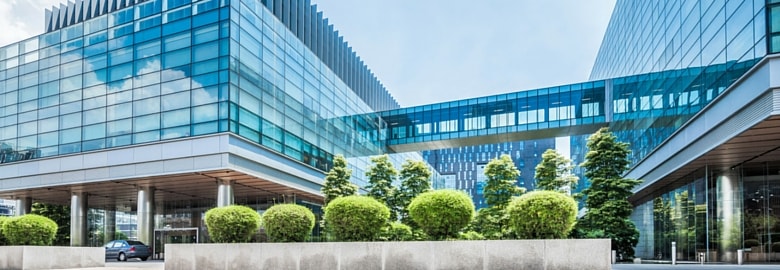
Post-construction facade and window cleaning: manual scraping and drone washing before handover
Post-construction drone cleaning is the last and one of the most important stages of any building project. Aquadrone's building cleaning services specialise in cleaning new buildings once construction is complete. Before cleaning, our team manually scrapes hardened concrete, plaster and paint residue off the facade and windows, and then the drone washes the facade and windows with purified water and removes construction dust. […]
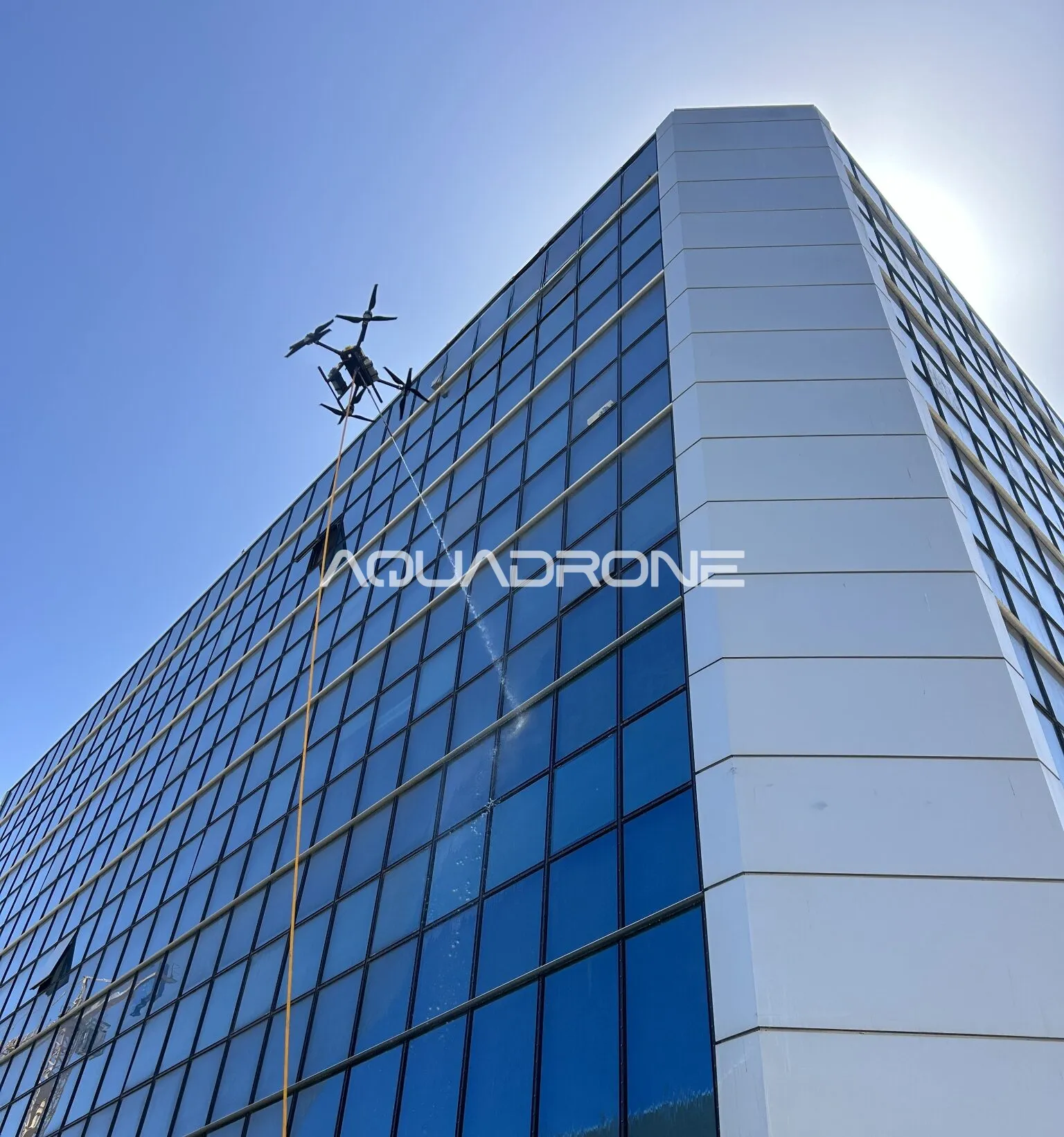
Facade cleaning in Tel Aviv
Professional facade and window cleaning for Tel Aviv and Gush Dan

Drone roof cleaning
A safe, efficient solution for cleaning roofs of every type and size

Drone cleaning of bridges and infrastructure
An advanced solution for cleaning infrastructure and complex structures at any height
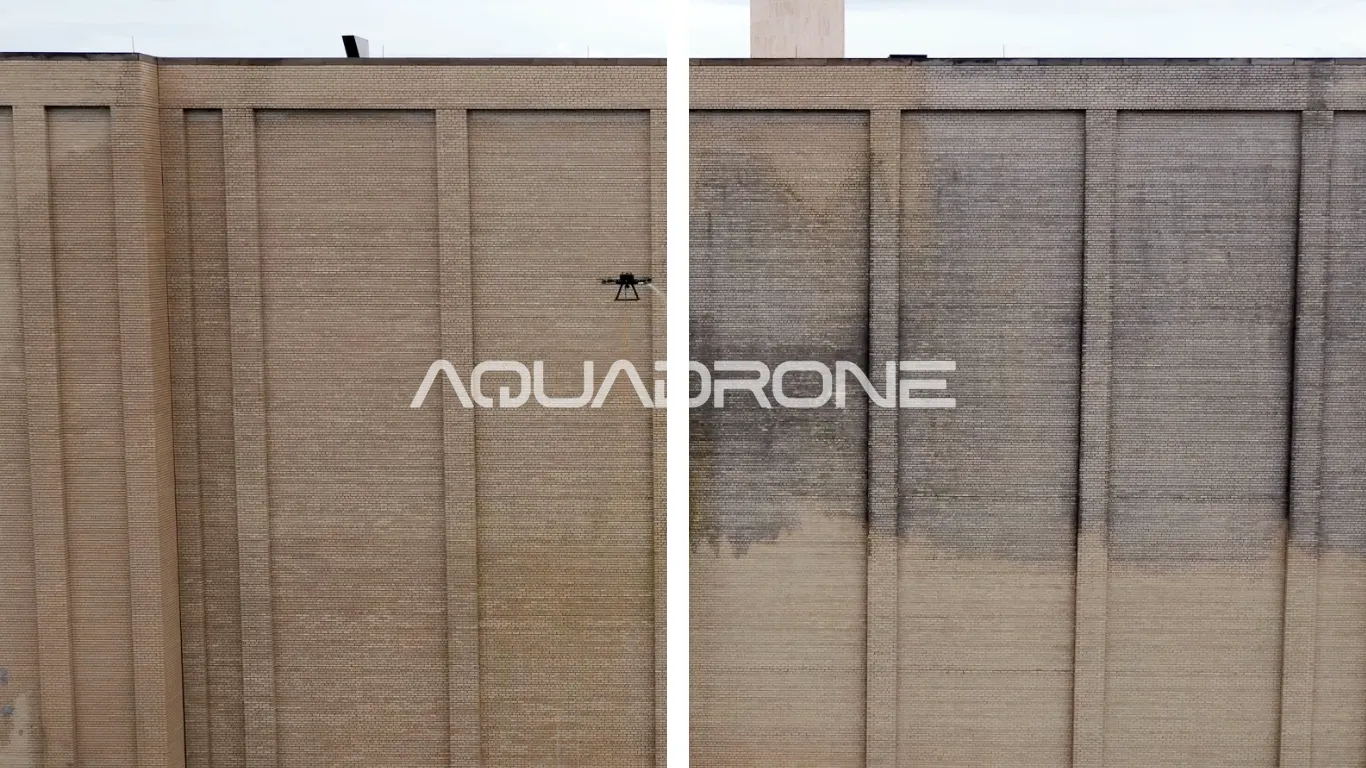
Drone brick cleaning and mould removal
A professional solution for removing mould, stains and stubborn dirt from brick facades
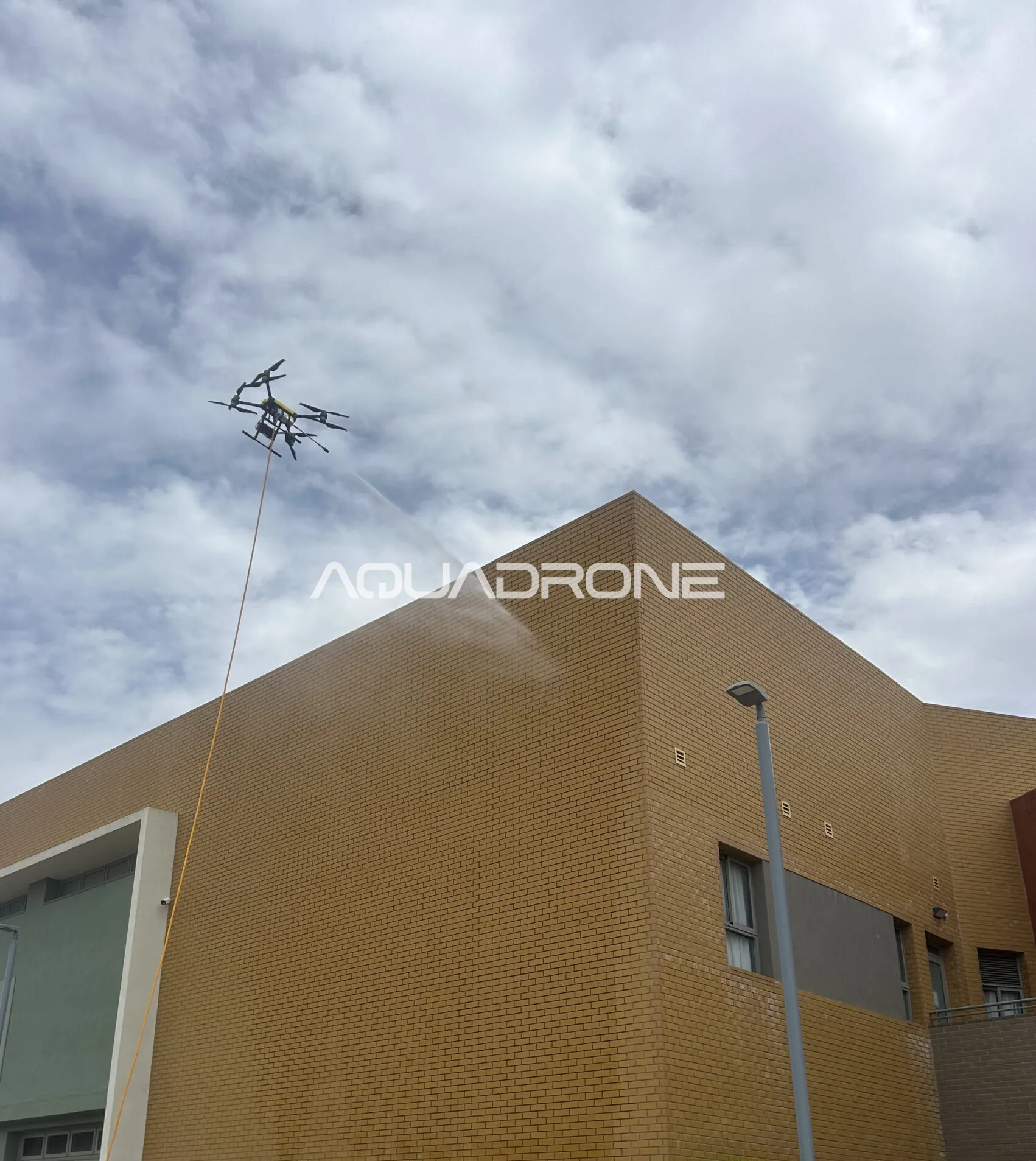
Building cleaning without scaffolding
How drones are replacing scaffolding and rope access for cleaning buildings at height
Facade stains: why dirt, limescale and pigeon droppings get harder to remove over time
Facade stains get harder to remove with every month. Why limescale, soot and pigeon droppings etch into the facade, and how early maintenance prevents permanent stains.
Drone high-rise window cleaning
Drone high-rise window cleaning: an advanced, safe solution
When should you clean your building facade? 6 signs it's time
When should you clean your building facade? The signs it's time: dark streaks under windows, limescale on glass, blackened stone and pigeon droppings, and how to clean without disruption.
Why building cleaning matters
The signs that it's time to clean, and why putting it off only makes treatment more expensive
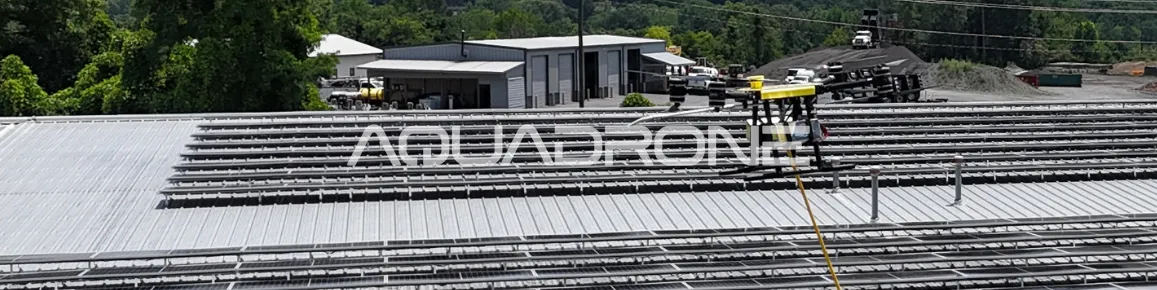
Drone solar panel cleaning
The right maintenance for maximum output

The direct link between facade maintenance and property value
A look at how smart maintenance protects a property's value.